Desk Setup Essentials for Video Editing: The Creator Workstation Checklist
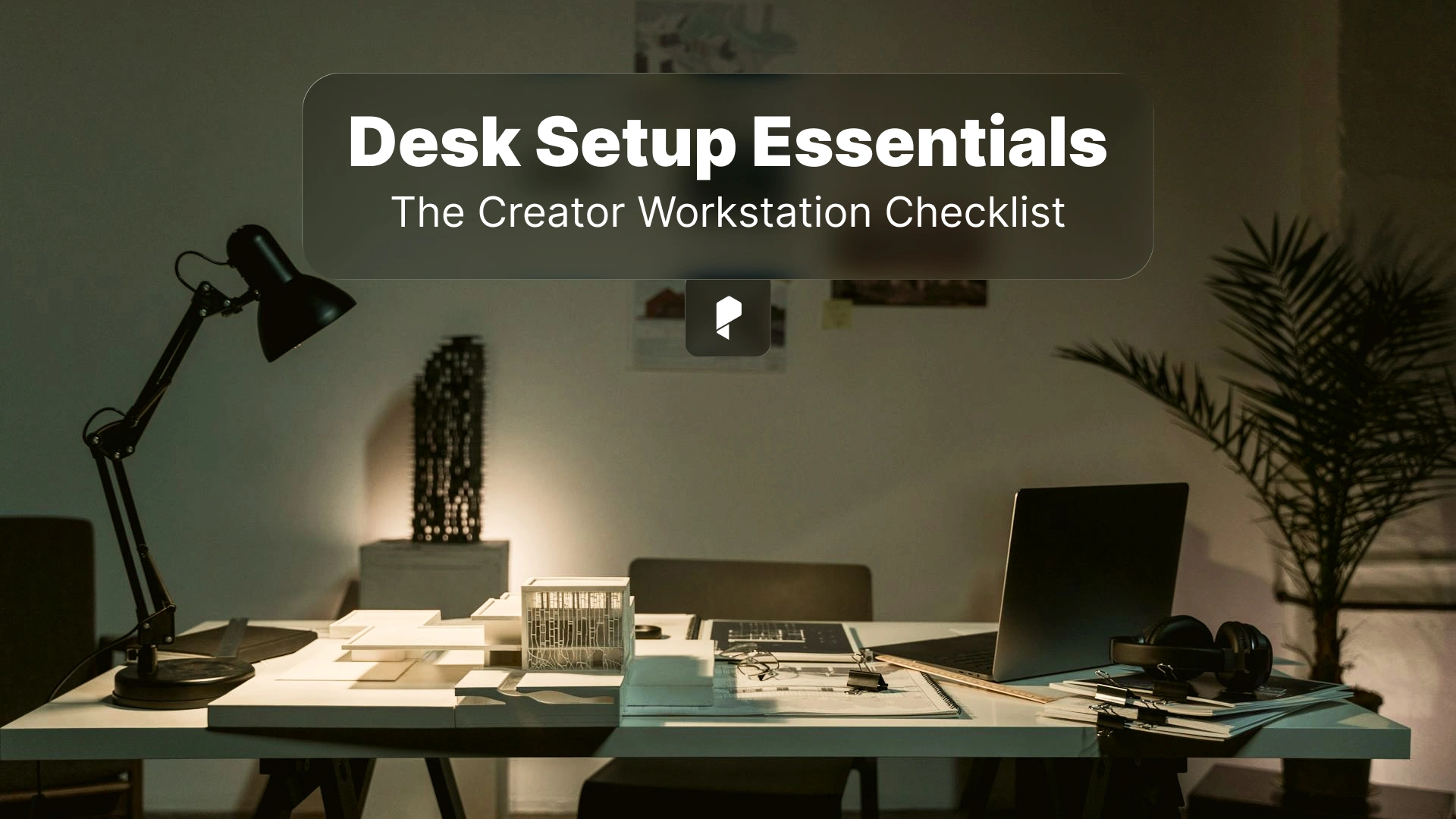
This guide walks you through building a practical workstation setup. You can upgrade one piece at a time, or use it as a full rebuild plan.
Start with workflow, not aesthetics
- Ingest footage and organize projects
- Edit timeline and refine pacing
- Color and finishing touches
- Sound cleanup and mix checks
- Export and upload
A creator workstation setup that supports this loop usually has five priorities:
- Comfort first, because editing sessions get long
- A monitor layout that reduces neck and eye strain
- Input devices that reduce hand fatigue while speeding up common actions
- Audio monitoring you can trust for edits and voiceovers
- Storage and cable management that keep you moving
If you are building on a budget, spend in this order:
- Chair
- Monitor placement (even before buying new monitors)
- Keyboard and mouse
- Storage strategy
- Audio monitoring
Desk and chair essentials for long editing sessions
Desk
A sturdy standing desk is one of the best desk setup essentials for people who edit for hours. Your setup can use a custom-built standing desk using IKEA parts. Use it like a tool, not a lifestyle change. Sit for precision work, stand for reviews, selects, and rough assemblies.
Quick setup tips:
- Keep your elbows close to 90 degrees when typing
- Keep your wrists neutral, not bent upward
- Give your mouse arm room, so you are not cramped into the edge of the desk
Chair
A chair that fits your body is a daily quality upgrade. The list here includes the Flexispot C7 Office Chair. Prioritize adjustability, lumbar support, and a seat height that lets your feet rest flat.
Monitor setup basics for editors (resolution, size, placement)
Practical placement rules:
- Center the main display with your keyboard, not the desk
- Put the top third of the screen near eye level
- Keep the screens close enough that you are not turning your head constantly
If you do color work, consistent brightness and a controlled room light matters more than raw screen size.
Keyboard and mouse, speed and comfort upgrades
From the list:
- Keyboard: AA F98 Pro
- Mouse: Logitech G Pro X Superlight
How to get faster without changing your whole workflow:
- Pick a comfortable typing angle and keep it consistent
- Reduce mouse travel by keeping the mouse close to the keyboard
- Commit to 10 core shortcuts you use every day, then build from there
If your hand hurts during long edits, that is a signal to adjust desk height, chair height, and input angle before buying more gear.
Audio for editing and voiceover (speakers and headphones)
From the list:
- Speakers: Edifier speakers
- Headphones: Beyerdynamic DT 770 Pro
Use speakers for overall balance and comfort during long sessions. Use headphones for details like clicks, breaths, hum, and plosives.
A simple workflow that works:
- Do your first pass on speakers
- Check edits and transitions on headphones
- Do a final loudness check before export
Microphone basics for creators who record at the desk
From the list:
- Microphone: Rode NT1A
Desk-recording tips that matter more than buying a new mic:
- Keep the mic slightly off-axis (not directly in front of your mouth)
- Stay the same distance from the mic for consistent volume
- Treat the room, even lightly, with curtains, soft furniture, or basic absorption
Computer components that keep your timeline smooth
- CPU: CPU
- Motherboard: Motherboard
- RAM: RAM
- Main drive: Main Drive
- Scratch drives: Scratch Drives
- Storage drives: Storage Drives
- Computer case: Computer Case
A simple storage approach that works for many editors:
- Main drive: OS, apps, current project files
- Scratch drive: cache, previews, temp files
- Storage drive: archive, backups, completed projects
The goal is predictable performance. You do not want your cache fighting your media files on the same drive.
Lighting and small accessories that make the desk feel finished
From the list:
- Wall lights: Wall Lights
- Clock: Clock
A soft, controlled background light can reduce eye strain and make on-camera calls look better. A visible clock sounds simple, but it helps creators track focus blocks and avoid accidental two-hour tweak sessions.
Bonus creator tools that level up what you shoot (cheap, high impact)
The list is:
Diopters
- Product: Diopters
- Why it helps: Lets you focus closer for macro-like product details, without buying a dedicated macro lens
Magic Arm and clamp combo
- Product: Magic Arm
- Why it helps: Mount lights, monitors, or a camera for POV and overhead angles, especially in small spaces
Diffusion
- Product: Diffusion sheet
- Why it helps: Turns harsh light into soft light fast, which makes skin and products look better on camera
5-in-1 reflector
- Product: 5-in-1 Reflector
- Why it helps: Gives you bounce, fill, and light control in one portable tool
Cinefoil
- Product: Cinefoil
- Why it helps: Shapes light, blocks spill, and creates more contrast where you want it
Clamps
- Product: Clamps
- Why it helps: Holds diffusion, reflectors, flags, and fabric. You always need more than you think
Portable haze machines
- Products:
- Why it helps: Adds atmosphere and makes light rays visible, creating depth and a more cinematic look
V-mount batteries
- Product: V-Mount Battery
- Why it helps: Powers multiple accessories reliably, so you are not juggling small batteries during a shoot
Multi-tools
- Products:
- Why it helps: Saves time on set when something needs tightening, mounting, or adjusting
Example desk setup checklist (quick shopping list)
Foundation
Displays
- Monitors: LG monitors
Input
- Keyboard: AA F98 Pro
- Mouse: Logitech G Pro X Superlight
Audio
- Speakers: Edifier speakers
- Headphones: Beyerdynamic DT 770 Pro
- Microphone: Rode NT1A
Computer and storage
- CPU: CPU
- Motherboard: Motherboard
- RAM: RAM
- Main drive: Main Drive
- Scratch drives: Scratch Drives
- Storage drives: Storage Drives
- Computer case: Computer Case
Finishing touches
- Wall lights: Wall Lights
- Clock: Clock
Shooting upgrades (bonus)
Conclusion
If you want one simple goal, build a creator workstation setup where you can sit down, start editing within minutes, and finish a project without fighting your gear.
Disclaimer : If you buy something through our links, we may earn an affiliate commission or have a sponsored relationship with the brand, at no cost to you. We recommend only products we genuinely like. Thank you so much.
Blog Label:
- best monitor setup for video editing
- cable management for desk setup
- creator workstation setup
- desk setup essentials
- desk speakers for editing
- editing workstation setup
- ergonomic chair for editing
- microphone for content creators
- standing desk for video editing
- video editing desk setup
- video editing keyboard and mouse


Write for us
Publish a Guest Post on Pixflow
Pixflow welcomes guest posts from brands, agencies, and fellow creators who want to contribute genuinely useful content.
Fill the Form ✏