How Can Casinos Modernize Promotions With Digital Displays?
Why Static Promos Look Ancient to Modern Players
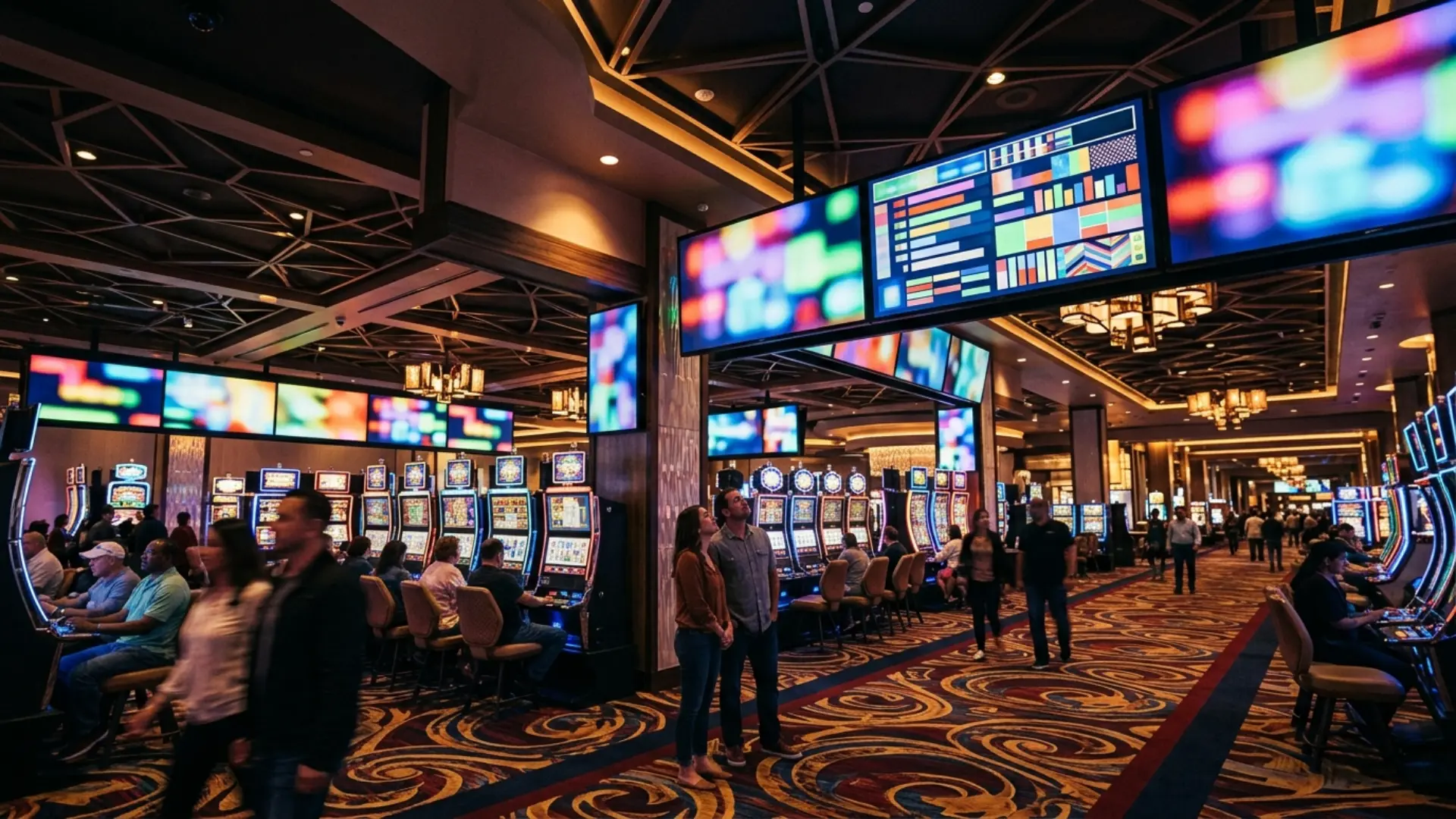
Guests now arrive with phones that update every second, and they expect your property to move at that same pace. When players see stale signage, their brains quietly file your casino under “outdated,” which affects how much they trust your promotions and how long they stay. The University of Nevada, Las Vegas has studied this exact behavior, finding that patron behavior in casinos shifts quickly based on perceived value and information flow, and slow information delivery actively suppresses gaming activity. Your signage is not decoration, it is a revenue trigger that most operators are still leaving un-pulled.
And here is the thing: the cost gap between static and digital has basically vanished. Screens are cheaper than ever, and the software to run them now handles everything from scheduling to content design. There is no financial excuse left to stay analog.
The Five Promotion Types That Scream for Digital Upgrade
Time-Sensitive Flash Offers
You know the drill: a slow Tuesday afternoon that needs a jumpstart. With printed marketing, that decision takes two days of lead time and a trip to the print shop. Digital flips that instantly, and you can push a “2x points until 6 PM” banner to every screen by the time your shift manager walks back to their office.
Tournament Leaderboards
Slot tournaments create huge excitement, but only if players can see the standings. A wall of paper score sheets kills the energy. Live leaderboards on screens turn the tournament into a spectator event, quite literally, because people gather around the display to watch numbers change in real time.
Food and Beverage Cross-Sells
Your steakhouse has empty tables while your slots are full of hungry players. Digital displays near gaming rows can tease a chef’s special with real photos, and you get the effect of a billboard placed right where hungry people stand. The timing matters more than the content, and screens let you time it perfectly.
Live Event Countdowns
When a big concert or boxing match comes to your venue, build anticipation for days before. Screens can run a countdown clock alongside the performer’s music video, which is far more compelling than a flyer that says “Coming Soon.”
Loyalty Program Reminders
Most players have no idea what tier they sit in or what perks they have earned. Screens placed near the players club desk can display personalized tier statuses and targeted offers, which quietly nudges your second tier players to push for the next level up.
Designing Content That Players Actually See
- One message per screen. A single bold headline like “FREE PLAY FRIDAY” beats a grid of five small offers every time.
- Full-bleed background images that show the prize, not the text. Let the reward do the talking.
- Animation that stops the wandering eye, but subtle enough to avoid irritating nearby players.
- A clear call to action that tells players where to go next, whether that is the players club desk or a specific bank of machines.
I would rather you run a display that changes once every ten seconds with a killer visual than one that scrolls through ten mediocre offers a minute. Restraint wins here.
Executing the Modernization Without Chaos
Phase 1: Audit Your High-Traffic Zones
Walk the floor with your shift supervisors and mark every spot where guests pause. The buffet line, the entrance to the high-limit room, the valet waiting area, and the bars are all natural screen locations. Start with five to ten high-impact spots instead of blanketing the whole building.
Phase 2: Pick Your Content Mix
Draft a weekly schedule that balances revenue-driving offers with atmosphere-building content. You want roughly 60 percent promotions, 30 percent entertainment and events, and 10 percent operational messaging like hours or safety notices.
Phase 3: Build a Simple Approval Workflow
The fastest way to kill a digital signage program is to require six layers of approval for every content change. Designate two people as approved content editors, ideally one from marketing and one from the slot operations team, and empower them to publish within minutes.
Phase 4: Train Staff on the “Why”
Your dealers, servers, and cage staff need to know what the screens say. When a player asks about an offer they saw on a display, every employee should know the details. Casual conversation between staff and guests about a promotion does more for your bottom line than the screen itself.
Casino employment in the United States has recovered to roughly 1.8 million workers in recent years, according to the U.S. Bureau of Labor Statistics, which means you have plenty of staff on the floor who can serve as brand ambassadors for whatever your screens advertise.
Security and Compliance: The Overlooked Layer
Your digital signage software must log every promotion that runs, including timestamps and screen locations. If a regulator asks why your Tuesday promotion displayed a higher match rate than what players received, you need a clean digital trail. ASIS International publishes guidelines on security and operational risk management for the gaming industry, and that operational discipline extends to how you track your marketing content. You should also build a manual review step into your content workflow so every promotion passes through human eyes before it hits the floor.
That compliance layer creates friction, but it does not need to slow you down much. The right software lets you set approval rules once, then trust the system to enforce them automatically.
Measuring Results: What to Track and When to Pivot
Start by tracking redemption codes. Put a unique code on each screen promotion, and tie that code to your players club system. You will learn within two weeks which offers resonate and which ones fall flat. Then use the timing data from your signage software to answer deeper questions: Do players redeem more on weekends? Does the 4 PM buffet tease outperform the 8 PM one? Your screens tell you all of it.
The biggest mistake I see operators make is treating digital signage as a set-and-forget installation. The technology fails silently, and content goes stale after about three weeks. Schedule a monthly review where you pull the redemption data, look at what your competitors are advertising, and refresh the entire content library. That monthly ritual keeps your floor feeling alive and keeps your players curious about what comes next.
And if something flops? Change it in ten minutes. That is the entire point of modernizing in the first place. You are no longer guessing for six weeks until the next print run; you are testing every single day and betting on what works. That is how you turn a screen into the strongest employee on your floor, the one who never sleeps and never stops selling your next great promotion.
Disclaimer : If you buy something through our links, we may earn an affiliate commission or have a sponsored relationship with the brand, at no cost to you. We recommend only products we genuinely like. Thank you so much.
Blog Label:


Write for us
Publish a Guest Post on Pixflow
Pixflow welcomes guest posts from brands, agencies, and fellow creators who want to contribute genuinely useful content.
Fill the Form ✏