AI Receptionist for Clinics: How Voice AI Works and How to Choose One
- What Is an AI Receptionist for Clinics?
- The Voice AI Behind a Medical AI Receptionist
- What Should an AI Receptionist Handle, and What Should It Leave to People?
- Will an AI Receptionist Replace Your Front Desk?
- How to Choose an AI Receptionist for Your Clinic
- AI Receptionists for Dental, Aesthetic and Women's Health Clinics
- Why an AI Receptionist Matters for Clinics and Patients in the UAE
- How to Roll Out an AI Receptionist Without Upsetting Patients
- Conclusion
- Wrap Up
It’s 9:40 pm. A patient finally has a quiet minute to book that dental cleaning, calls your clinic, and gets voicemail. By morning, they’ve booked somewhere else. (Every clinic manager knows this story.)
The same thing happens at noon, when two receptionists are checking patients in and the phone rings for the fourth time in a minute. The people who’d answer it are busy with the patients standing in front of them.
That’s the gap an AI receptionist for clinics fills. And if you’ve spent any time with AI voiceovers, you already know the technology behind it: voices that pause, stress the right word and sound like a person. In this guide, we’ll look at what a medical AI receptionist does, how its voice AI works, what it should never do, and how to pick one for your practice.
What Is an AI Receptionist for Clinics?
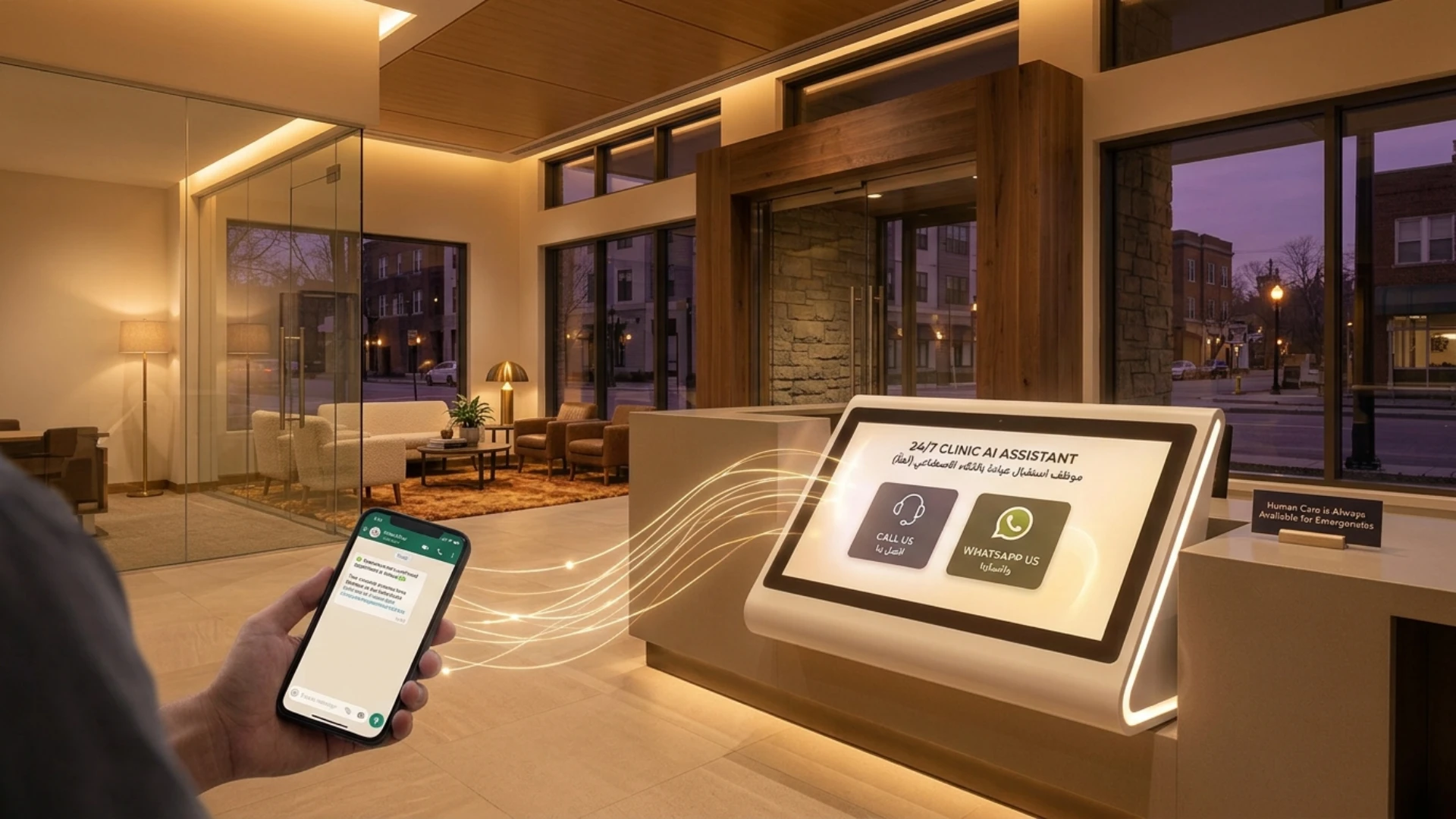
Most of them work across more than one channel:
- Phone calls, answered by an AI voice agent
- WhatsApp and other messaging apps
- Web chat on the clinic’s site
And most of them do the same core jobs:
- Answer questions about services, prices, doctors, insurance, opening hours and parking
- Handle automated appointment booking, rescheduling and cancellations
- Send reminders and confirmations
- Take messages and pass them to the right person
Among healthcare AI solutions, it sits firmly in the front office. Think of it as AI-powered patient support for logistics: medical appointment scheduling, directions, prices. Diagnosis and treatment stay with your clinical team.
The Voice AI Behind a Medical AI Receptionist
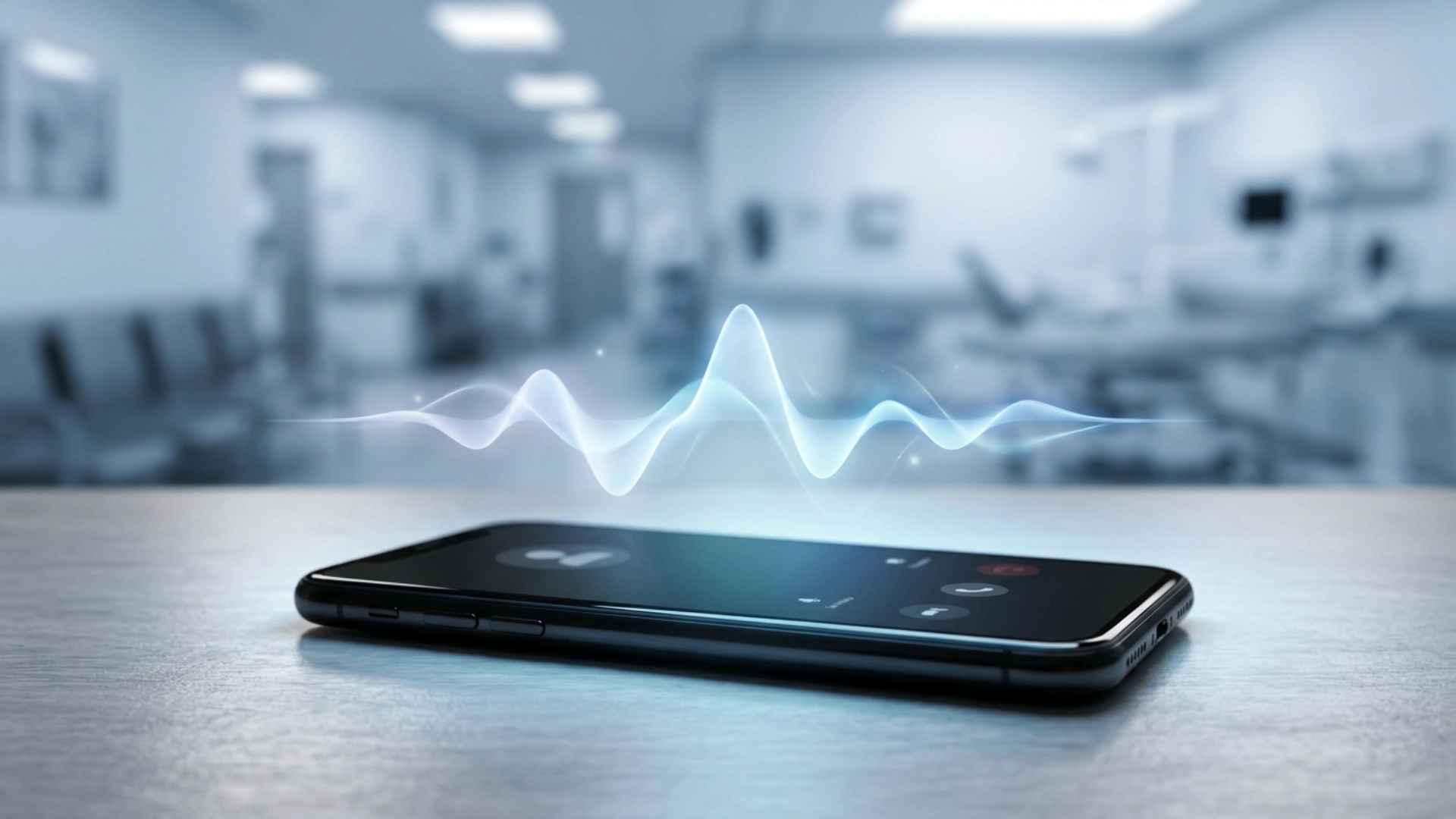
Voice choice matters more on a clinic line than in a promo video. A patient calling about test results needs a calm, slower voice, while someone booking a whitening session is fine with something brighter. The same skills creators use to control the tone and pacing of an AI voice apply here, and good vendors let you tune them.
Then there’s latency, the gap between the patient finishing a sentence and the AI answering. In a voiceover, a slow render costs you a few seconds. On a live call, a two-second pause makes the patient say “Hello?” and talk over the reply. (When you test a vendor, interrupt it mid-sentence and see whether it stops and listens.)
All of this is moving fast. Real-time conversation is near the top of the list when you look at where AI voice technology is heading, and clinic phone lines are one of the first places it’s being put to work.
What Should an AI Receptionist Handle, and What Should It Leave to People?
Dentists who’ve tried these tools worry about exactly this. In one r/Dentists thread, the concern was patients who go off script: if the agent can’t hand off cleanly, it creates more cleanup work than it saves. So test the handoff before you test anything else.
Will an AI Receptionist Replace Your Front Desk?
Creators have had this exact argument about narration. The AI vs. human debate in voiceovers landed in roughly the same place: AI for speed, scale and consistency, people for emotion and nuance. Your front desk is no different.
How to Choose an AI Receptionist for Your Clinic

First, disclosure. Patients should know when they’re talking to an AI, and in some places it’s part of health policy: the Dubai Health Authority’s AI policy asks providers to disclose which functions are AI-enabled, as this Applify Lab guide explains. Responsible creators already disclose when a voice is synthetic, and the same honesty builds trust on a clinic line.
Second, pricing. The same guide puts most ready-made AI receptionist plans at USD 109 to 299 a month, with setup fees up to USD 500. A clinic setup that books into your calendar in more than one language and covers both phone and WhatsApp is usually quoted on channels, minutes and message volume.
AI Receptionists for Dental, Aesthetic and Women’s Health Clinics
Aesthetic clinics get a sales bonus. Patients ask about packages, and a well-briefed AI can mention the right one at the right moment, the way a good receptionist would. Women’s health clinics need the opposite instinct: the AI should be quieter, more careful and quick to bring in a person.
Why an AI Receptionist Matters for Clinics and Patients in the UAE

- Patients speak many languages, with Arabic and English at the center. A bilingual receptionist on every shift is hard to staff, while an AI that switches languages is easy to run around the clock.
- WhatsApp is how many patients prefer to reach businesses, so WhatsApp automation for clinics matters as much as the phone line.
- Health data has its own federal law. Federal Law No. 2 of 2019 covers the use of information technology in health fields and requires health data to be stored and processed inside the UAE, with limited exceptions.
Voice tech is what makes the language part practical. The same multilingual AI voices that let creators localize one video into many languages now let a clinic answer an Arabic call and an English WhatsApp message at the same time.
Rabetica is one example built around these needs. It’s an AI receptionist for clinics in the UAE that answers calls and WhatsApp messages 24/7, replies in Arabic or English depending on the patient, and books, reschedules and cancels appointments in the clinic’s booking system (or its own, if the clinic doesn’t have one). It also sends a reminder before every appointment and lets patients confirm or reschedule on WhatsApp.
For UAE residents, that means:
- Booking an appointment at 11 pm without waiting for the clinic to open
- Getting answers in their own language, on a call or in a chat
- Fewer forgotten appointments, thanks to WhatsApp reminders they can answer in one tap
- Patient data stored in the UAE, which Rabetica states for all the data it handles
- Clinical questions left to people, since Rabetica says it never gives medical advice, diagnoses or prescriptions
Rabetica reports these results on its own site: up to 80% fewer patient no-shows, 35% more appointments booked and replies 4x faster. As with any vendor’s numbers, ask how they were measured at clinics like yours.
How to Roll Out an AI Receptionist Without Upsetting Patients
- Start with after-hours and overflow. Let the AI pick up when the clinic is closed or every line is busy. Your team stays in charge at peak hours while you learn.
- Write down your top 20 patient questions. Prices, doctors, insurance, parking, preparation instructions. This becomes the AI’s knowledge, so get it right.
- Set the handoff rules before launch. Decide which topics always go to a person and who gets the alert.
- Test calls in each language. Have staff call in as patients, including the awkward ones: the caller who rambles, the one who interrupts, the one who asks for a diagnosis.
- Review conversations weekly. Every question it couldn’t answer is a gap to fill.
- Track a few numbers. Answer rate, after-hours bookings, handoffs, and your no-show rate before and after.
(The patients who just want to talk about their week will show up too. Make sure the AI has a kind way to pass them to a person.)
Conclusion
Before you sign with anyone, write down the 20 questions your patients ask most and run every vendor’s demo through them. If your clinic is in the UAE, put Rabetica on that list. (And make at least one of those test calls at 11 pm.)
Wrap Up
- An AI receptionist for clinics answers calls and WhatsApp messages 24/7 and books, moves and cancels appointments.
- It runs on speech recognition, a language model and text to speech, the same voice tech behind AI voiceovers.
- It should handle logistics and pass symptoms, emergencies, complaints and upset patients to a person.
- Your front desk stays. The AI takes the repetitive load so your team can focus on patients in the clinic.
- Choose one on languages, channels, booking integration, handoff, data storage, AI disclosure, voice quality and pricing.
- In the UAE, Arabic and English support, WhatsApp and local storage of health data matter most, and Rabetica is one platform built for that.
- Roll it out slowly: after-hours first, then weekly reviews of real conversations.
Disclaimer : If you buy something through our links, we may earn an affiliate commission or have a sponsored relationship with the brand, at no cost to you. We recommend only products we genuinely like. Thank you so much.
Blog Label:

Write for us
Publish a Guest Post on Pixflow
Pixflow welcomes guest posts from brands, agencies, and fellow creators who want to contribute genuinely useful content.
Fill the Form ✏