How Video and Motion Design Are Changing the Way Businesses Gift
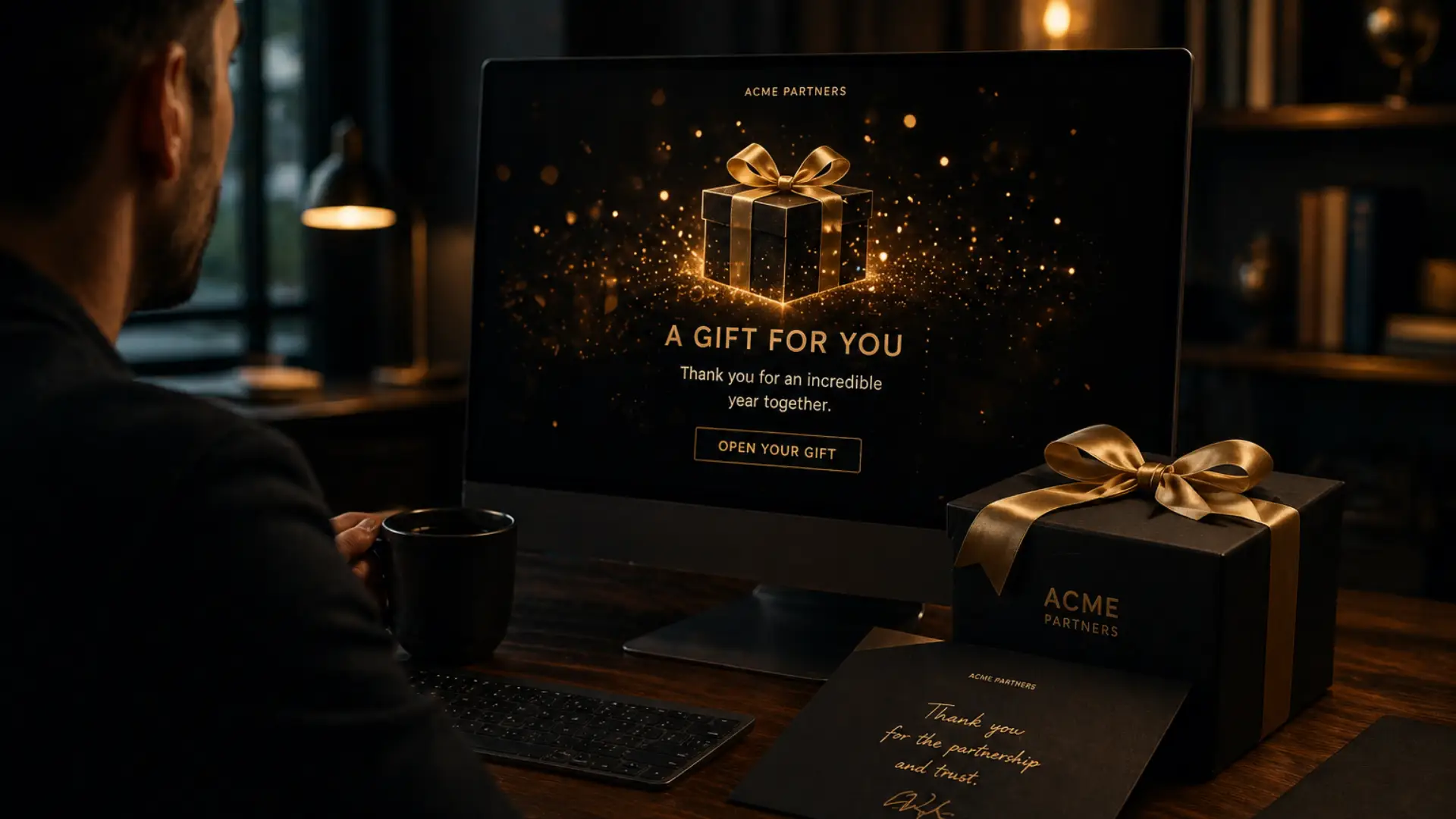
That’s changing. As video becomes the default language of business communication, gifting is following. Companies are moving beyond static cards and generic emails toward animated gift reveals, personalised video messages, and motion-designed thank-you experiences that feel closer to a film production than a corporate formality.
The shift reflects something real. In a world where clients receive dozens of emails a day, a well-crafted video gift stands out. And for creative agencies, production studios, and design-forward businesses, it’s become a natural extension of how they already communicate.
Why Video Works in B2B Gifting
Applied to gifting, this creates an obvious opportunity. A short, personalised video message attached to a corporate gift communicates far more than a gift note ever could. It shows effort. It shows the sender actually thought about the recipient. And in a B2B context, where relationships are built over years and contracts are often renewed on the strength of those relationships, that distinction matters.
Platforms that have recognised this shift – like GIFQ, which handles the logistics of corporate gifting at scale – are increasingly part of workflows that include branded visual assets, custom messaging, and personalised delivery experiences. The gifting itself has become a content moment
Motion Graphics as a Gift Reveal
Think of it as a trailer for the gift. A 15-second animation that carries the sender’s brand, expresses the sentiment behind the gift, and creates a moment worth paying attention to.
For motion designers, this is a genuinely interesting brief. The constraints are tight – short format, clear message, strong brand alignment – but the creative territory is wide open. There’s no established template. Companies doing this well are largely figuring it out as they go.
If you’re working on an animated gift reveal or branded gifting video, Pixflow’s motion graphics templates are a solid starting point for building the visual layer quickly without starting from scratch.
Personalised Video Messages at Scale
This is where AI voiceover and templated motion workflows are starting to make a real difference. A company can build a branded video template – consistent intro, consistent outro, consistent motion design – and then personalise the middle section with a script that changes per recipient. The name, the project reference, the specific message.
AI voiceover tools handle the narration. Motion templates handle the visual frame. The result is something that feels considered without requiring a separate production run for every recipient.
It’s not the same as a fully bespoke video. But it’s significantly more impactful than a generic gift email, and the effort-to-impact ratio is hard to argue with.
The Visual Identity Problem in Corporate Gifting
This is a missed opportunity, and it’s largely a design problem.
Every touchpoint in a gifting flow – the notification email, the animated reveal, the digital gift card, the thank-you follow-up – is a brand moment. Treating it as one means applying the same care to the visual presentation that you’d apply to any client-facing material.
For teams working in video and motion, this is familiar territory. Brand consistency across formats, adapting a visual identity to different aspect ratios and delivery contexts, maintaining coherence between motion and static elements – these are skills that translate directly to building a gifting experience that feels like it came from somewhere intentional.
What Makes a B2B Gift Actually Land
Timing Over Calendar
Timing creates context. Context makes the gesture meaningful.
Specificity in the Message
That’s the actual gift. Everything else is the wrapper.
Platforms like Reachdesk support personalized messaging at scale, which makes specificity more achievable even when the recipient list is long.
Consistency Across Every Touchpoint
Inconsistency at any point breaks the experience. And in B2B gifting, experience is most of what you’re actually delivering.
The Takeaway
For designers and motion artists, this is a space worth paying attention to. The briefs are getting more interesting, the production values are going up, and the clients who understand what’s possible are looking for people who can execute it.
The gift is the message. Make sure the message looks like it was made by someone who cares about how things look.
Disclaimer : If you buy something through our links, we may earn an affiliate commission or have a sponsored relationship with the brand, at no cost to you. We recommend only products we genuinely like. Thank you so much.
Blog Label:


Write for us
Publish a Guest Post on Pixflow
Pixflow welcomes guest posts from brands, agencies, and fellow creators who want to contribute genuinely useful content.
Fill the Form ✏