Shutter Speed Explained for Content and Video Production
What is shutter speed?
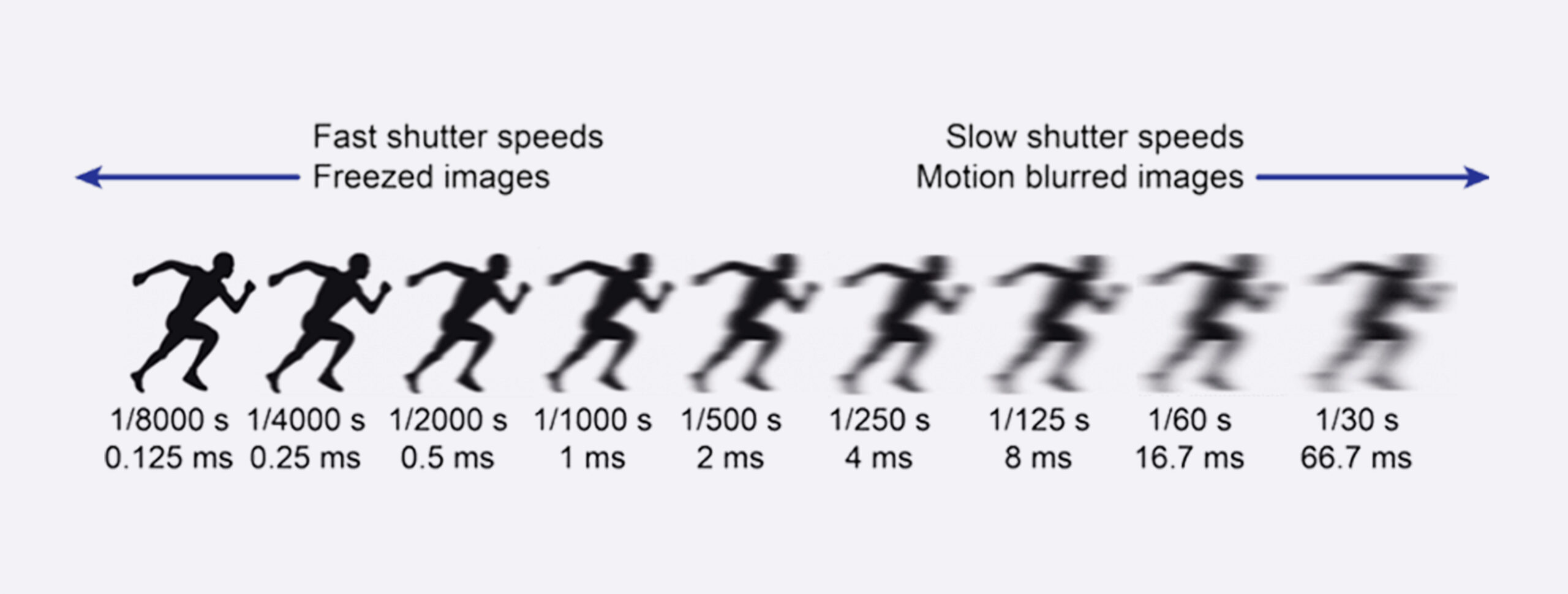
The shutter is a device in a camera that is responsible for the duration of the light coming through. So if the shutter speed is low the amount of light will be more and if the shutter speed is high the less light will get through. Somehow you can compare shutter speed with a door. The speed of opening and then closing the door determines the amount of light that crosses. On the other hand, shutter speed clarifies the sharpness of the shot so the faster shutter speed produces sharper images and vice versa. In motion photography, shutter speed is an elemental part as you want to show the action alongside its sense of movement clearly. It’s in these cases that photographers come across some creative changes and create their own styles. These creative alterations can also be applied in filming to change the feeling of a shot but we’ll get to that later. Now let’s get familiar with the shutter in filming a bit more.
Shutter speed and filming
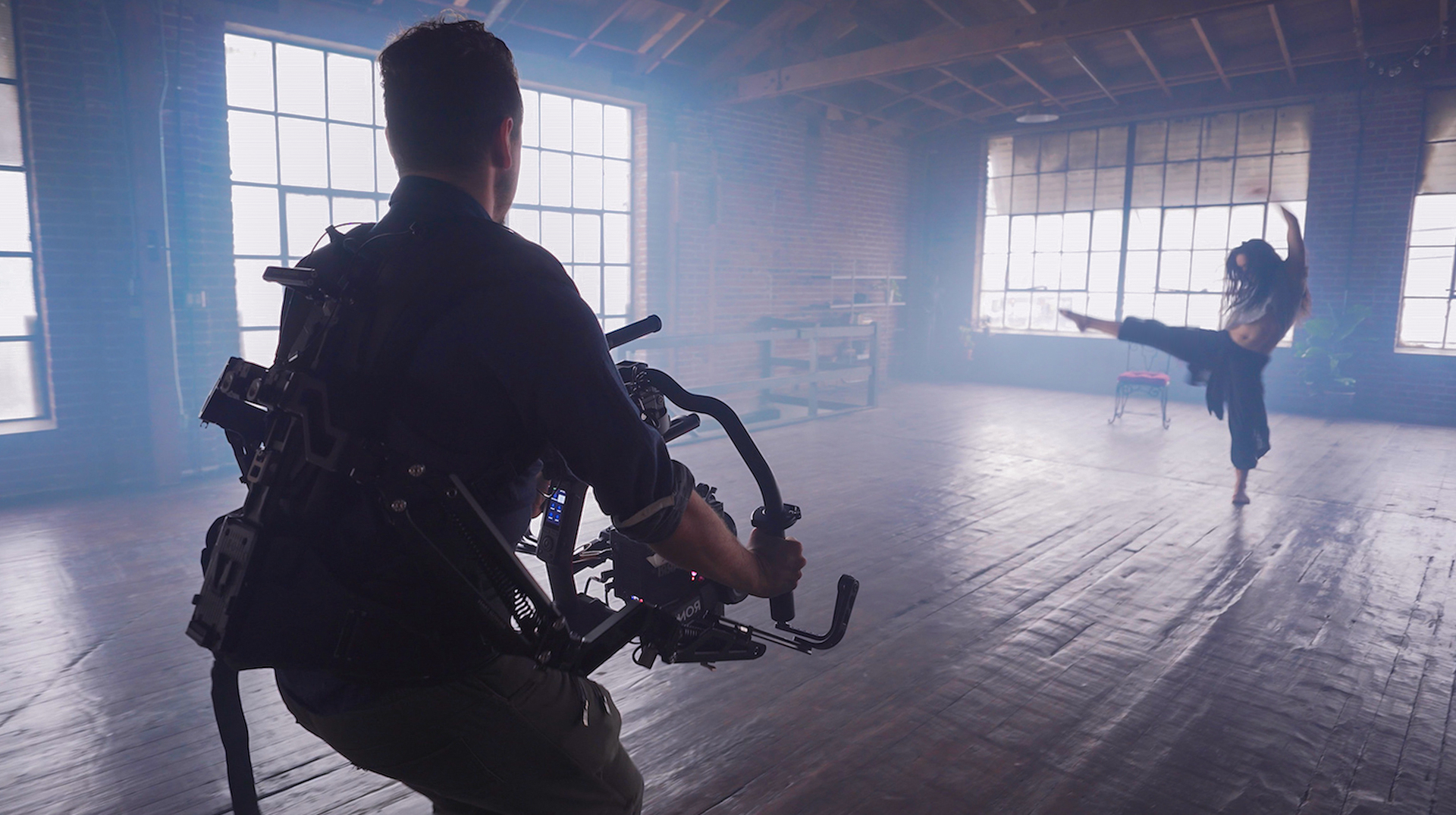
Filming actions requires a complete understanding of the rules and principles of camera shutter speed, that’s what we’ve said before. But there’s more to it. You also need to put framerates into consideration for the best results. The usual framerate out there is 30 fps that are set for many cameras but cameras are evolving and framerates like 60 are being available on more cameras. But if you want to use 60 fps, you need to think about the playback platform and its capacity. But as they say, shooting at 60 fps provides more detailed images of actions you’re filming. But how to set your camera right, according to the relationship between shutter speed and framerate? Well, there is a rule called 180-degree that tells you what to do.
What is the 180-degree rule?
Based on this rule, the framerate determines shutter speed on a ½ basis, so the shutter speed should be twice the framerate. If you plan to shoot on 30 fps, your shutter speed should be set on 1/60, or on 1/120 when shooting in 60 fps. To ease the process, professionals usually use variable ND’s to get what they want. A variable ND (variable neutral density) is a lens filter that controls the incoming amount of light. This way, you can set the shutter speed exactly at the point that it must be, according to the framerate.


“the framerate determines shutter speed on a ½ basis, so the shutter speed should be twice the framerate”
Shutter speed and creativity
Although there is a specific rule for setting shutter speed, playing with it will give you special results that might be interesting for you. One of the ways you can get outta the line is by setting the shutter speed four times higher than the normal (180 rule) to get actions more vivid and somehow dramatic with more emphasis. If you take the process conversely and reduce the shutter speed to one-fourth of the framerate, the result will be a dizzy, motion-blurry video that can be useful to show an unstable state for the character. You can also increase your shutter speed while capturing actions in slow motion to show every movement clearly.
Genre-Specific Shutter Speed Settings for Slow-Motion and Speed Effects
The creative shutter speed principles above become much more powerful when you understand how different genres demand different settings. The choice of shutter speed is not just a technical decision; it determines the emotional texture of every slow-motion or speed-manipulated shot. Here is how shutter speed settings translate into genre-specific creative effects.
Action and Superhero Films: 1/500+ for Crisp Impact
Action sequences and superhero films rely on extremely high shutter speeds, often 1/500 or faster, combined with high frame rates (120 fps or above). This combination captures each frame with razor-sharp clarity, so when the footage is played back at 24 fps, every detail of the action is visible in slow motion without any motion blur. Think of the famous “bullet time” sequence in The Matrix, where the camera circles around Neo as he dodges bullets. That level of per-frame sharpness requires a shutter speed fast enough to freeze each individual moment. The same principle applies to explosion details, fight choreography, and any scene where the audience needs to see exactly what happened in a split second.
The shutter speed setting here directly serves the storytelling purpose: the director is saying “this moment matters, and I want you to see every fragment of it.”
Drama and Romance: Slightly Above the 180° Rule for Emotional Weight
Dramatic slow-motion works differently. Instead of freezing action with clinical sharpness, filmmakers shooting emotional slow-motion often use shutter speeds only slightly above the 180° rule (for example, 1/96 at 48 fps instead of the standard 1/48). This retains a subtle hint of motion blur that makes the movement feel dreamlike rather than hyper-real.
This is the technique behind the classic “falling in love” slow-motion shot, where a character notices someone across a room and time seems to slow. The slight softness created by the moderate shutter speed makes the image feel subjective, as if we are seeing the world through the character’s emotionally heightened perception. The same approach works for crisis moments in drama, where extending a critical action into slow motion builds suspense and lets the audience feel the weight of every second. The ending of Intouchables uses this kind of slow-motion beautifully, pairing it with Ludovico Einaudi’s score to create a contemplative moment that lets the audience absorb the entire story.
Sports and Documentary: 1/250–1/1000 for Analytical Clarity
Sports cinematography uses high shutter speeds (1/250 to 1/1000) for a practical reason: the footage needs to be both visually compelling and analytically useful. When a soccer match uses VAR (Video Assistant Referee), the slow-motion replay must show precisely where a foul occurred, whether a ball crossed a line, or how a tackle made contact. Any motion blur would compromise the accuracy of the review.
The same principle applies to scientific slow-motion, where researchers use extremely high frame rates and correspondingly fast shutter speeds to analyze events that happen too quickly for the human eye, from chemical reactions to ballistic impacts. In both cases, the shutter speed is set for maximum clarity because the purpose of the slow-motion is understanding, not emotion.
Music Videos: Variable Shutter for Stylized Rhythm
Music videos often take the most experimental approach to shutter speed. Filmmakers may vary the shutter speed within a single shoot to create different textures that align with the rhythm and mood of the music. A verse might be shot at a standard 180° shutter for natural movement, while the chorus shifts to a high shutter speed for crisp, punchy slow-motion that hits with the beat.
The isolation effect is particularly powerful in music videos: setting the shutter speed high on the background action (fast-forwarding the crowd or environment) while keeping the artist at normal speed creates a visual separation that emphasizes loneliness or detachment. Ariana Grande’s “Breathin” music video uses exactly this technique, speeding up the world around the artist to show emotional isolation. Reversing the approach, where the artist moves fast while the world stays still, conveys stress and agitation.
Comedy: Fast Shutter + Speed Ramping for Physical Humor
Comedic fast-forward has a long tradition dating back to Charlie Chaplin, where sped-up movement makes physical actions look absurd and exaggerated. The shutter speed consideration here is straightforward: shoot at your standard frame rate and shutter speed, then increase playback speed in post-production. However, if you plan to combine fast-forward with occasional slow-motion punchlines (a technique called speed ramping), you need to shoot at a higher frame rate with a correspondingly fast shutter speed so the slow-motion moments remain sharp when you drop back to normal or reduced speed.
The Key Takeaway for Filmmakers
The 180° rule is your baseline, but creative shutter speed manipulation is where your visual storytelling voice emerges. The genre you are working in should guide your settings: sharp and fast for action and analysis, soft and moderate for emotion and drama, variable for music and experimental work. Understanding these genre conventions does not limit creativity; it gives you a foundation to either follow or deliberately break for effect.
Disclaimer : If you buy something through our links, we may earn an affiliate commission or have a sponsored relationship with the brand, at no cost to you. We recommend only products we genuinely like. Thank you so much.
Blog Label:

Write for us
Publish a Guest Post on Pixflow
Pixflow welcomes guest posts from brands, agencies, and fellow creators who want to contribute genuinely useful content.
Fill the Form ✏