How Bong Joon-ho Uses Blocking to Build Tension
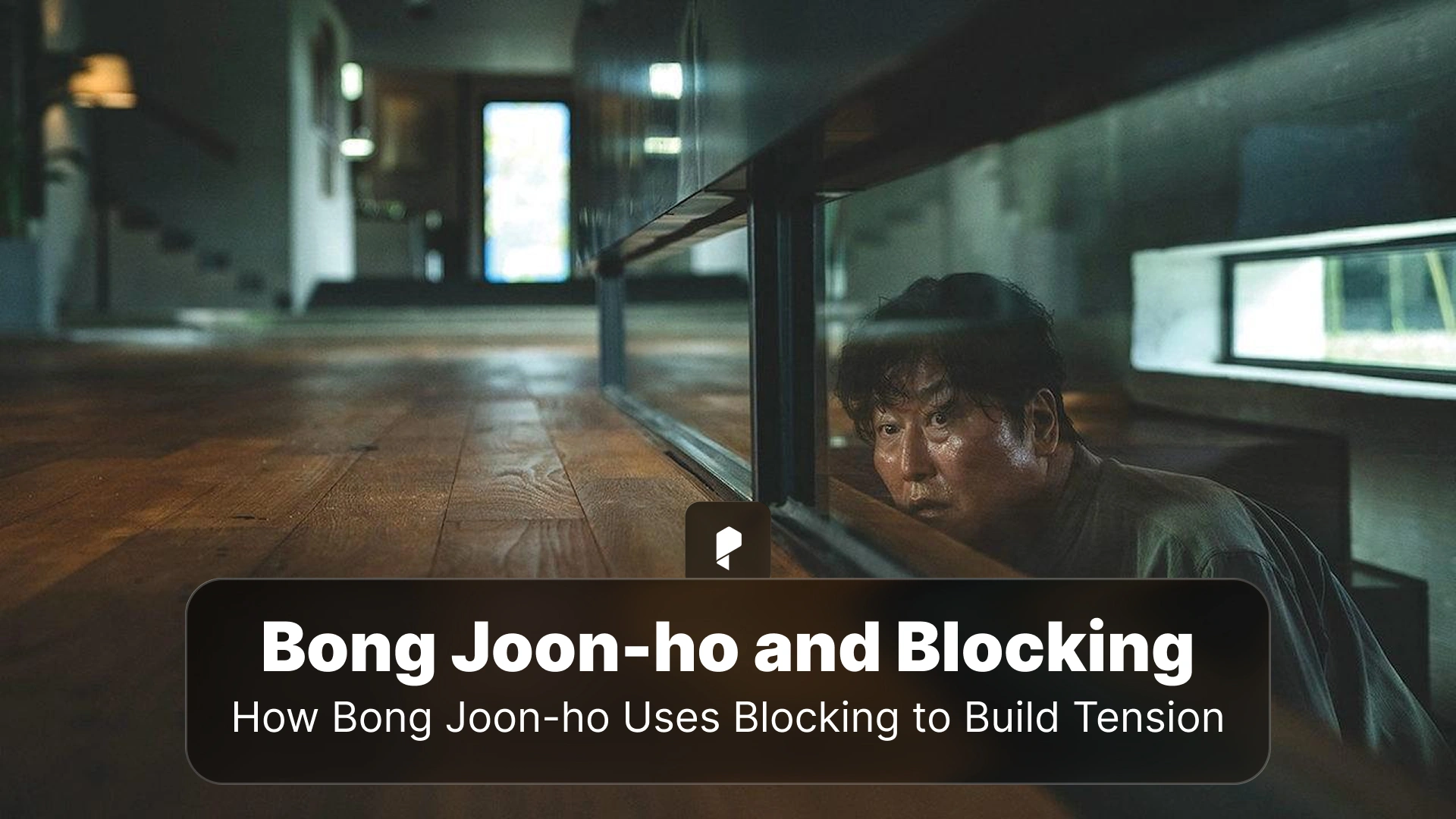
Blocking, in its simplest definition, refers to the planned movement and positioning of actors within a scene, in relation to each other, to the camera, and to the physical space they occupy. It is one of the oldest disciplines in theatrical and cinematic direction, and also one of the most invisible to a casual viewer. When blocking is working at its best, you do not notice it. You simply feel something. Dread. Unease. The creeping certainty that something is about to go wrong.
Bong Joon-ho is a director who treats blocking not as a logistical necessity but as a storytelling language. The way his characters stand, move, cluster, separate, and freeze encodes meaning that the script alone never could. This piece breaks down exactly how he does it.
What Is Blocking and Why Does It Matter?
A skilled cinematographer can make any blocking look beautiful. But only thoughtful blocking can make a scene feel true. When an actor moves toward another character, that is a decision. When they stay rooted while someone approaches them, that is a different decision. When two people stand side by side versus face to face versus with one turned slightly away from the other, each configuration produces a different emotional register in the viewer, often without them being consciously aware of why.
Bong is known for his obsessive pre-production process, particularly his storyboarding. He boards his films panel by panel, working out shots and spatial logic before a single camera rolls. This means his blocking is not improvised on set. It is considered, diagrammed, and intentional from the very beginning. When you watch one of his films and something about the spatial arrangement of bodies feels meaningful, you are right to trust that instinct. It was placed there on purpose.
The Language of Space: How Bong Uses Geography to Signal Power
Parasite makes this explicit as a thematic concern: the Kim family lives in a semi-basement, the Park family on an elevated property with a house built upward on a hill, and the secret resident in the bunker lives even further underground. The class hierarchy of the film is literally a vertical map. But it is in the blocking of individual scenes that this becomes visceral rather than merely symbolic.
Whenever the Kim family is operating in the Park home, Bong repeatedly positions them below the sightlines of the Parks. They crouch, they duck below windows, they descend stairways while the Parks remain at the top. In the scenes where the Kims begin to feel confident and in control – particularly the extended sequence when the Parks leave for a camping trip – Bong allows them to occupy the higher ground in the house for the first time. Then, when things begin to collapse, that spatial privilege is stripped away scene by scene.
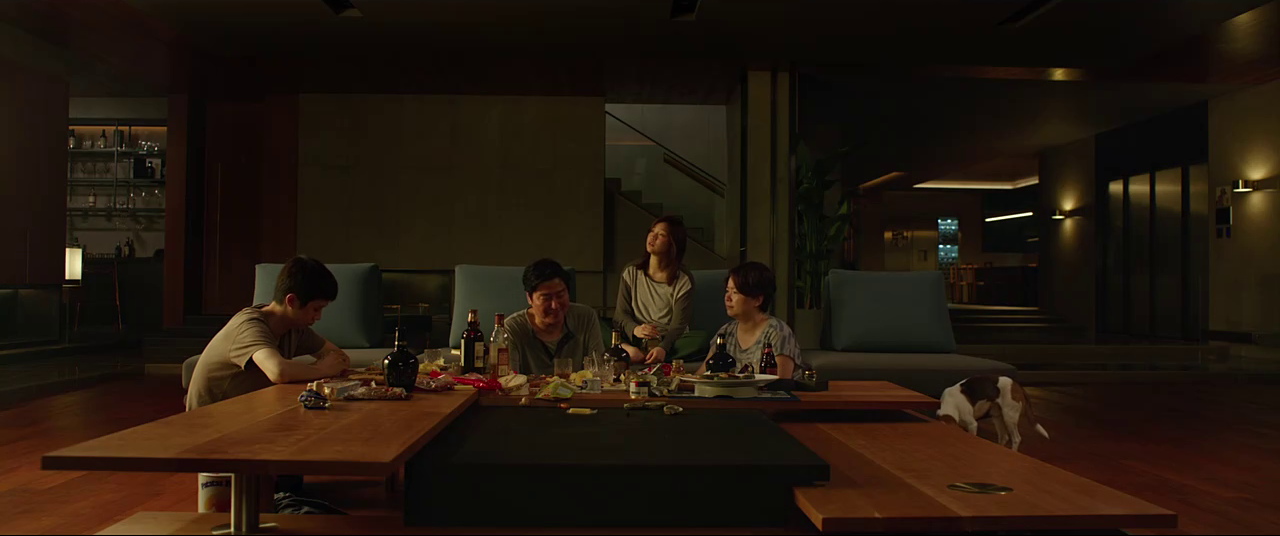
Centering is equally deliberate. Classical framing tends to place important characters at the center of the frame. Bong consistently violates this expectation, pushing characters to the edges, obscuring them behind objects, or splitting the frame between two subjects of unequal power. A character off-center is a character without full claim to the space they are in.
Obstruction and Entrapment: Blocking with Architecture
In most films, architecture serves the scene. Characters move through it. In Bong’s films, architecture actively participates in the blocking. Characters are framed through doorways in ways that make the door frame feel like a cage. They are seen through windows as if under surveillance. They press themselves against walls not because the choreography requires it but because the wall itself communicates something about the character’s confinement.
The semi-basement apartment of the Kim family in Parasite is one of the most carefully blocked environments in recent cinema. Every scene set there uses the architecture to reinforce claustrophobia, precarity, and exposure. The windows sit at ground level, which means the family looks outward at legs and feet, always observing the world from below. When a drunk man urinates against their window, they cannot even confront him directly. They are literally framed below the level of agency.
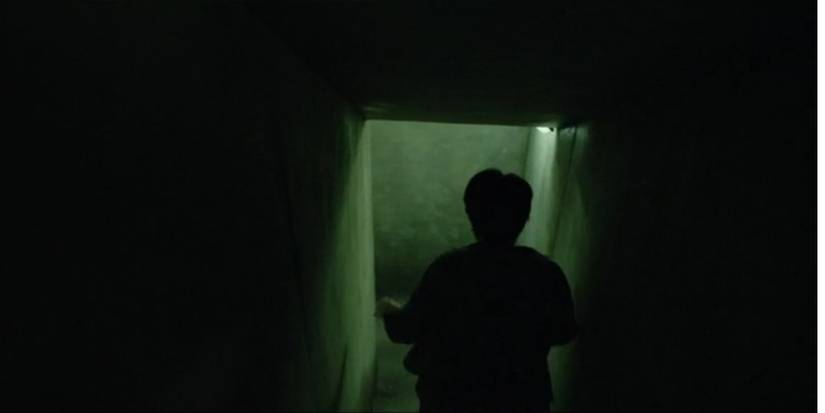
The hidden bunker takes this further. When the secret of the basement is revealed, the blocking of that space is designed to feel labyrinthine and suffocating. Doorways are low, sightlines are obstructed, and the spatial rules of the house the audience thought they understood are suddenly restructured. Bong uses our accumulated spatial memory of the Park home, built through previous scenes, to make the discovery of the bunker feel like a violation of known geography.
In Mother, the narrow corridors and cramped interiors of the small town serve a similar function. The mother is consistently blocked into tight spatial corners, both literally and figuratively. The architecture of the film does not give her room to breathe, and neither do the blocking choices within it.
Movement as Tension: When Characters Move (and When They Don’t)
His most electrifying scenes often feature someone who is completely, deliberately still while chaos or threat assembles around them. This stillness focuses the audience’s attention with extraordinary precision. When everyone else is moving and one person is not, the eye locks onto that person and refuses to leave. Bong exploits this relentlessly.
The garden party sequence in Parasite is a masterclass in this principle. As the crisis builds toward its breaking point, Bong orchestrates movement and stillness in a counterpoint rhythm. Some characters are moving – frantically, purposefully, desperately. Others are frozen, either in shock or in the particular paralysis of someone who has just made an irreversible decision. Ki-taek’s stillness in the final moments before violence erupts is almost unbearable to watch precisely because he is not moving. The camera does not need to push in. The stillness does the work.
When characters do move, Bong’s blocking tends to be choreographed as a kind of spatial negotiation or combat. Characters circle each other without making it obvious they are circling. One advances; the other retreats without appearing to retreat. These micro-movements, invisible if you are watching for plot, register emotionally as the sensation that something is being decided, that a balance of power is shifting in real time.
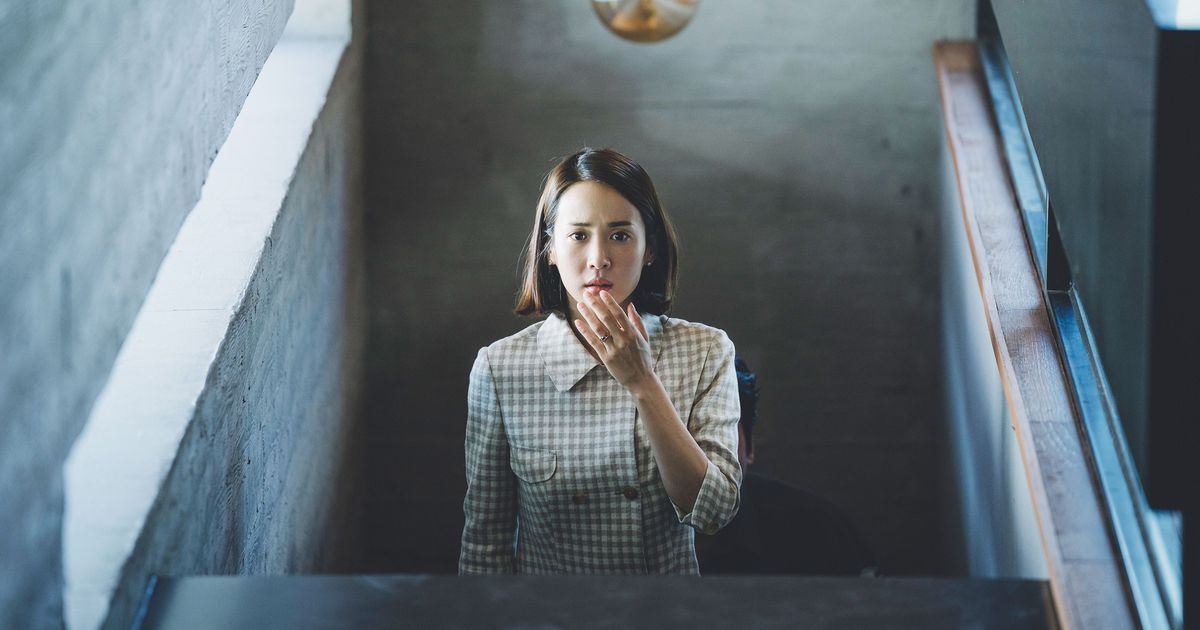
The Group Dynamic: Blocking Multiple Characters to Create Unease
His fundamental technique is to make the spatial arrangement of a group communicate social and power dynamics at a glance. When the Kim family is together in the Park home and the Parks are present, Bong consistently places the Kims in configurations that signal service and subservience: at the periphery of the room, behind the main action, facing toward the Parks rather than facing outward as equals. This is not just staging for realism. It is the film’s class argument rendered in spatial geometry.
Conversely, when the Kims are alone in the Park home during the camping-trip sequence, Bong immediately opens the blocking up. They spread out, occupy the center, drape themselves across furniture. The spatial freedom is visible before they even speak, and it communicates liberation, however temporary and precarious.
The flooding sequence in Parasite uses group blocking in a more visceral register. As the Kim family’s neighborhood floods and they scramble to salvage what they can, the blocking becomes deliberately chaotic and overlapping. Bodies collide with each other, with objects, with walls. The spatial order that has governed every scene up to this point collapses entirely. The flooding is not just water. It is the dissolution of the social and spatial structures the film has been carefully constructing for over an hour.
The dinner table scenes across Bong’s films consistently reveal his attention to who sits where, who faces whom, and where the empty space falls. Absences at tables are as meaningful as presences. A chair slightly pushed back from the group is a character already leaving. A person who has turned their body marginally away from the table’s center is a person who no longer belongs to the consensus in the room.
Blocking in Harmony with Camera: The Director-DP Partnership
Bong’s collaboration with cinematographer Hong Kyung-pyo on Parasite is particularly instructive. Hong’s lens choices – often slightly wide, slightly closer than comfortable – amplify the blocking’s spatial dynamics. A wide lens in a tight space exaggerates depth and distance. Characters who are only a meter apart can feel occupying entirely different planes of the image. This optical distortion, used strategically, makes the spatial relationships established through blocking feel more extreme and therefore more emotionally loaded.
One of Bong’s key camera decisions is when to move the camera and when to lock it down. This is not a cinematographic decision alone. It is a blocking decision. When Bong locks the camera during a tense scene and lets the actors move through the frame, he is trusting the blocking to carry all of the tension. The static frame acts as a container under pressure. When he finally allows the camera to move, it often signals a rupture: the tension has broken, the container has cracked, something has irrevocably changed.
The reverse is equally telling. In scenes of social performance and pretense, particularly scenes where characters are maintaining a fiction in front of each other, Bong tends to use steady, composed shots. The calm of the camera reflects the performed calm of the characters. But the blocking within those still frames is quietly, precisely wrong in ways that signal the audience that what they are watching is a performance within a performance.
Case Study: The Staircase Scene(s) in Parasite
The staircase connecting the front gate to the Park family’s main house is established early as a space of transition and exposure. To climb those stairs is to enter the Park family’s domain. To descend is to return to the city below. Bong’s blocking on and around this staircase consistently uses the vertical axis to establish who has permission and who is trespassing, who belongs and who is performing belonging.
In the sequence where Ki-jung and Ki-woo are navigating the house during the camping trip, the blocking on the staircase is almost playful: they move freely, without the careful spatial discipline they maintain when the Parks are present. The staircase, temporarily, belongs to them. The audience reads this in their movement before understanding it conceptually.
Then there is the climactic sequence. Without detailing every beat for those who have not seen the film, the staircase in the film’s final act becomes the fulcrum around which the entire film’s class argument turns violent. Bong’s blocking during this sequence is constructed so that the vertical geography of the space, established over the previous two hours, suddenly means everything. Who is at the top of the stairs and who is at the bottom at each moment of the sequence determines who has power, who is vulnerable, and who will survive.
There is a specific image – a figure descending from above while another watches from below – that crystallizes the entire film’s spatial logic in a single shot. It works because Bong has spent two hours teaching the audience to read vertical space as a power relationship. By the time that image arrives, no explanation is needed. The blocking has already said everything.
Conclusion
Studying his blocking makes you a better filmmaker because it reveals how much meaning can be communicated before a word is spoken or a plot point lands. It makes you a better viewer because it opens up a layer of the film that is always present but rarely discussed: the spatial argument running beneath the surface of every scene.
In Bong’s films, the room itself has something to say. The stairs take a position. The doorway has an opinion. Learning to read that language is learning to watch film at its deepest level.
Disclaimer : If you buy something through our links, we may earn an affiliate commission or have a sponsored relationship with the brand, at no cost to you. We recommend only products we genuinely like. Thank you so much.


Write for us
Publish a Guest Post on Pixflow
Pixflow welcomes guest posts from brands, agencies, and fellow creators who want to contribute genuinely useful content.
Fill the Form ✏