Cinematography Techniques: The Ultimate Visual Storytelling Guide for Filmmakers
- What Is Cinematography (and Why It's the Heart of Visual Storytelling)
- The Golden Rule: Show, Don't Tell
- Shot Composition: Framing the Story
- Shot Sizes and What They Communicate
- Camera Angles: The Storyteller's Power Tool
- Camera Movement: Bringing Energy to the Frame
- Lens Choice and Focal Length
- Lighting as Visual Storytelling
- Color and Color Psychology
- Mise-en-Scène: Everything in the Frame Tells a Story
- Editing as Visual Storytelling
- Sound and Music as Storytelling Partners
- Iconic Film Case Studies
- Common Visual Storytelling Mistakes (and How to Fix Them)
- Bringing It All Together: A Filmmaker's Visual Workflow
- Conclusion
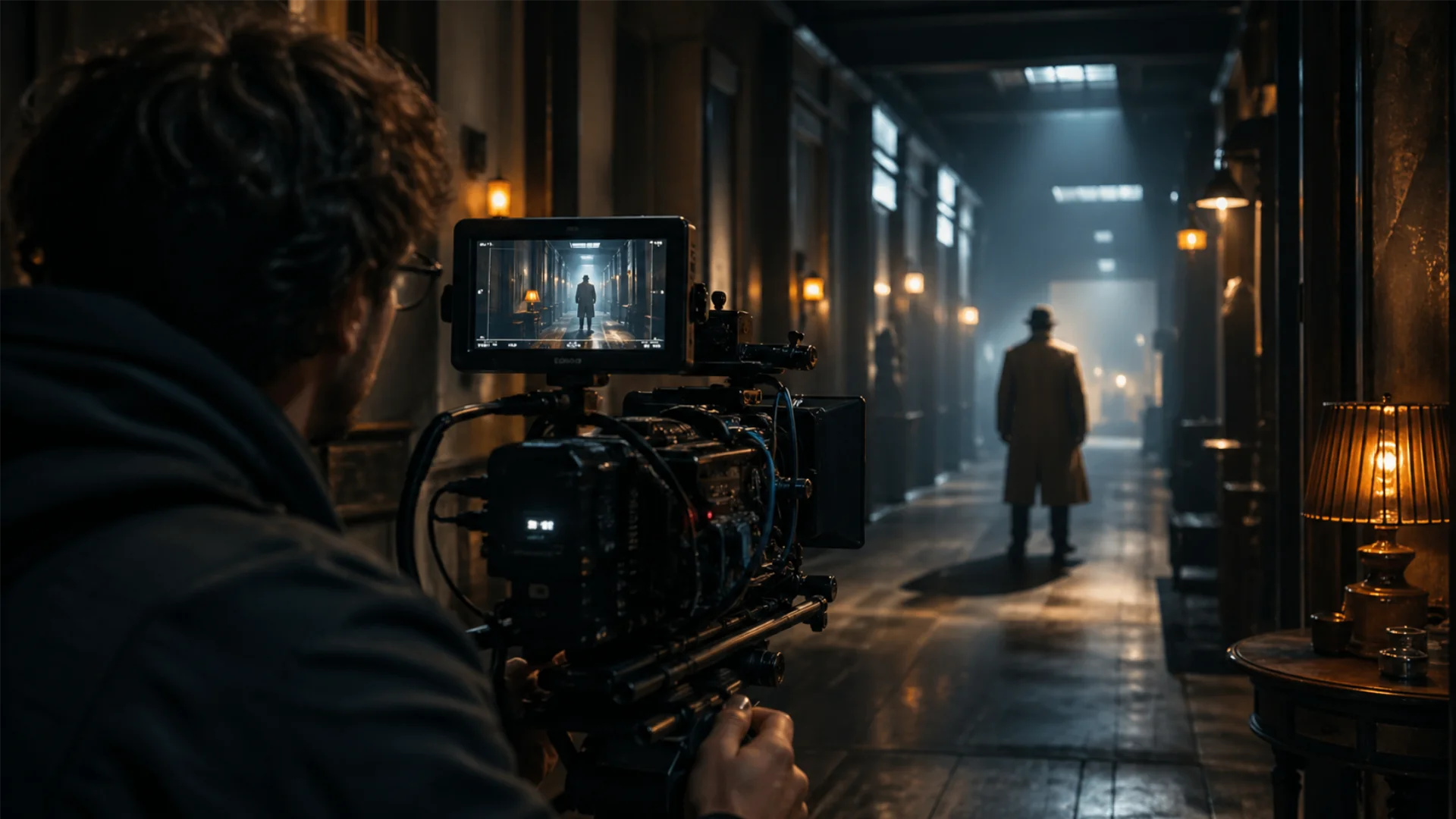
That moment isn’t an accident. It’s cinematography doing what cinematography does best: telling the story without saying a word.
Here’s the thing. Cinematography techniques are not just a checklist of camera tricks. They’re the visual grammar you use to make audiences feel something. The rule of thirds, lens choice, lighting, color, camera movement, every decision is a sentence in the language of film. When you string those sentences together with intention, you stop recording a story and start telling one.
In this guide, we’re going deep into the cinematography techniques that power great visual storytelling, the ones working filmmakers, indie creators, and YouTube directors actually use. Whether you’re picking up a camera for the first time or refining a craft you’ve been developing for years, you’ll walk away with a clearer eye, a sharper toolkit, and a stronger sense of why every shot matters.
Let’s get into it.
What Is Cinematography (and Why It’s the Heart of Visual Storytelling)
But a tighter, more useful definition is this: cinematography is the art of telling stories with light and motion.
And visual storytelling is the bigger umbrella. Visual storytelling is any method of communicating narrative through images instead of words, whether it’s a feature film, a documentary, a music video, a brand commercial, or a 30-second TikTok. Cinematography is the engine that drives visual storytelling in moving pictures. And the human brain is built for it: as Sessions College points out, we process images roughly 60,000 times faster than text, which is exactly why a single well-composed frame can do what a paragraph of dialogue can’t.
The two are inseparable. Cinematography without storytelling is empty pretty footage. Storytelling without strong cinematography never lands with the impact it could.
The Golden Rule: Show, Don’t Tell
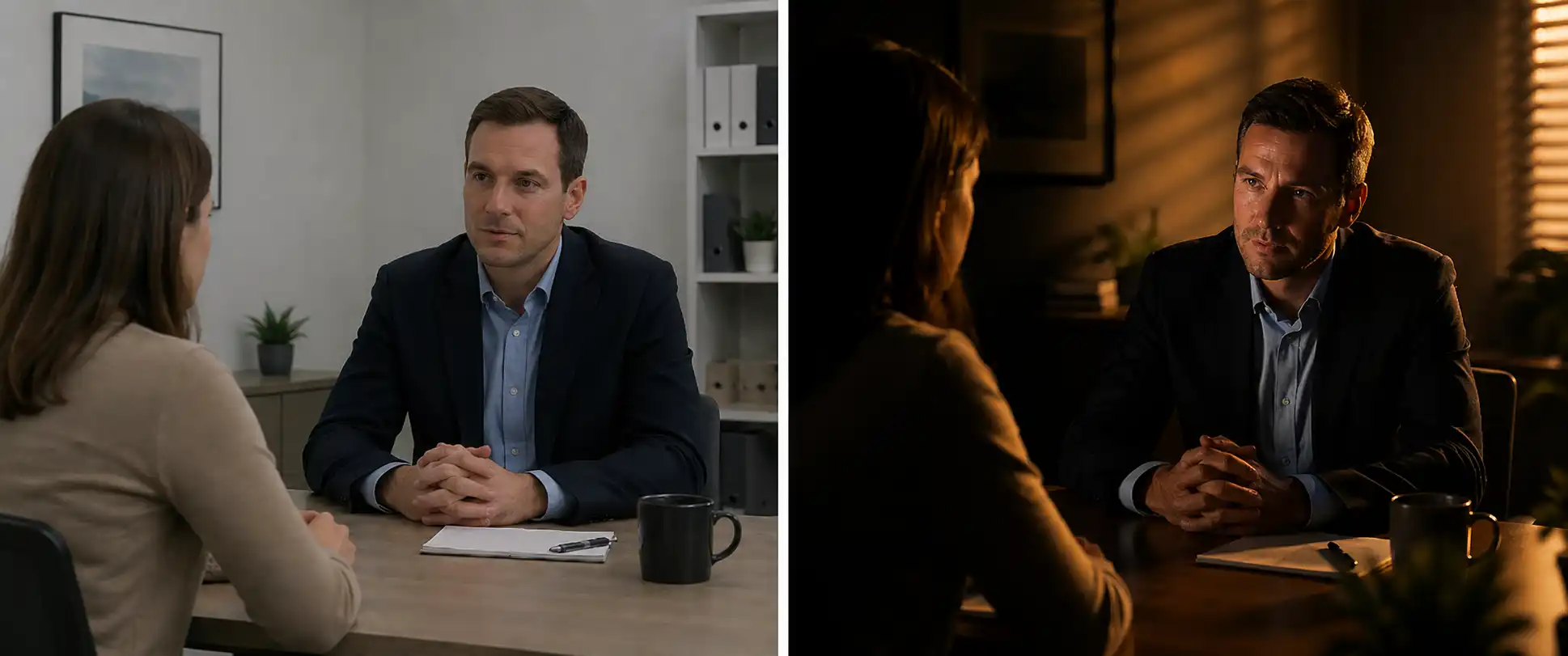
Dialogue tells. Visuals show. And audiences trust what they see far more than what they’re told. As No Film School emphasizes in its primer on visual storytelling techniques, every shot should earn its place. If a frame isn’t pulling weight in the story, it’s pulling weight away from it.
Think about the opening of Up. In about four minutes of nearly silent footage, Pixar takes you through Carl and Ellie’s entire marriage: their dreams, their disappointments, their quiet love, and finally, their loss. There’s almost no dialogue. There doesn’t need to be. The images do all the work.
Storytelling Is Depicting Change
A powerful frame to think about visual storytelling: a story is a depiction of change. A character starts somewhere emotionally, physically, or morally, and ends up somewhere else. Your job as a cinematographer is to visualize that change.
That shift can be:
- Time-based (a character ages, a season turns, a city evolves)
- Emotional (joy collapses into grief, fear grows into courage)
- Spatial (a character moves from comfort to danger, from confinement to openness)
- Moral (a hero compromises, a villain finds redemption)
Every shot, every cut, every lighting choice should be in service of showing that change. (The Video Effect’s piece on filmmaking craft and visual storytelling is a great read on building this instinct as a modern creator.) When you frame a scene, ask yourself: “What’s different now compared to before? How can I make that visible?”
A Quick Test
Mute your edit. Does the story still make sense? If yes, your visual storytelling is doing its job. If you have no idea what’s happening without dialogue, your visuals aren’t carrying their share of the load yet.
The filmmakers we admire most (Kubrick, Villeneuve, Wong Kar-wai, Bong Joon-ho, the Coen Brothers) pass this test effortlessly. Their films work as silent films first, and that’s exactly why their dialogue feels so impactful when it does arrive.
Shot Composition: Framing the Story
Master these composition rules and your shots will instantly look more intentional.
The Rule of Thirds
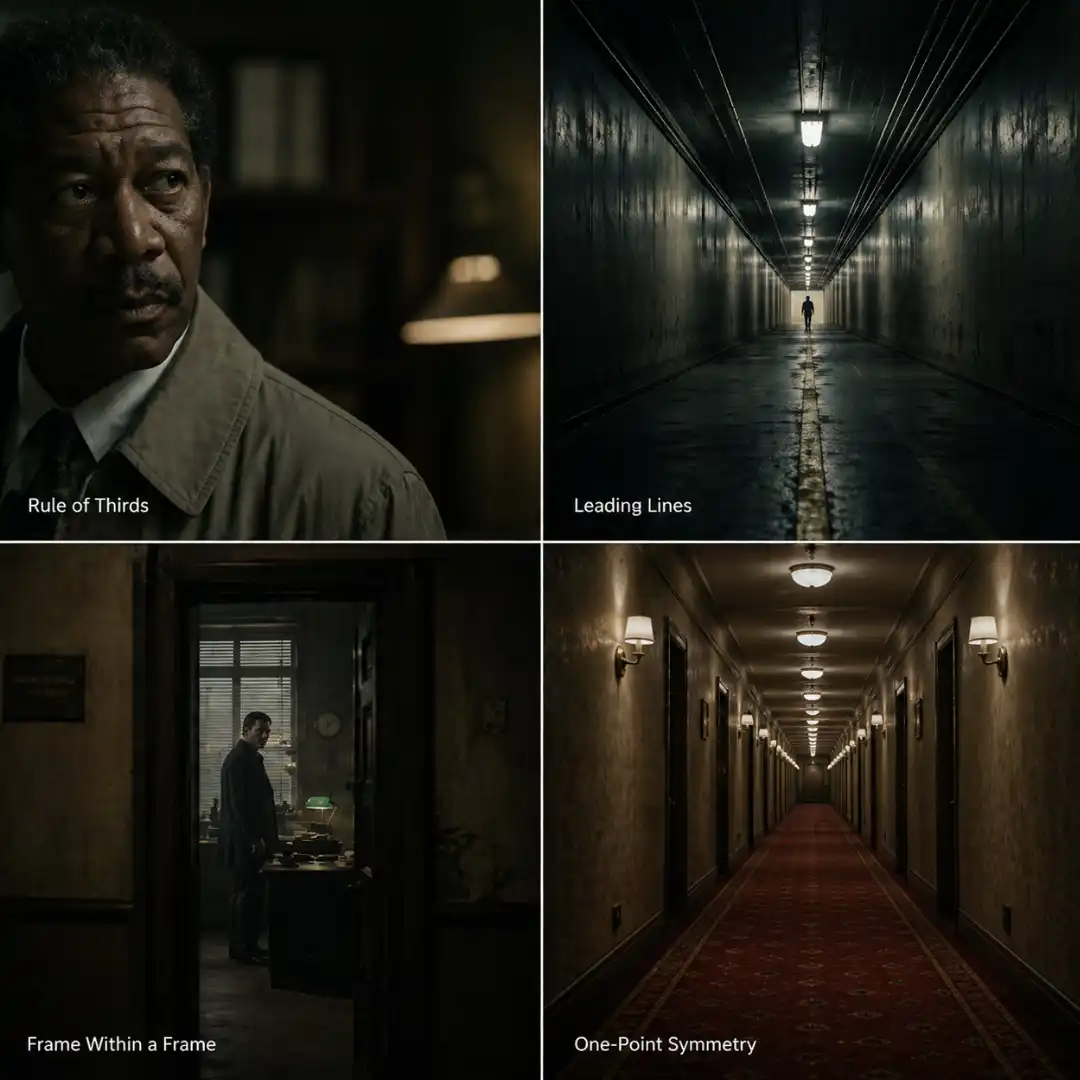
Divide your frame into a 3×3 grid (most cameras have this overlay built in). Place your subject’s eyes, key action, or important visual elements along those lines or at the intersections.
Why it works: centered subjects can feel static and confrontational. Off-center subjects feel dynamic and create breathing room for context, environment, and movement. StudioBinder’s deep dive on the rule of thirds walks through dozens of examples if you want to study how working cinematographers apply it.
The Shape of Water uses the rule of thirds beautifully. Elisa is rarely centered, which gives the underwater world and her aquatic companion room to coexist with her in the frame. The composition itself tells you these two beings share a world.
Leading Lines
Use roads, hallways, fences, light beams, and architectural shapes to guide the viewer’s eye toward your subject.
Blade Runner 2049 is a masterclass in leading lines. Roger Deakins constantly uses corridors, neon strips, and architectural geometry to pull you toward K, often making him feel small inside an indifferent world. (For a deep dive on this look, our Blade Runner 2049 cinematography breakdown walks through the visual playbook shot by shot.)
Frame Within a Frame
Use doorways, windows, mirrors, archways, or foreground objects to create a frame inside your main frame. This adds depth, draws attention, and often comments on the character’s emotional state (trapped, observed, isolated, voyeuristic).
Citizen Kane and The Searchers use this technique iconically. The famous final shot of The Searchers, with Ethan framed by the cabin doorway, tells you everything about his place in the world without a single word.
Headroom, Lookroom, and Negative Space
- Headroom is the space above a character’s head. Too much and they look small. Too little and the frame feels claustrophobic.
- Lookroom (or nose room) is the space in the direction a character is facing. Without it, the viewer feels something is off.
- Negative space is the empty area around your subject. Used well, it amplifies isolation, scale, or meditative stillness.
Lost in Translation uses negative space to communicate Bob and Charlotte’s isolation in a city that overwhelms them. The empty space around them does as much storytelling as any line of dialogue.
Symmetry and Balance
Symmetry signals control, order, formality, sometimes obsession. Stanley Kubrick built an entire visual identity around it.
One-point perspective and centered framing in films like The Shining and 2001: A Space Odyssey create a stark, almost unnatural sense of precision that pulls you into the world’s psychology. Wes Anderson uses symmetry to a different effect, evoking dollhouse whimsy and emotional distance.
To see exactly how a master uses this, our breakdown of Kubrick’s symmetry and one-point perspective is essential reading.
Shot Sizes and What They Communicate
Extreme Wide Shot (EWS)
The character is tiny against a vast environment. Use it to establish scale, isolation, or a character’s place in a larger world.
Lawrence of Arabia practically invented the modern EWS, using it to make Lawrence look like a single grain of sand against the desert.
Wide Shot (WS) / Long Shot
Shows the full character within their environment. Great for establishing geography, blocking, and character relationships.
Medium Shot (MS)
Shows a character from roughly the waist up. The conversational workhorse of cinema. Comfortable, neutral, lets dialogue breathe.
Medium Close-Up (MCU)
From mid-chest up. Closer to emotion than a medium, but still leaves some breathing room. Common in interviews and dialogue scenes.
Close-Up (CU)
Face fills most of the frame. The single most powerful tool for emotional intimacy. Use it when the audience needs to feel exactly what the character feels.
Think of Anton Chigurh’s calm, predatory close-up in No Country for Old Men. The tension lives entirely in his eyes.
Extreme Close-Up (ECU)
A single feature: an eye, a hand, a trembling lip. Maximum intensity. Use sparingly, because every ECU is a punctuation mark.
Sergio Leone built whole sequences out of ECUs in The Good, the Bad and the Ugly. The standoff is unforgettable precisely because Leone holds on those eyes far longer than feels comfortable.
Two-Shot, Over-the-Shoulder (OTS), and POV
- Two-shot: two characters in the same frame. The composition can show closeness, separation, or hierarchy.
- Over-the-shoulder (OTS): standard for dialogue, shot from behind one character’s shoulder onto the other.
- POV (point of view): what the character is seeing. Used well, POV puts the audience inside the character’s head.
Enter the Void takes POV to its extreme, shooting most of the film from inside the protagonist’s perspective, creating an unsettling, unforgettable subjectivity.
Camera Angles: The Storyteller’s Power Tool
Eye Level
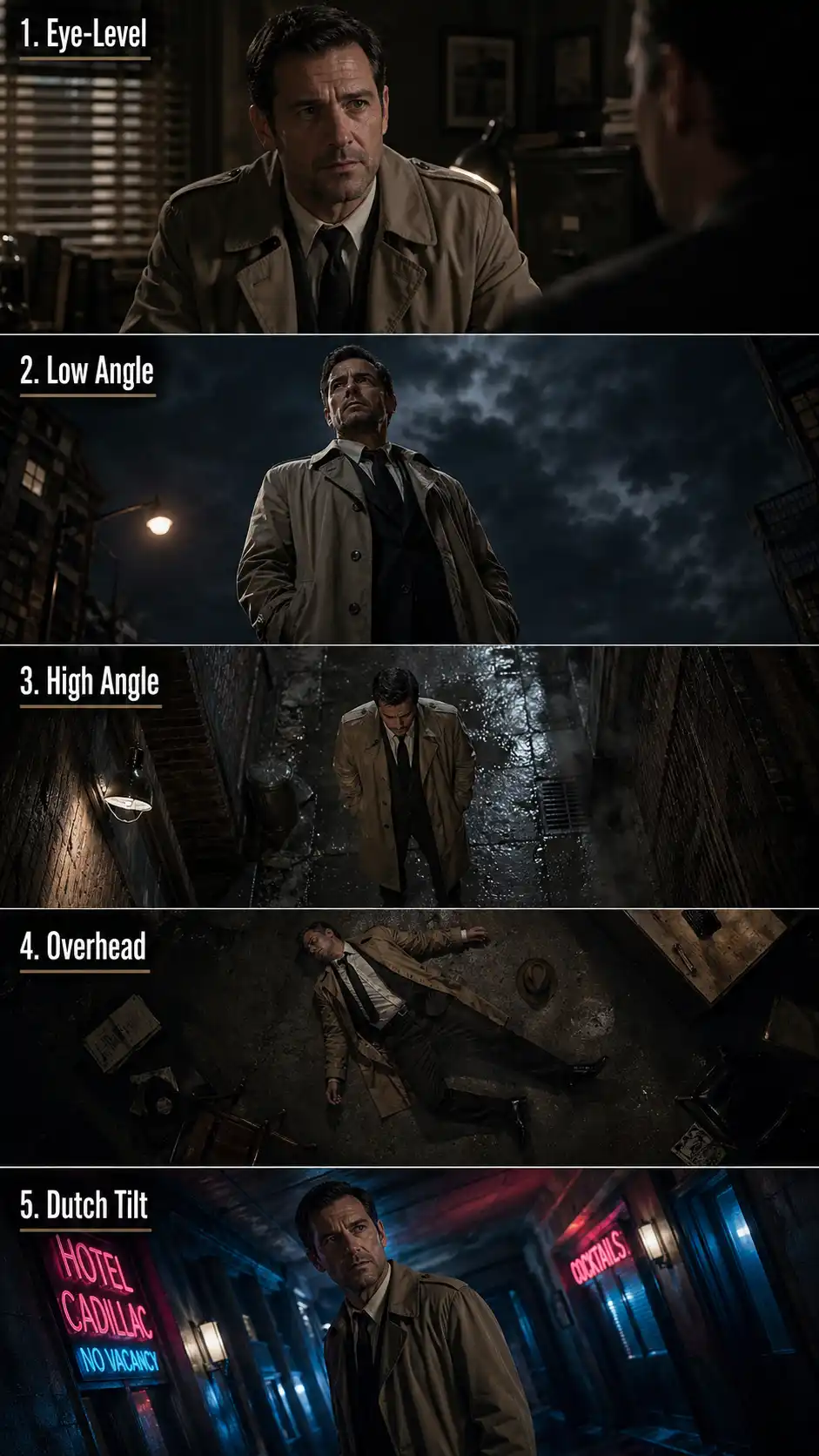
Neutral. The audience meets the character as an equal. It’s the most common angle precisely because it’s invisible. We have a full breakdown of when (and when not) to use it in our eye level shot guide.
Low Angle
The camera looks up at the subject. Communicates power, dominance, heroism, or threat. Think of how The Dark Knight introduces Heath Ledger’s Joker, or how superheroes are constantly shot from below to make them feel mythic. Our low angle shot tips and best practices digs into the emotional weight of this angle.
High Angle
The camera looks down. Communicates vulnerability, weakness, smallness, or moral judgment. Useful when a character is overwhelmed, defeated, or being observed. See our high angle shot deep dive for breakdowns of how this angle reshapes character power dynamics.
Overhead (Bird’s Eye / God’s Eye)
Looking straight down. Detached, omniscient, sometimes geometric and beautiful. Wes Anderson and Stanley Kubrick both lean on it for distinct reasons. Our overhead shot guide explores why this angle creates such a unique storytelling perspective.
Dutch Tilt (Canted Angle)
The camera is tilted off horizontal. Signals unease, instability, danger, or psychological disturbance. Used heavily in German Expressionism (The Cabinet of Dr. Caligari), and modern thrillers like Battlefield Earth (where, fairly or not, it became the example of how not to overuse it).
Camera Movement: Bringing Energy to the Frame
Static Shot
The camera doesn’t move. Creates stillness, stability, observation. Often the most powerful choice when emotion is doing the heavy lifting.
Phantom Thread uses static shots to lock you into Reynolds Woodcock’s rigid, controlled world. The camera barely moves, and that stillness becomes its own kind of tension.
Pan and Tilt
The camera rotates horizontally (pan) or vertically (tilt) on a fixed axis. Useful for following action or revealing information piece by piece.
Dolly and Tracking Shots
The camera physically moves through space, on rails, wheels, or a gimbal. Tracking creates immersion, urgency, and visceral connection.
Goodfellas contains one of cinema’s most famous tracking shots: the unbroken Copacabana sequence following Henry and Karen through the kitchen and into the club. It puts you inside their seductive, illicit world in a way no cut ever could.
Crane and Jib Shots
Vertical sweeping movement, usually rising or falling. Great for scale, reveals, and emotional climaxes. We’ve broken down the storytelling power of crane shots in detail.
Handheld
Intentionally unsteady. Creates immediacy, realism, and emotional rawness. Used heavily in The Bourne franchise, Children of Men, and almost all of Paul Greengrass’s work.
Steadicam and Gimbal
Smooth, floating movement. The Steadicam revolutionized cinema by letting cameras glide through impossible spaces without rails. The Shining‘s Big Wheel sequence is the textbook example.
POV and Handheld Subjective
Movement that mimics a character’s perspective. Used to put the audience inside someone’s head.
Long Takes / Oners
A single unbroken shot, often used to build tension or showcase craft. 1917 sells you the illusion of a continuous two-hour shot, and the result is an immersion almost no other war film matches. (Our breakdown of why 1917’s cinematography earned its Oscars goes deep on the technique.)
David Fincher takes camera movement in a different direction entirely. He uses precise, controlled, almost imperceptible movement to create unease and surveillance. We unpack his approach in How David Fincher Uses Camera Movement for Control and Tension.
A Note on Motion Direction
In most Western cinema, left-to-right motion feels natural and forward-moving (we read left to right). Right-to-left motion feels regressive, ominous, or against the grain. Lawrence of Arabia uses right-to-left desert crossings to subtly suggest Lawrence is moving against destiny.
Lens Choice and Focal Length
Wide-Angle Lenses (14mm to 35mm)
- Exaggerate space and depth
- Make environments feel large and characters feel small (or, up close, distorted and unsettling)
- Great for establishing shots, action, immersive POV
Terry Gilliam’s films lean heavily on wide-angle distortion to make the world feel slightly off. The Coen Brothers use wide lenses in Fargo and Raising Arizona to make characters look both comic and trapped.
Standard Lenses (40mm to 60mm)
- Closest to how the human eye sees
- Neutral, natural perspective
- The classic 50mm is often called the “storytelling lens”
Telephoto Lenses (85mm and up)
- Compress depth, flattening foreground and background
- Isolate the subject from the environment
- Create that creamy, shallow-focus background (bokeh) we associate with intimacy
The Graduate uses telephoto compression in its iconic running sequence to make Ben look like he’s running in place, brilliantly visualizing his existential paralysis.
Anamorphic Lenses
Produce that ultra-widescreen 2.39:1 frame, oval bokeh, horizontal lens flares, and a distinctive cinematic stretch. Think Dunkirk, Star Wars, The Master. Anamorphic instantly says “this is cinema.”
Lens Choice on Faces
One of the easiest visual storytelling shifts: the same face on a wide lens looks suspicious, distorted, or comic. On a long lens, it looks heroic, romantic, or contemplative. Choose accordingly.
Lighting as Visual Storytelling
High-Key Lighting
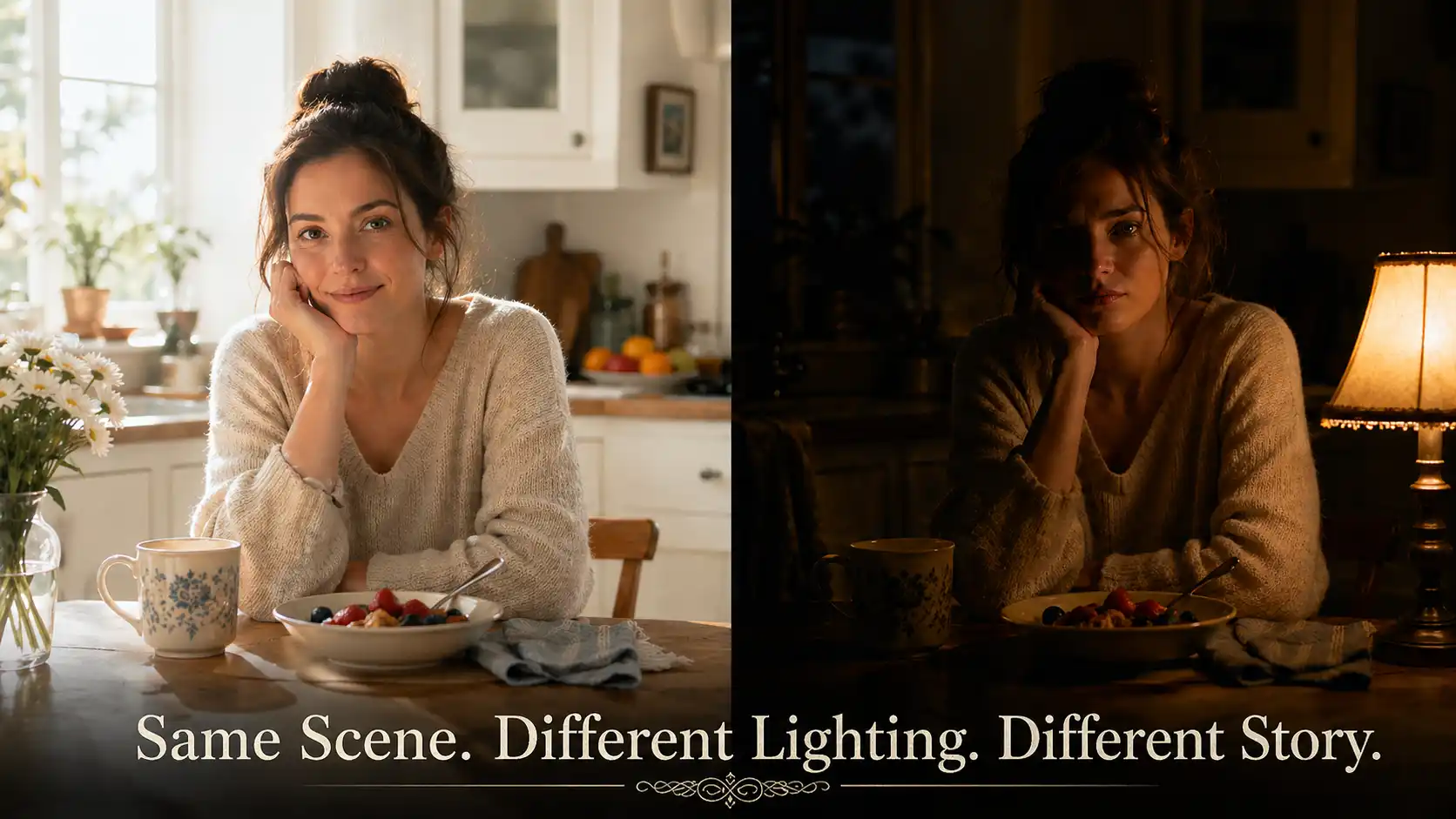
Bright, even, low-contrast. Few shadows. Common in comedies, sitcoms, romcoms, music videos, and commercials. Communicates safety, levity, openness.
Low-Key Lighting
High contrast, deep shadows, selective illumination. Common in noir, thrillers, horror, and prestige drama. Communicates secrecy, danger, moral ambiguity.
Sin City and the original Blade Runner push low-key into stylized extremes. Most film noir lives here too.
Chiaroscuro
The extreme contrast of light and dark, borrowed from Renaissance painters like Caravaggio. Half a face in light, half in shadow. The visual shorthand for moral duality.
The Godfather opens with chiaroscuro. Vito Corleone’s face emerges from total darkness, telling you everything about the man before he says a word. Roger Deakins’s work on 1984 and The Shawshank Redemption leans on chiaroscuro for emotional weight too.
Three-Point Lighting
The traditional setup: key light (main illumination), fill light (softens shadows), back light (separates subject from background). Master this, then learn when to break it.
Motivated Lighting
Light that appears to come from a real source within the scene: a window, a lamp, a fire, headlights. Even when it’s faked with cinema lights, motivated lighting feels organic and grounded.
Practical Lights
On-screen, in-frame lights: neon signs, table lamps, candles, computer monitors. They become part of the production design and the storytelling. In the Mood for Love uses practicals to drench every frame in melancholy gold.
Color Temperature
- Warm light (tungsten, orange, gold) feels nostalgic, intimate, comforting, sometimes oppressive
- Cool light (daylight, blue, teal) feels distant, sterile, melancholic, or modern
Mixing temperatures inside the same frame is one of cinematography’s most expressive tricks. Drive and John Wick both use warm-cool color contrast inside individual shots to build tension.
For a deeper look at how the technical side of light meets the creative, our piece on shutter speed for content and video production helps connect exposure decisions to storytelling intent.
Color and Color Psychology
Color Associations (Western Cinema)
- Red: passion, danger, violence, power, sacrifice
- Blue: sadness, calm, isolation, technology, nostalgia
- Green: envy, nature, sickness, the supernatural, money
- Yellow: energy, joy, warning, deceit
- Orange: warmth, intimacy, autumn, action
- Purple: royalty, mystery, fantasy, spirituality
- Black: death, evil, sophistication, the unknown
- White: purity, sterility, peace, emptiness
These aren’t rules. They’re starting points. Great filmmakers play against expectations all the time.
Color Palettes That Tell Stories
A consistent palette gives a film a visual identity. The Matrix lives in green digital hues to signal the artificial world. Schindler’s List uses black and white to make a single red coat unforgettable. Mad Max: Fury Road uses orange day and teal night, the most aggressive color contrast in modern action cinema.
Wes Anderson builds entire films around tightly curated palettes. Our ultimate guide to Wes Anderson’s color palette breaks down exactly how he does it.
Denis Villeneuve takes a different approach, using color to elevate emotional and thematic weight. We dig into it in How Denis Villeneuve Uses Color Palettes to Elevate Storytelling.
And if you want to develop your own film palette analysis skills, our step-by-step movie color palette analysis guide is a great starting point.
Color as Character Arc
Color can track a character’s emotional journey. Her progresses from warm reds and oranges (love, passion) to cool blues and grays (loss, distance) as Theodore’s relationship dissolves. Inside Out literally builds its characters out of emotional colors.
Discordant Color
Clashing colors create visual tension. When characters in conflicting palettes share a frame, the discord visually previews a clash to come. Our piece on discordant colors in film shows how filmmakers weaponize this.
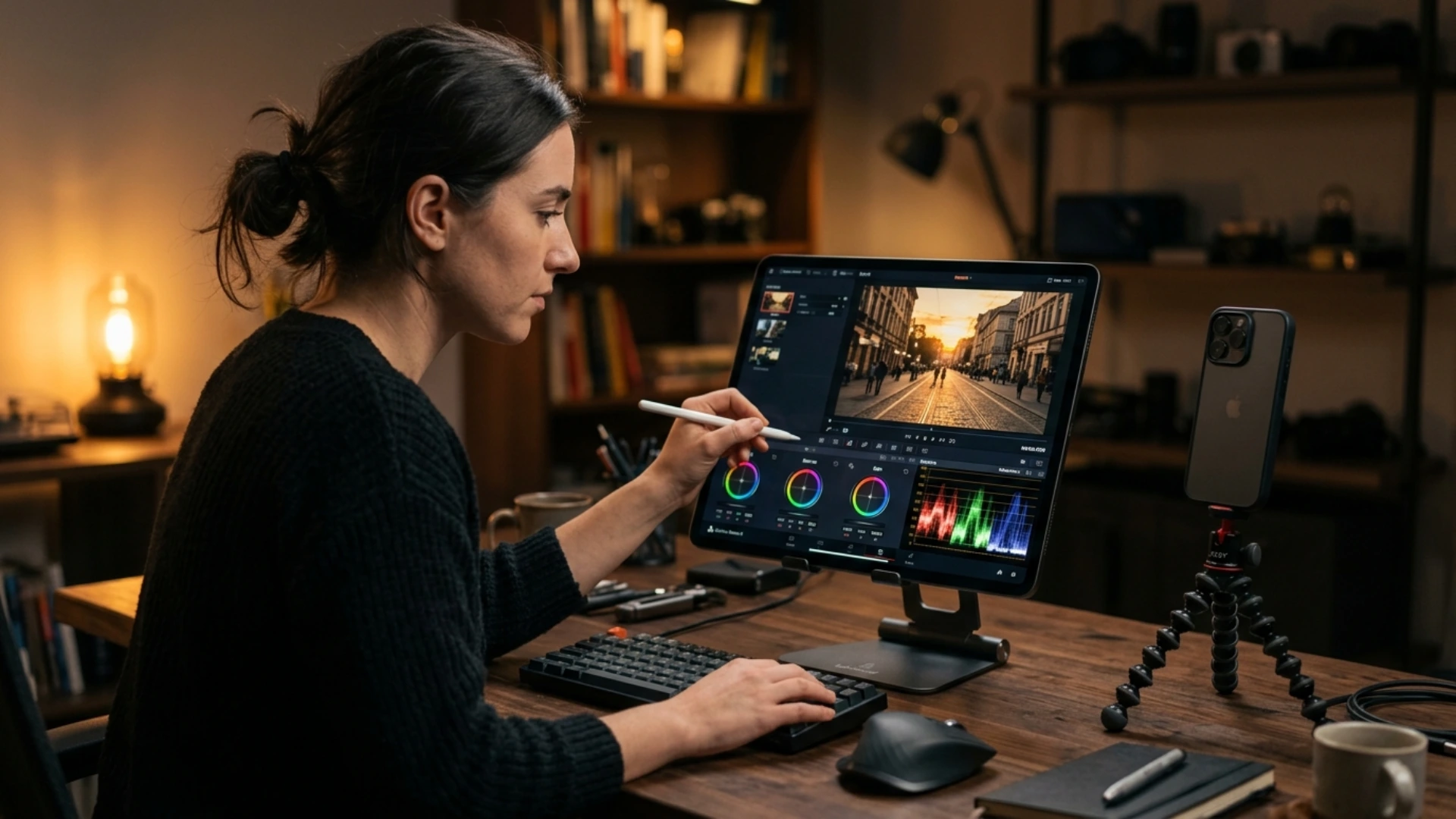
Bringing the Cinematic Look in Post
The modern cinematic look is built as much in the grade as on set. If you want that real film stock feel, complete with authentic grain, Kodak and Fuji emulation, letterboxes, and LUTs, our Film Emulation Pro gives you everything in one drop-in pack. Pair it with intentional in-camera lighting and you’ll close the gap between “video” and “cinema” faster than you’d believe.
Mise-en-Scène: Everything in the Frame Tells a Story
Production Design and Set Decoration
A cluttered apartment tells you something about a character. So does an immaculate one. Parasite uses the architectural difference between the Park family’s pristine modernist home and the Kim family’s semi-basement to be the entire thematic engine of the film.
Costume
Color, silhouette, period, condition. The Royal Tenenbaums dresses each character in a single uniform that telegraphs their entire psychology in one glance.
Blocking and Staging
Where actors stand and how they move within the frame is one of the most underrated storytelling tools in cinema. Bong Joon-ho is one of the absolute masters. Our breakdown of how Bong Joon-ho uses blocking to build tension is required reading on this.
A quick rule: characters in conflict should rarely share comfortable space. Use depth, angle, blocking, and frame edges to visualize their dynamic.
Depth and Layers
A strong frame has visual interest in foreground, middleground, and background. Layering pulls the eye through the image and creates the illusion of a real, breathing world.
Props
A single prop can carry an entire arc. The bowler hat in Miller’s Crossing. The spinning top in Inception. The conch in Lord of the Flies. Pick props with intention.
Editing as Visual Storytelling
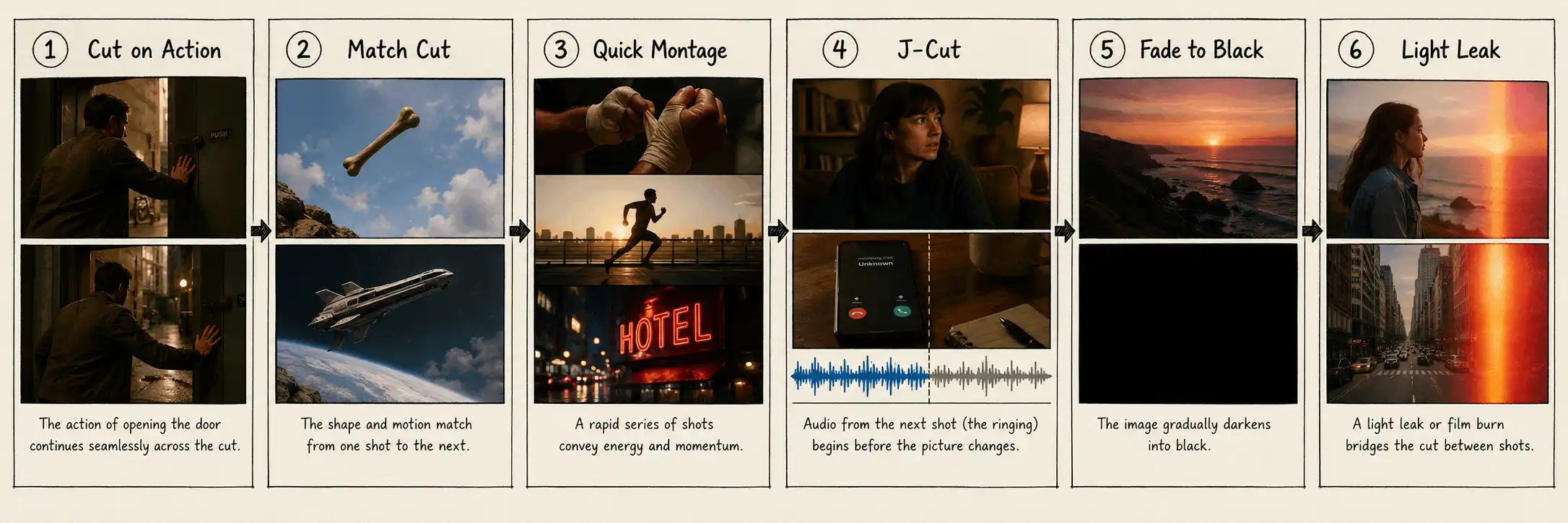
Cut on Action
Match movement across cuts. The viewer’s eye follows motion, so an action cut feels invisible and natural.
Match Cut
Link two shots through visual or thematic similarity. The most famous match cut in cinema is 2001: A Space Odyssey‘s bone-to-spaceship transition, leaping millions of years of human evolution in a single frame.
Montage
A series of short shots compressed into a sequence that conveys time, transformation, or theme. The Soviet montage tradition (Eisenstein, Vertov) basically invented modern editing as a meaning-making tool.
Rhythm and Pacing
Fast cuts create energy and tension. Long takes create immersion and weight. The pace of your edit is the pace of the story.
J-Cuts and L-Cuts
Let audio overlap visual cuts so transitions feel seamless. Audio leading the cut (J-cut) signals what’s coming. Audio trailing the cut (L-cut) creates emotional continuity. Both are foundational dialogue tools.
Transitions That Mean Something
Most cuts should be invisible. But occasionally, a deliberate transition (a fade to black, a whip pan, a light leak, a film burn) can carry emotional weight. They mark chapter breaks, time jumps, or thematic shifts.
If you want to build that organic, in-camera light leak feel without rebuilding it from scratch, our Luminous Light Leak Transitions pack gives you 80 4K transitions including film burns and authentic-looking light leaks. Drop them in where you need that soft, emotional bridge between scenes. (Your timeline will thank you.)
Sound and Music as Storytelling Partners
Diegetic vs. Non-Diegetic Sound
- Diegetic sound exists in the world of the film (a character’s footsteps, a ringing phone, music playing on a car radio).
- Non-diegetic sound doesn’t (the score, voice-over narration, sound design from outside the world).
Mixing the two intentionally creates layered storytelling.
Score as Subtext
A scene of two people sitting silently can feel like love, dread, or comedy depending entirely on the score. Composers like Hans Zimmer, Hildur Guðnadóttir, and Jonny Greenwood have become co-authors of modern visual storytelling.
Silence
The most underrated tool. A Quiet Place and Sound of Metal both use the absence of sound to make audiences feel what their characters feel. Silence is its own visual storytelling partner.
Sync Points
When visual rhythm aligns with audio rhythm (a beat drop landing on a cut, a music swell timed to a reveal), the result is emotional gold. Edgar Wright lives here.
Iconic Film Case Studies
Vertigo (1958) — Hitchcock
The dolly zoom (also called the “Vertigo effect”) was invented for this film: zoom in while the camera dollies back, distorting space to visualize disorientation. It’s the perfect example of a technique born from a story need. As Musicbed’s piece on cinematic storytelling puts it, the techniques that endure are the ones invented to solve story problems, not the other way around.
Goodfellas (1990) — Scorsese
The Copacabana tracking shot. The freeze frames. The constant camera movement. Scorsese uses energy as a thesis statement. The cinematography says “this lifestyle is intoxicating” before any character ever does.
1917 (2019) — Mendes / Deakins
The one-shot illusion. Long takes that immerse you in real time. A single character, single mission, single visual flow. The cinematography is the story.
Phantom Thread (2017) — Paul Thomas Anderson
Mostly static frames. Extreme attention to fabric, light, and stillness. The camera matches the protagonist’s controlling, perfectionist mind.
Sound of Metal (2019) — Darius Marder
Subjective sound design and intimate close-ups. The cinematography pulls you inside Ruben’s experience of losing his hearing. Visual storytelling and sound design as one unified language.
Do the Right Thing (1989) — Spike Lee
The Dutch tilts. The saturated reds and oranges. The handheld energy. The cinematography of the film feels the heat that drives the story.
Barbie (2023) — Gerwig / Le Sourd
A candy-colored, deliberately artificial Barbieland gradually shifts in saturation and warmth as Barbie crosses into the real world. The visual language is the film’s central metaphor.
Severance (2022) — Stiller / Faraci
Cold, sterile color palettes. Symmetrical office geometry. Confining frames within frames. Almost every cinematography rule we discussed lives in this show, working together. Our Severance cinematography breakdown digs into how each shot is engineered to build dread.
Christopher Nolan’s Body of Work
IMAX format, in-camera practical effects, time as visual structure. Our deep dive into Nolan’s directing style and cinematography and our analysis of the cinematography and color of Oppenheimer both unpack his unique visual approach.
Dune Part 2 (2024) — Villeneuve / Fraser
Monumental scale. Minimal color. Light that feels almost biblical. Our Dune Part 2 cinematography deep dive walks through the techniques behind the look.
Spielberg’s Reaction Shots
Spielberg’s signature isn’t the spectacle. It’s the reaction to the spectacle. The audience sees the awe on a face before (or instead of) the spectacle itself. We break this down in How Spielberg Uses Reaction Shots to Guide Emotion.
Common Visual Storytelling Mistakes (and How to Fix Them)
Mistake 1: Pretty Shots With No Purpose
A cinematic shot that doesn’t serve the story is just a screensaver. Every frame should answer: what is this telling the audience right now? (FilmLocal’s guide on how to master visual storytelling is a great gut check on this trap and worth a read for any filmmaker prone to falling in love with their B-roll.)
Mistake 2: Overusing Techniques
Dutch tilts on every shot. Slow-mo on every action. Drone shots between every scene. Techniques are punctuation marks. Use too many and the sentence becomes noise.
Mistake 3: Inconsistent Visual Language
If your film opens with handheld realism and shifts mid-scene to glossy, locked-off framing for no narrative reason, the audience feels the dissonance even if they can’t name it.
Mistake 4: Ignoring Coverage
“Coverage” means shooting a scene from enough angles and sizes to cut it together convincingly. Skipping coverage to save time on set creates editing nightmares later.
Mistake 5: Skipping the Storyboard
Planning your shots before the shoot day saves you time, money, and creative energy. If storyboarding feels intimidating, our complete how to storyboard guide walks you through the whole process.
Mistake 6: Forgetting the Audience Reads Faces
No matter how stunning your environment, audiences look at faces first. If your composition burys the emotional center of the scene, the visual storytelling falls flat.
Mistake 7: Treating Color and Lighting as Post Problems
Color and lighting need to be designed in pre-production, captured on set, and refined in post. If you wait until the grade to find your look, you’ll always be working against the footage instead of with it.
Bringing It All Together: A Filmmaker’s Visual Workflow
Step 1: Define the Emotional Arc
Before you touch a camera, write down what your character feels at the start, middle, and end. Your visual storytelling exists to support that arc.
Step 2: Build a Visual Reference Deck
Gather still frames from films, photographs, and artworks that match the feeling you want. Reference is how you communicate vision to your collaborators.
Step 3: Storyboard or Shotlist Every Scene
Even a rough storyboard is better than no storyboard. It forces you to make composition decisions before you’re losing daylight on set.
Step 4: Plan Lighting and Color in Pre-Production
Build a basic lighting plan and color palette per scene. You don’t need to be precise. You just need to be intentional.
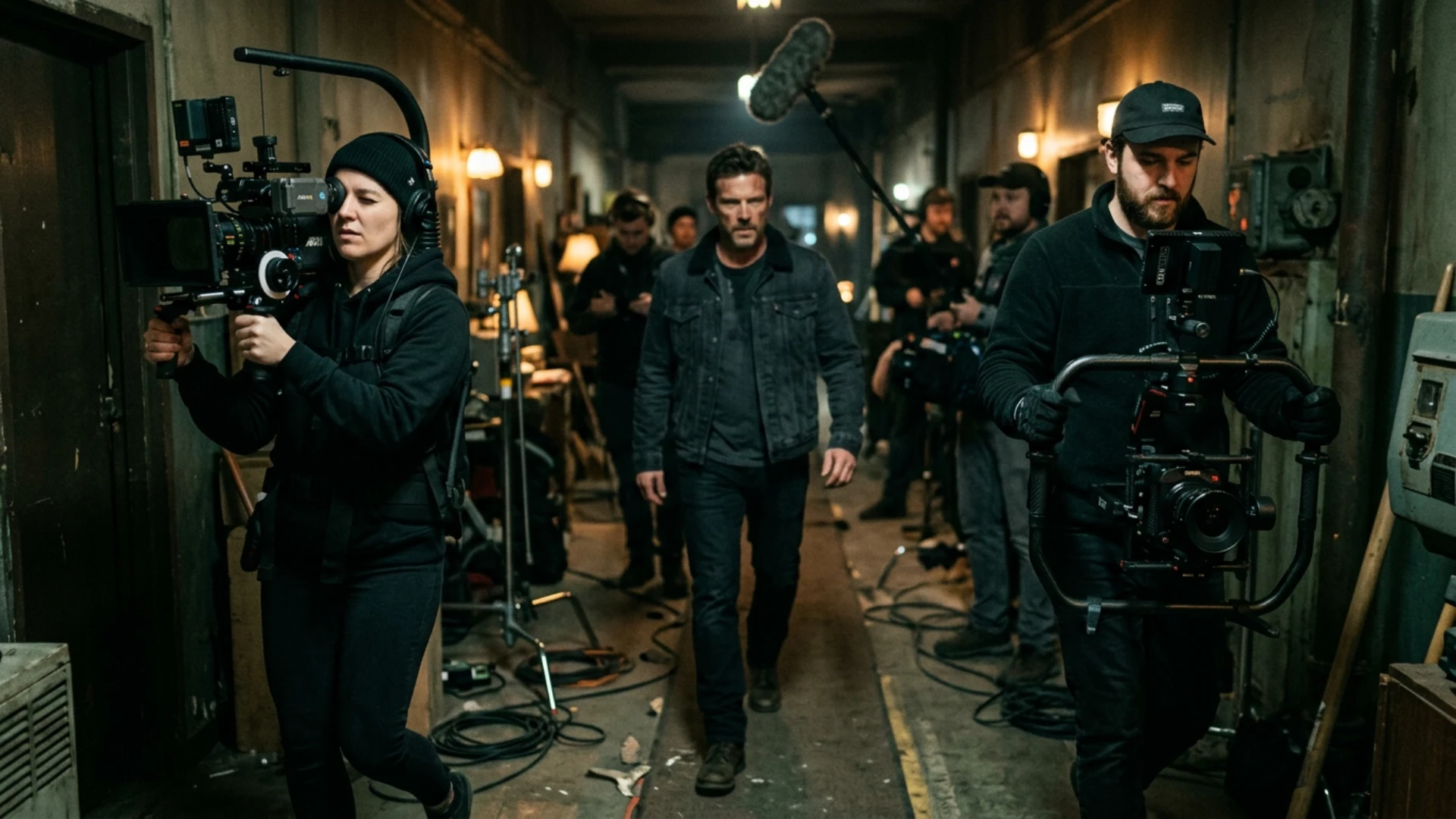
Step 5: On Set, Protect the Frame
Watch every shot through the monitor. Ask: is this composition serving the story? Is the lighting saying what I need it to say? Are the actors blocked in the right relationship?
Step 6: Shoot Coverage
Wide, medium, close-up, OTS, plus a couple of insert shots. Future-you in the edit will be grateful.
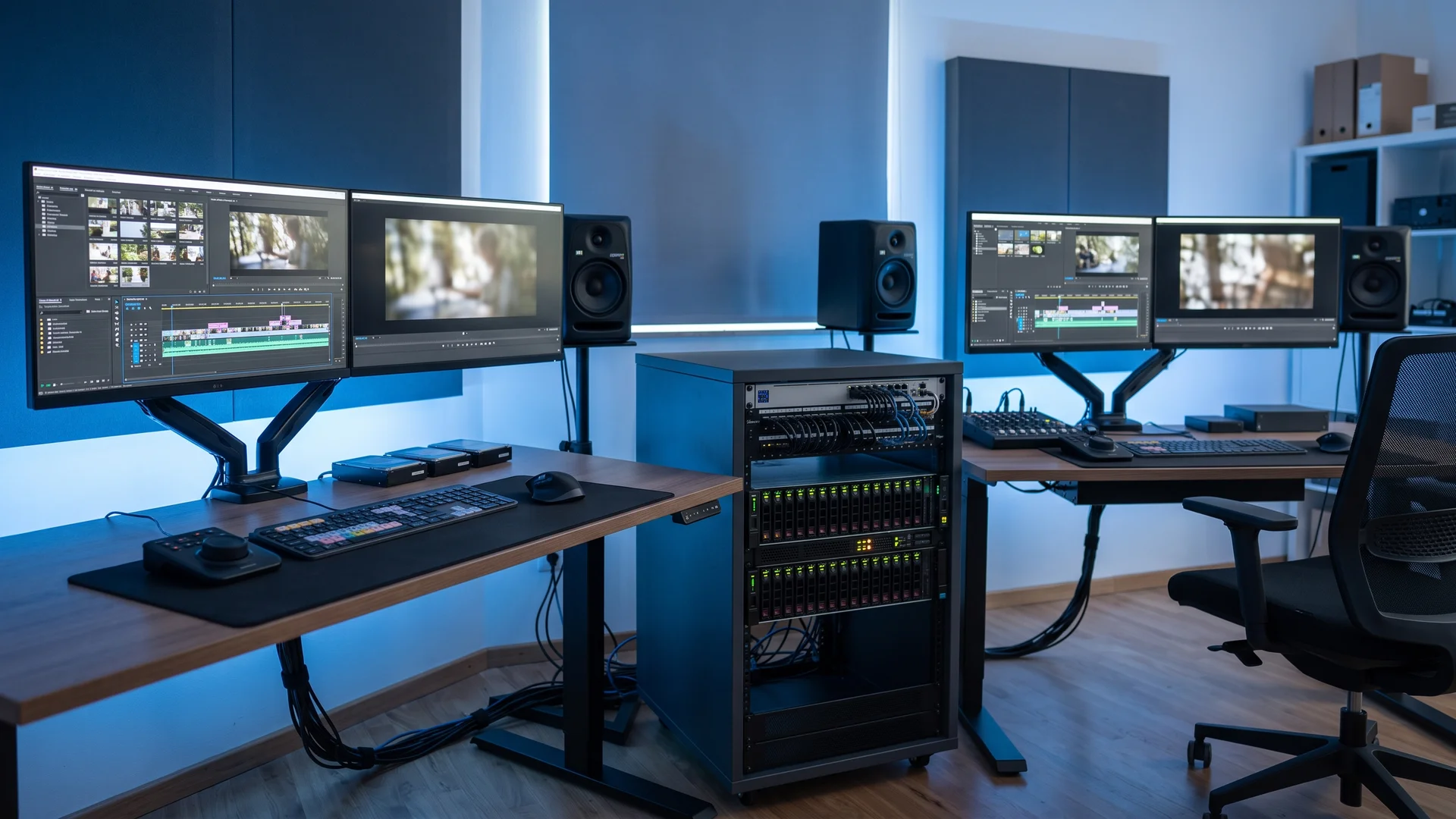
Step 7: Edit With Visual Intent
When you cut, ask the same questions you asked on set. Every cut is a sentence. Every transition is a punctuation mark.
Step 8: Grade With Purpose
Color grading is the final layer of visual storytelling. The grade should reinforce the emotional arc you wrote in Step 1.
If you’re directing your first short, our complete walkthrough on how to direct your first short film is a great companion read to this section.
Don’t Forget the First Impression
The very first thing the audience sees is your title sequence, and a strong title is a piece of cinematography in itself. Saul Bass built his career on this. If you want a fast, professional way to give your project a cinematic opening, our CineTitles pack gives you 29 ready-to-customize cinematic title templates for After Effects, Premiere Pro, and Photoshop. (Trust us, your project’s first 10 seconds matter more than you’d think.)
Conclusion
The filmmakers we admire (Kubrick, Villeneuve, Bong Joon-ho, Deakins, Fincher, Anderson, Spielberg, Mendes) are not better than you because they own better gear. They’re better because they’ve internalized this vocabulary so deeply that they can use it to say exactly what they mean. Every shot is a deliberate sentence. Every cut is a deliberate punctuation mark.
You get there the same way they did. By watching films closely, asking why each shot was framed that way, then trying it yourself. Shooting, failing, refining, shooting again.
The story is the boss. The technique is the tool. Visual storytelling is what happens when you stop thinking about the camera and start thinking about what you want the audience to feel.
Grab your camera. Go make something. The world has more than enough pretty footage. It needs more visual stories.
Disclaimer : If you buy something through our links, we may earn an affiliate commission or have a sponsored relationship with the brand, at no cost to you. We recommend only products we genuinely like. Thank you so much.
Blog Label:


Write for us
Publish a Guest Post on Pixflow
Pixflow welcomes guest posts from brands, agencies, and fellow creators who want to contribute genuinely useful content.
Fill the Form ✏