Forget Prompts: Why Classic Directing and Cinematography Are Still the Secret to High-End AI Video
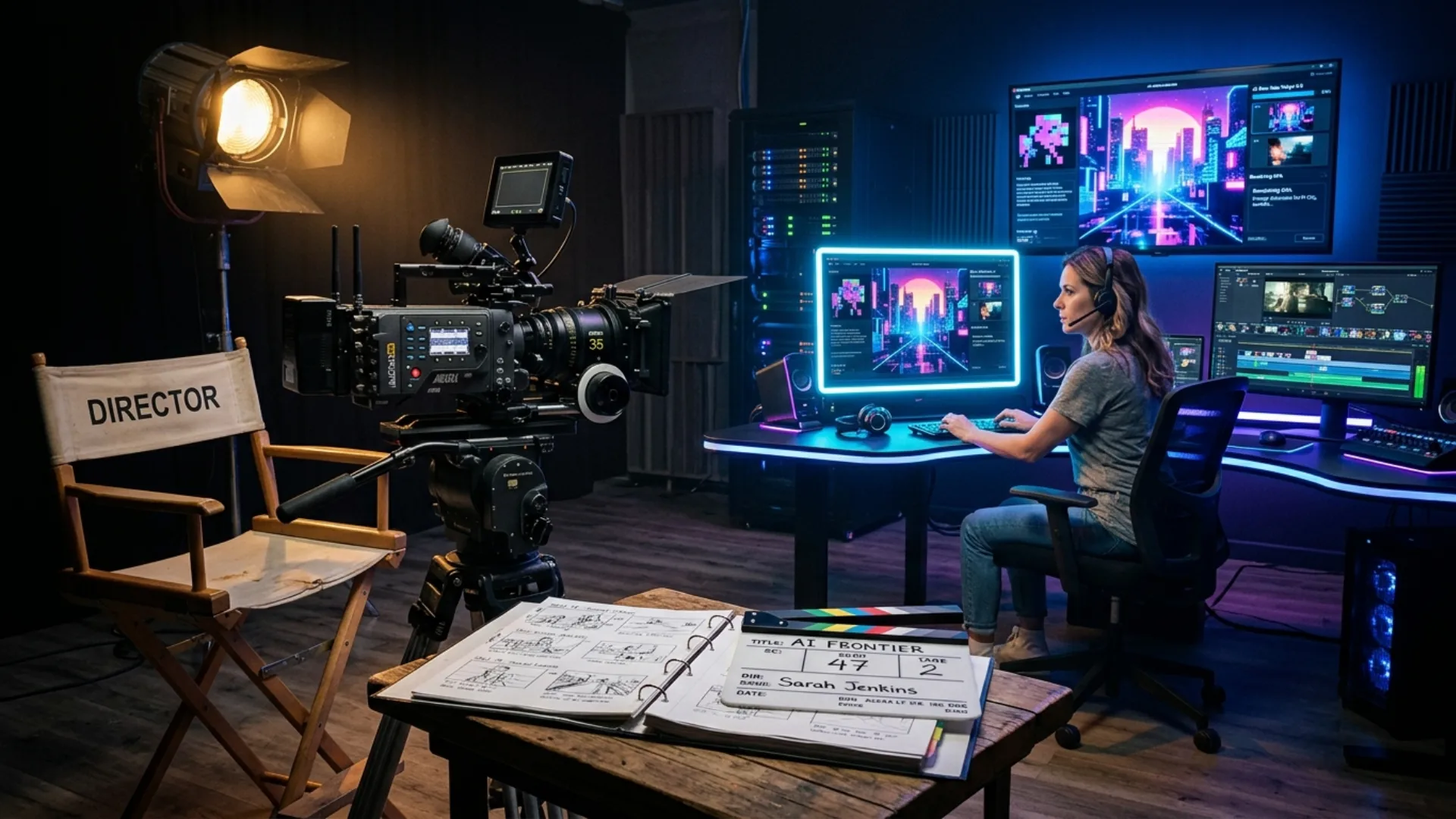
AI is genuinely remarkable at generating images and videos. But strip away the hype and it only really replaces one piece of the puzzle: physical filming. Everything else — story, scriptwriting, directing, editing, sound design, the marketing strategy behind it all — is still entirely on us.
I’m Sergey Rodin, founder of the video marketing agency Lava Media. We’ve made over 900 videos in the last thirteen years, everything from traditional TV commercials to bleeding-edge AI content, so I’ve had a front-row seat to where this technology shines and where it still needs serious human babysitting.
Let’s look at a few entries from the recent Higgsfield Action Contest, because they make the point better than I ever could in words alone.
Where AI still trips over its own feet
Then there’s the bomb that, about 45 seconds in, quietly turns into a gun. The casing just appears from nowhere, mid-shot. This is exactly the kind of thing you solve by splitting it into two separate generations: show the welding finish in one shot, cut, then reveal the finished weapon in the character’s hand from a new angle.
One of the stranger moments involves a monster leaping off a rooftop, falling past several floors — and then landing on the hero, who’s somehow back on the top floor with nothing above them. A beat later, the monster’s scale changes entirely. None of this is really an “AI problem” so much as a planning problem: you can’t just type “monster fights hero” and expect spatial logic to hold. You have to map out the environment first and generate the shots in sequence.
And during longer shots with fast camera movement, textures tend to melt and lose detail the longer the generation runs. The fix here is almost boringly simple: keep the camera slow, and cut before the model has time to start hallucinating.
None of these errors is fatal on its own. But stack enough of them together and you get a “noisy” image — one that quietly tells the viewer’s brain something is off, even if they can’t say exactly what.
What doing it right looks like
(One quick audio note, since it trips up a lot of people: never generate video and voice together. You’ll get that flat, metallic-sounding voice every time. Generate the dialogue separately, sync the lips in post, or — if the budget allows — just hire a real voice actor. The emotional difference is enormous.)
It was never about the prompt
Kevin Pretini built an AI commercial for Amazon that feels like a Super Bowl spot: a dancing character tying ease to the product, relaxed music, a floating lamp as the visual hook. But none of that started with a prompt. Every scene began as a static image, animated afterward. The phone UI on screen is hand-drawn. The sound design and edit were both done by hand.
In another piece — a helicopter drop aimed at snowboarders — Kevin started with a mood (brutalism), an audience trigger, and a color palette of deep, contrasting blues with metallic textures, and only after all of that did he storyboard and start generating.
Billy Boman invents products that don’t exist but builds them around hooks that are entirely real. In one video, he spends most of the runtime dramatizing the discomfort of blurry vision before the solution, glasses, shows up. It’s a perfect setup for AI to handle: one character, a plain blurred background, minimal motion. The model executes it without a hitch. But the reason it works is the hook, not the generation.
Karsten Winegeart’s videos often skip a traditional narrative altogether and run purely on atmosphere and rhythm. For his more visual pieces, he’ll start with a concept — sneakers and a snake, say — generate the raw footage, find a track that hits, and edit fast and tight to build the rhythm.
Juan Felipe Orozco posted a video on Runway’s profile that pulled in 112 million views, and the comments were full of people insisting “the AI came up with this and edited it.” It didn’t. Juan is a working feature film and TV director. He came up with the concept, chose every shot, decided every cut, synced the music, and built the sound design by hand. His videos lean hard on the oldest rule in filmmaking — show, don’t tell. The AI generated pixels. Juan built the story.
What ties them together
Kevin came up through graphic design and music video direction. Juan was already directing feature films. They understand pacing, cinematography, and audience psychology at a level most prompt-writers never will, and that’s precisely why their AI work is so far ahead of everyone else’s.
Good AI video has very little to do with finding the perfect prompt. It has everything to do with understanding how video actually works on a person watching it.
Before a single frame gets generated, you need a real creative concept — locations, costumes, characters, all worked out in advance. You need your shot sizes planned so close-ups and wide shots actually cut together in the edit. And when the AI inevitably gets something wrong (it will), you need the editing and sound design chops to fix it in post.
If you want AI video that actually moves the needle for your business — something that sells, not just something that looks like a slick tech demo — that’s exactly what we do at Lava Media. We pair AI’s speed with the same strategic rigor we’d bring to a traditional commercial shoot.
Disclaimer : If you buy something through our links, we may earn an affiliate commission or have a sponsored relationship with the brand, at no cost to you. We recommend only products we genuinely like. Thank you so much.
Blog Label:



Write for us
Publish a Guest Post on Pixflow
Pixflow welcomes guest posts from brands, agencies, and fellow creators who want to contribute genuinely useful content.
Fill the Form ✏