Why Character Consistency Is Becoming the Next Big Challenge for Generative AI
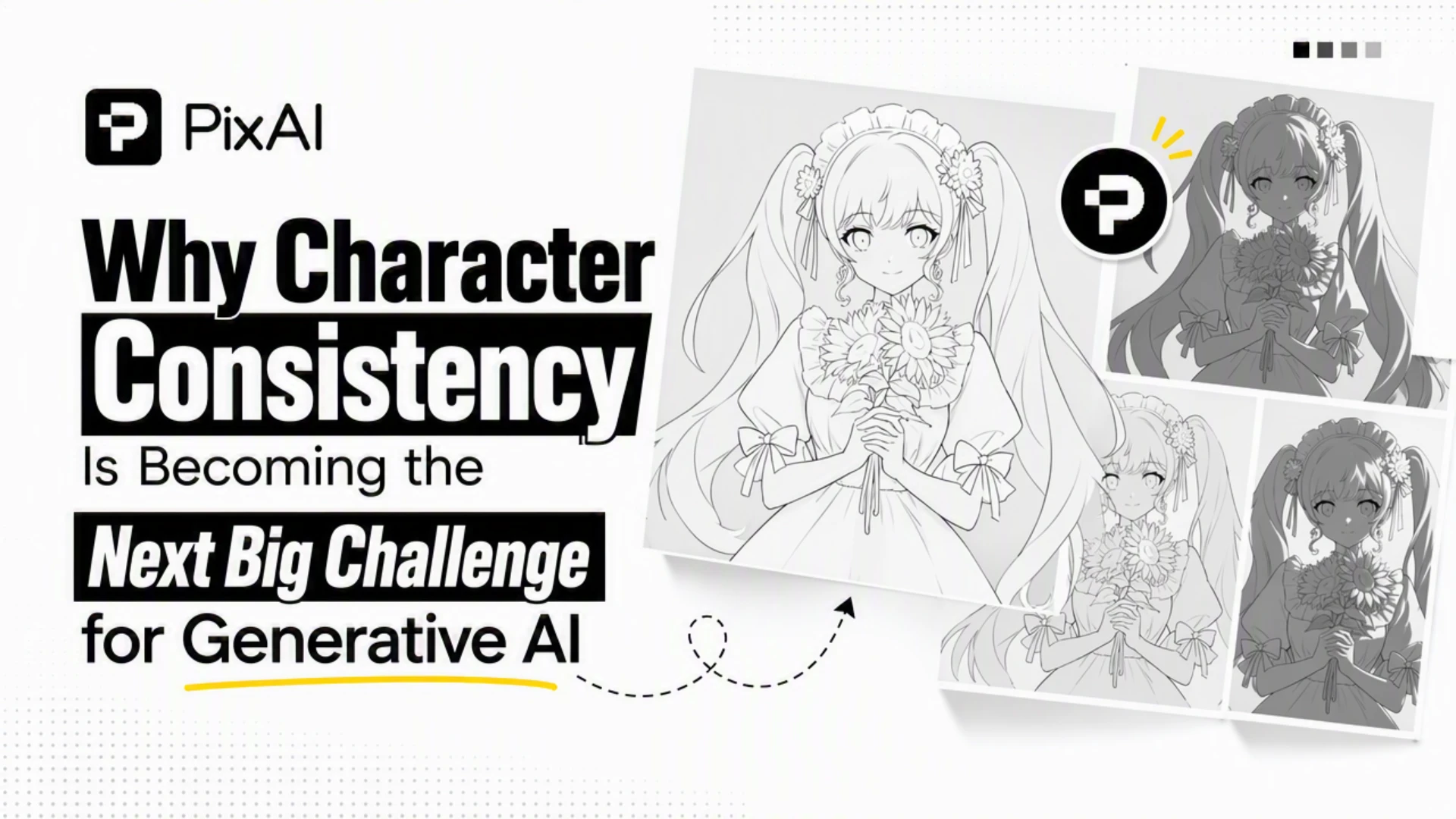
- A great character image is easy to admire - a reusable character is harder to build
- Character consistency is a workflow problem, not just a visual problem
- Why recurring characters raise the standard for generative AI
- Reference-based generation changes what the creator has to repeat
- Consistency has to survive expressions, poses, and outfits
- Turnarounds reveal an even harder problem: unseen information
- Style consistency matters too
- What creators should look for in a consistent character workflow
- The next challenge is not generating a character - it is keeping one
A great character image is easy to admire – a reusable character is harder to build
Change the pose and the face may shift. Change the outfit and the hairstyle may drift. Move from a close-up to a full-body image and the proportions can feel different. Ask for a side view and details that were never visible in the first image suddenly need to be invented.
For casual experimentation, these differences may not matter. For original characters, comics, visual novels, VTuber art, game concepts, or any recurring visual project, they can become the central problem.
Character consistency is a workflow problem, not just a visual problem
A useful character workflow needs to preserve those decisions while allowing other things to change. The character should be able to smile, run, change clothes, enter a new environment, appear under different lighting, or be drawn from another angle without becoming a different person.
That makes consistency more demanding than simple image similarity. The goal is controlled variation: enough change to support a new scene, but not so much change that the identity disappears.
Why recurring characters raise the standard for generative AI
Even social creators working with a recurring OC face the same issue. A recognizable character becomes part of the content identity, so visual drift has a cost.
This is why character consistency is becoming a more meaningful benchmark for generative AI. The first image proves that a model can invent. The later images reveal whether it can maintain.
Reference-based generation changes what the creator has to repeat
PixAI’s Tsubaki.3, currently in Early Access, supports generation from a single character reference. From that one reference, creators can place the character into new scenes, outfits, poses, lighting conditions, and formats including manga, stickers, expression sheets, and turnarounds.
This separates two parts of the creative request. The reference helps answer ‘Who is this character?’ while the prompt can focus more on ‘What should happen next?’ That division is especially useful for creators who want to reuse a design rather than describe it again and again.
Consistency has to survive expressions, poses, and outfits
Expressions are a good example. A smile, fear, anger, and surprise alter the face while the identity should remain stable. Pose sets create another challenge because the model has to preserve proportions and signature features while changing the whole body. Outfit variations ask the model to change clothing without redesigning the person wearing it.
Tsubaki.3 can create expression sheets, pose sets, outfit variations, and age progressions for a single character. These are useful examples because they turn consistency into something visible across a set, not a claim made from one image.
Turnarounds reveal an even harder problem: unseen information
That means a turnaround should not be judged only by whether the unseen details are ‘accurate’ to information that never existed. A more practical test is whether the known traits are preserved and whether the invented details remain self-consistent across the sheet.
Tsubaki.3 includes character turnarounds as part of both its creative-workflow and reference-generation capabilities, which reflects the growing importance of structured character assets rather than isolated portraits.
Style consistency matters too
For long-term creative projects, this matters almost as much as the face. A comic, character design package, or recurring illustration series benefits when the character and the art direction stay in the same visual world.
Tsubaki.3 is designed to maintain both character identity and visual style across related generations. That pairing points to a broader truth: creators do not simply need the same person again. They often need the same person in the same project language.
What creators should look for in a consistent character workflow
- Identity preservation: face, hairstyle, proportions, and signature traits remain recognizable.
- Controlled variation: pose, expression, outfit, scene, or camera can change without breaking identity.
- Reference reuse: the creator can carry an established design into new tasks.
- Cross-view coherence: front, side, back, close-up, and full-body outputs still belong to the same character.
- Style continuity: related images feel as though they belong to one visual project.
No single output can prove all of these. Consistency becomes meaningful when a model is asked to support a sequence of related creative decisions.
The next challenge is not generating a character – it is keeping one
That changes the benchmark for AI character generation. A beautiful first portrait is still valuable, but the real test may be what happens after it. Can the same character survive the next pose, the next outfit, the next scene, and the next page?
As generative AI becomes more involved in storytelling and long-term creative work, character consistency is likely to move from an impressive feature to a basic expectation.
It also changes how creators plan projects. Instead of treating every scene as an independent prompt, they can begin by establishing a reliable character reference, then build expressions, poses, outfits, and scenes around it. That creates a clearer visual foundation before the project becomes complex, which is especially useful when several assets need to stay recognizable over time.
Perfect consistency is not the only useful outcome. A practical workflow can still save time if it preserves the traits that matter most and makes the remaining differences easy to identify and correct. For creators, predictable variation is often more valuable than random perfection.
Disclaimer : If you buy something through our links, we may earn an affiliate commission or have a sponsored relationship with the brand, at no cost to you. We recommend only products we genuinely like. Thank you so much.
Blog Label:


Write for us
Publish a Guest Post on Pixflow
Pixflow welcomes guest posts from brands, agencies, and fellow creators who want to contribute genuinely useful content.
Fill the Form ✏