The Role of 3D Rendering in Modern Creative Production
- The Role of Photorealistic Building Renderings in Creative Production
- 3D Interior Design Rendering for Visual Development
- How 3D Rendering Fits into the Creative Workflow
- Creating Consistent Visual Content Across Projects
- Rendering as a Tool for Creative Collaboration
- The Future of Creative Production with 3D Visualization
- Conclusion
Modern rendering workflows also make it easier to experiment with different ideas. Materials, lighting, colors, camera angles, layouts, and environments can be adjusted digitally without the time and expense associated with creating multiple physical versions. As a result, 3D visualization has become a practical part of creative production across architecture, interior design, product development, and marketing.
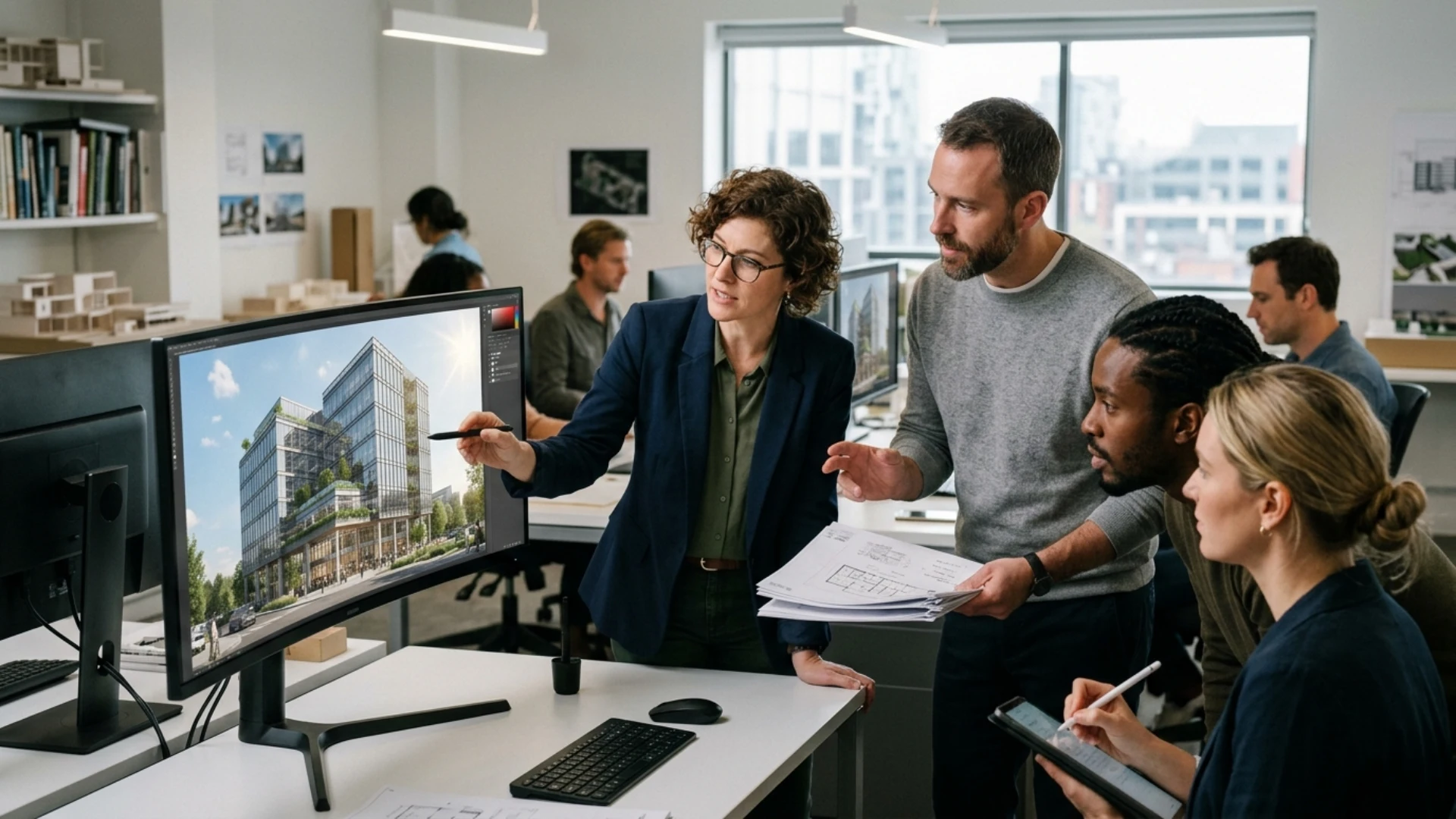
The Role of Photorealistic Building Renderings in Creative Production
Photorealistic visuals are also valuable for creative production because the same architectural model can support multiple types of content. A project can be presented through exterior views, close-up details, aerial perspectives, or atmospheric scenes created for specific marketing materials.
This flexibility is particularly useful when a project needs content for websites, presentations, social media, brochures, or promotional campaigns. High-quality architectural visualization gives creative teams a consistent visual foundation while still allowing them to adapt the imagery to different communication goals.
3D Interior Design Rendering for Visual Development
A digital interior scene can be adjusted throughout the creative process. Designers can experiment with furniture arrangements, wall finishes, flooring, lighting schemes, decorative elements, and color combinations without changing the physical space. This makes rendering useful not only for final presentations but also as part of the development process itself.
Realistic interior visuals can also help different stakeholders understand a design from the same perspective. A client may find it easier to evaluate a room through a detailed rendered image than through floor plans or material samples alone. Creative teams can use the visuals to discuss specific design decisions and make changes before those decisions become expensive to implement.
The resulting images can also support marketing and communication. Interior renders can be used on websites, social media, property listings, presentations, and promotional materials. When multiple spaces or design concepts need to be presented, a consistent rendering workflow helps maintain the same visual language across the entire project.
How 3D Rendering Fits into the Creative Workflow
Once the scene is prepared, creative teams can produce test renders and review the results. This stage allows them to identify issues with composition, proportions, materials, or lighting. Changes can be made digitally before the final images are produced, making the workflow more flexible than traditional visual production methods.
The ability to revise scenes is one of the main advantages of digital rendering. Instead of recreating an entire visual after a change, teams can modify the relevant elements and generate a new version. This supports an iterative approach where visualization becomes part of the creative decision-making process.
Creating Consistent Visual Content Across Projects
For example, an architectural project may require exterior images for a website, detailed views for a presentation, and lifestyle-oriented visuals for social media. An interior design project may need several room perspectives, alternative material combinations, and different lighting conditions. Because these visuals can be generated from the same digital environment, maintaining consistent proportions, materials, and design details becomes easier.
This approach is especially useful for projects that evolve over time. When a design changes, the digital scene can be updated and new visuals can be produced without rebuilding the entire creative asset from the beginning.
Rendering as a Tool for Creative Collaboration
Instead of relying exclusively on technical terminology, teams can use rendered images to identify specific elements of a design. A discussion about materials, lighting, proportions, or spatial relationships becomes more concrete when everyone can see the same visual representation.
This can help reduce misunderstandings and make review cycles more productive. Visual feedback can also be incorporated directly into the digital scene, allowing teams to test alternatives before deciding on a final direction.
The Future of Creative Production with 3D Visualization
The broader shift is not simply about producing more realistic images. It is about giving creative teams greater control over how ideas are developed, reviewed, presented, and reused. A well-structured 3D workflow can connect design development with communication and marketing, creating a more flexible process from the initial concept to the final visual assets.
Conclusion
Disclaimer : If you buy something through our links, we may earn an affiliate commission or have a sponsored relationship with the brand, at no cost to you. We recommend only products we genuinely like. Thank you so much.
Blog Label:



Write for us
Publish a Guest Post on Pixflow
Pixflow welcomes guest posts from brands, agencies, and fellow creators who want to contribute genuinely useful content.
Fill the Form ✏