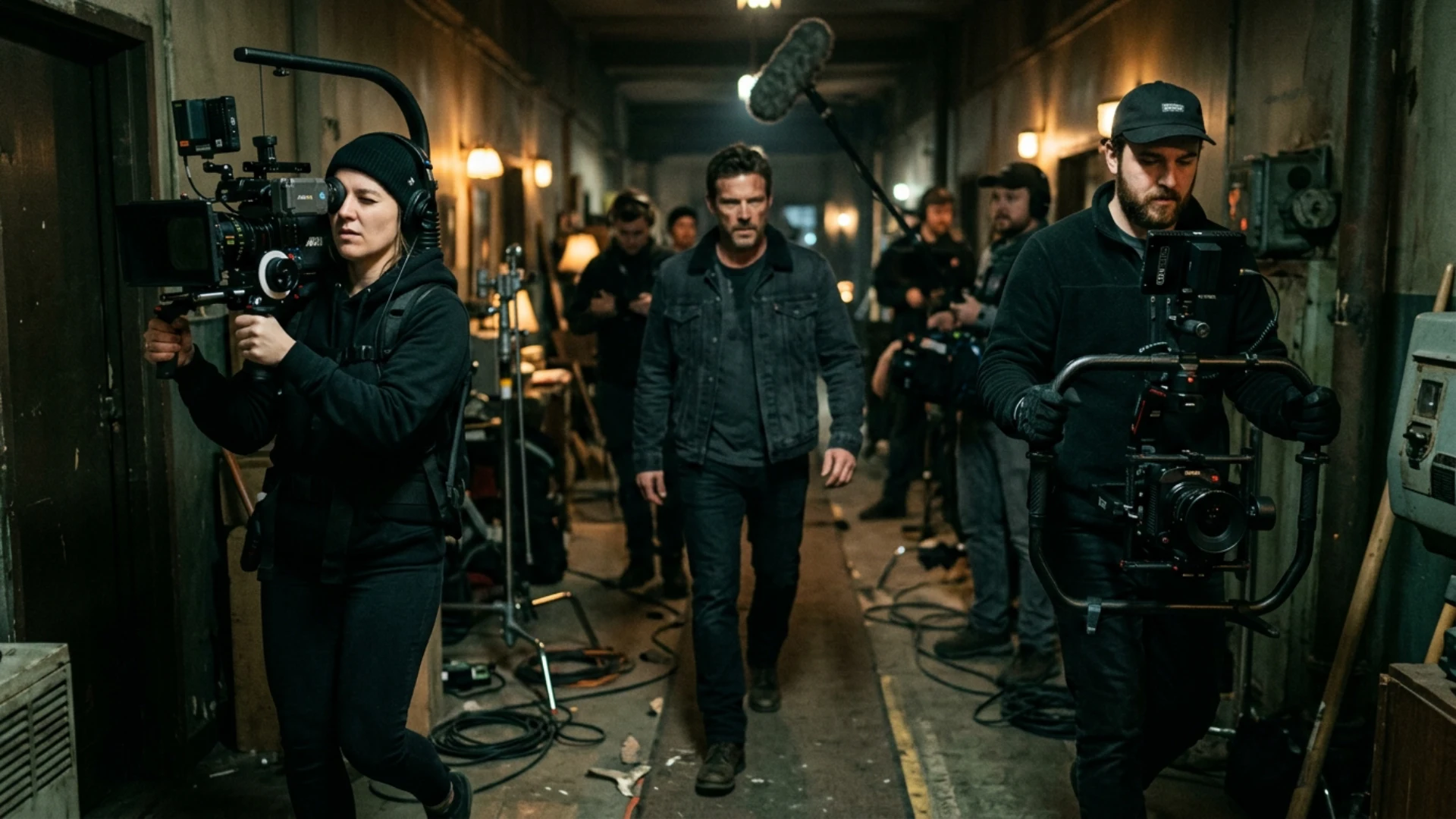
How Video Production Studios Keep Track of Gear, Props, and Hard Drives Without Losing Their Minds
Most small studios handle this with a shared spreadsheet, a group chat, and good intentions.
That works for about three months. Then the spreadsheet forks into five versions, the chat scrolls past anything useful, and someone starts asking whether a real system is worth the money. It is. Studios that treat their gear room like an operation, not a pile, spend far less time hunting and far more time editing. If you’re weighing software options for that gear room, rfid asset tracking is where a lot of production managers end up once a spreadsheet has failed them twice. Here’s the part that surprises people: the fix isn’t a bigger cabinet or a stricter manager. It’s a labeling system that assumes humans will forget things, because they will. Set that assumption as your baseline and the entire workflow gets simpler.
Why does gear go missing in the first place?
Trust isn’t the problem. Volume is. A working studio might move two hundred individual items in a busy month, counting every battery, cage, matte box, and cable. No memory, however sharp, tracks two hundred moves accurately. If you’ve ever spent a Friday night photographing barcodes with a phone, you already know the pain. According to the Bureau of Labor Statistics, motion picture and video production employs hundreds of thousands of people in the United States, and a large share of them work on small crews where nobody has an inventory title. The gear falls to whoever cares most. That person burns out. I’ve watched it happen twice in the same facility.
The gear room framework I’d actually build
- Zone one, the vault. Anything expensive and slow-moving lives here. Sensor bodies, prime lens sets, the good gimbal. Every item gets a tag with a short numeric ID, a printed name, and a home slot number.
- Zone two, the staging shelf. Gear pulled for an active shoot sits here, checked out against a job number, not a person’s name. Jobs outlive people and job numbers don’t argue.
- Zone three, the outbound stack. Cases that are packed and sealed. Once a case leaves this zone, its contents must be listed as a single unit with a sub-list.
The zone system does two things. It makes every item’s location binary instead of a guess, and it shows you the ghost items: the gear listed as available that hasn’t moved in a year. I would sell the ghosts before I’d buy another shelf. Storage is expensive and idle gear is a slow tax.
Why drives break every system that came before them
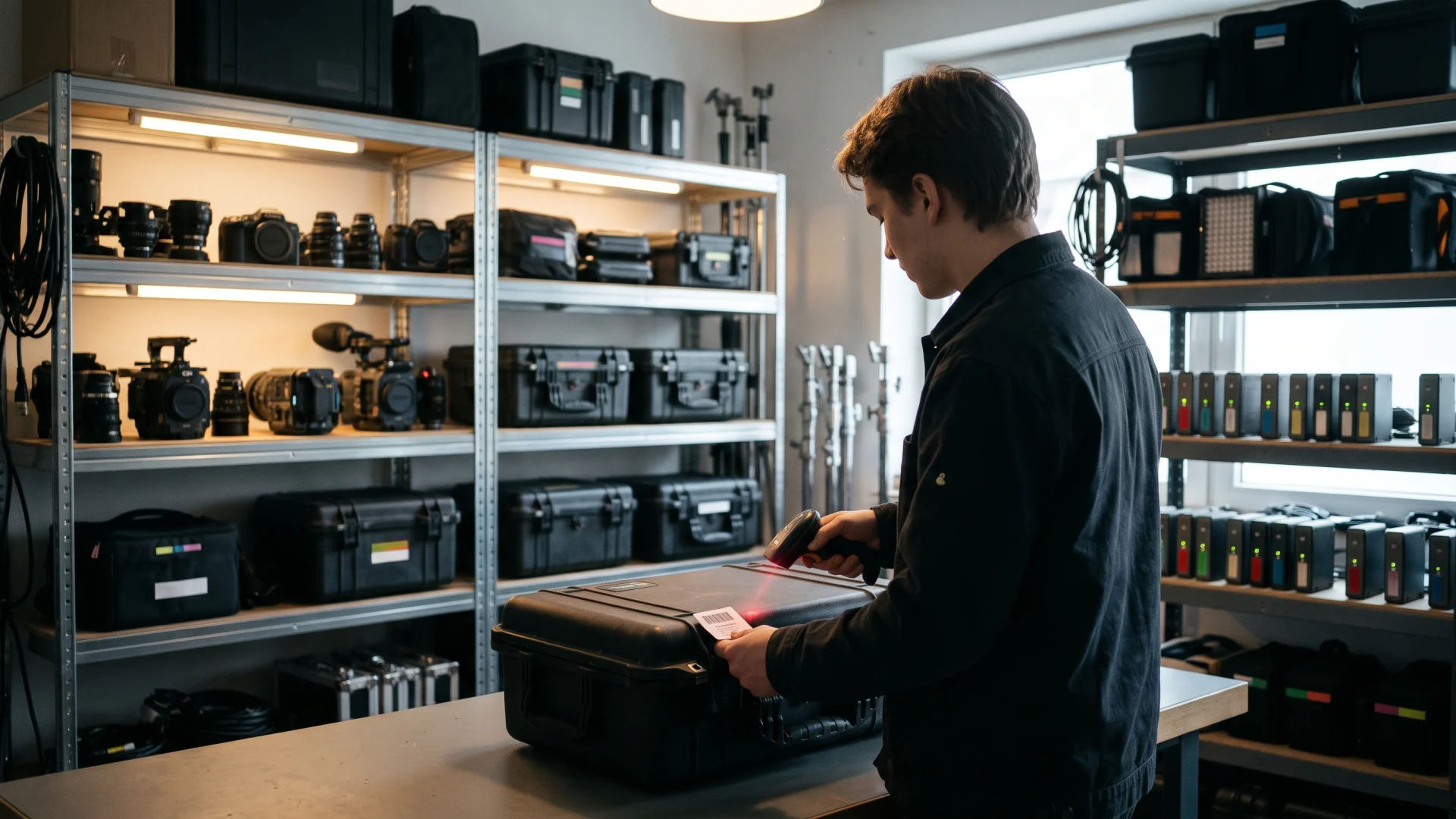
You don’t need to buy anything new to start. A cheap label printer and a shared log will carry a studio through its first year. The reason bigger shops move up to tagged systems is speed: a handheld reader walks past a shelf and knows instantly what’s there and what’s missing. That’s the difference between a weekly audit and one that never happens.
Run this checklist every first Monday of the month
- Scan or read every item in zone one and match against the expected list. Note gaps.
- Pull up all open job numbers. Anything checked out past its return date gets a call.
- Confirm every outbound case has a sub-list taped inside the lid.
- Flag any item that hasn’t moved in ninety days for sale or return.
- Back up the log itself. A tracking system with no backup is a better-organized disaster.
I’d pick a boring calendar date rather than “when we have time.” The studios that maintain gear for a decade are the ones with boring habits. Audits need scheduling because the moment you skip one, the whole system quietly becomes fiction.
What about borrowing, rentals, and other people’s gear?
There’s a technical detail that matters here. RFID tag data has to enter your system through a printer encoder, software, or firmware, and the encoding process runs on a defined frequency standard. If you want the technical overview, the Optical Society publishes foundational material on how these identification and sensing systems behave. Choosing the wrong tag type for your metal cases will produce read failures that look like ghost gear, so test a handful of tags on real gear before committing.
The archive problem, and why it stays broken
The cheapest insurance is a boring rule: one project, one archive location, printed on the label and logged at wrap. In my experience, edits go wrong and clients get emotional, but a clear location record makes those conversations short. Finding a project takes minutes instead of a week of emails. Go fix the vault, then run your first audit, then set the calendar reminder for the first Monday of next month. Which item in your gear room would you bet a client’s shoot day you could find in under sixty seconds?
Disclaimer : If you buy something through our links, we may earn an affiliate commission or have a sponsored relationship with the brand, at no cost to you. We recommend only products we genuinely like. Thank you so much.
Blog Label:



Write for us
Publish a Guest Post on Pixflow
Pixflow welcomes guest posts from brands, agencies, and fellow creators who want to contribute genuinely useful content.
Fill the Form ✏