The Faceless Funnel: How 8 Faceless Channel Creators Earn Without Adsense
That changed in September 2022, when I first came across Midjourney, one of the earliest text-to-image models that produced images good enough to impress rather than amuse. By December I was hooked, spending hours prompting and building a large collection of images across different aesthetics. Much like my writing, these images needed an outlet.
In early January 2023 I created my TikTok page, Raivolution, nicknamed Beboo. The name is a pun on “revolution” plus AI, and a small revolution is roughly what it became. By my third post I had passed 230,000 views. By my tenth I was over 2 million. AI images were clearly a content format ready to take social media by storm, and my growth suggested I was near the front of the wave.
I qualified for TikTok’s Creator Rewards Program (the platform’s equivalent of YouTube AdSense) within a week by crossing 10,000 followers. My earnings were pitiful. Despite consistently posting videos that broke a million views, I didn’t come close to a real income until months later, when I changed how I thought about monetisation entirely.
This article is about that shift. It covers the monetisation approach faceless channel creators are using to diversify their income and stop living at the mercy of a platform’s payout program. But first, some groundwork.
What is a faceless channel?
The format covers a wide range. Some faceless channels are traditional: cooking videos shot over the shoulder, gameplay walkthroughs, software tutorials recorded as screen captures. Others are fully automated: AI-narrated horror stories, animated explainers, ambient music streams, AI-generated documentary shorts. When most people talk about faceless channels today, they usually mean the automated, AI-assisted kind.
Those AI-driven channels have taken over the space for a simple reason. Production cost has collapsed. Work that once needed a stock footage subscription, a voice actor, and an editor can now be done by one person with a ChatGPT subscription, an image generator, an AI voice tool, and a basic editing app. A channel that would have required a small team two years ago can now run from a bedroom on a budget no greater than $100.
The second shift is repeatability. Once a format works, AI tools let you produce it again and again without much manual lift, which is why platforms have appeared that handle the entire pipeline from script to finished video. That automation is why I eventually built Taletok.io, after spending hundreds of hours assembling my own faceless videos by hand.
The result is a gold rush. Faceless channels are thriving in formats that barely existed two years ago: modern influencers traveling into the past, outlandish timelapse renovations, dramatised Reddit threads, interactive horror stories and an infinite amount more. If you can prompt it, it’s likely someone has already built a channel around it.
How are faceless AI channels earning?
Platform payouts. The default path everyone reaches for first, and the weakest stream for most faceless creators. As I found out, you can post million-view videos for months and still earn a rounding error. Ad revenue rewards long watch time, which favours long-form YouTube over short-form virality, so short-form faceless creators who treat payouts as their main income are leaving most of their value on the table.
Brand partnerships and sponsorships. Once a channel reaches a certain size, brands start reaching out. The catch is that faceless channels usually command lower rates than personality-led ones, because brands pay for the trust a recognisable face carries. Niche channels in finance, fitness, or gaming can still land good deals, but it is rarely the main engine.
Affiliate marketing. Linking to products in descriptions and bios for a commission. This works well for tutorial-adjacent niches, but purely entertainment-focused channels often struggle to find relevant products to promote.
Flipping accounts. A grey-area but real practice where operators grow faceless accounts and sell them on. The platform-compliance risk makes this hard to recommend, but it exists and is worth being aware of.
Digital products and physical merchandise. This is the focus of the rest of the article. It is the method the smartest faceless creators are quietly building their income around, and it is almost entirely missing from the standard monetisation guides.
There is one more reason to take this seriously. Platform payouts are fragile. YouTube has revised its stance on AI-generated and “mass-produced” content more than once in the past two years, and reserves the right to demonetise channels it judges inauthentic. TikTok has changed its Creator Rewards payout structure repeatedly. Instagram has scaled its bonuses back. Most creators accept this risk simply because they are unaware of any alternative. The funnel below is about owning the stream of income instead. A course creator funnel builder helps streamline this process by guiding potential customers from discovery to purchase through a structured, conversion-focused journey.
A note on platform reliance: the YouTube demonetisation history alone should make every faceless creator nervous about putting all their eggs in the AdSense basket. YouTube has shifted its monetisation policies around AI-generated content multiple times in the past two years, and the platform reserves the right to demonetise channels it deems “mass-produced” or “inauthentic.” TikTok’s Creator Rewards Program has changed payout structures repeatedly since launch. Instagram pays bonuses inconsistently and has scaled them back significantly. Platform payouts are a rented house. Digital products are owned land.
The monetisation method smart faceless channel creators are using, with 8 real examples:
What these creators are actually selling
From the earliest days of commerce, selling information has been one of the most stable and profitable trades. That is even truer in the information age, and the creators below have understood it well. Their products vary, from Skool communities and Etsy guides to physical merchandise and Patreon subscriptions, but the logic is the same. Many creators build successful digital products around topics such as how to open an Etsy shop, turning their experience into step-by-step guides that help new sellers get started. They have stepped out of the payout queue and built a funnel that puts buying power back in their own hands.
Two advantages make this work.
Leverage. You write the guide or record the walkthrough once, then funnel viewers to it indefinitely. Create it a single time, sell it without limit.
Trust. Viewers who follow you already trust you, and some actively want to support you. A product that lets them into your creative process gives them something they value and rewards you at the same time.
The funnel structure that makes it all possible
The faceless funnel comes down to three elements.
Content as the hook. Your content is the lure. It has to stand on its own as something worth watching and must never feel like an advertisement.
Demonstrated value. This sits inside the content, because the content is the proof. A viewer who enjoys what you made naturally starts wondering how you made it, which opens a knowledge gap your product can fill.
Call to action. Usually a light touch at the end of the video, something as simple as “creation guide in bio,” often echoed in the description. The lighter the better, until the audience is warm.
Here is how that plays out across eight real creators, starting with my own page.
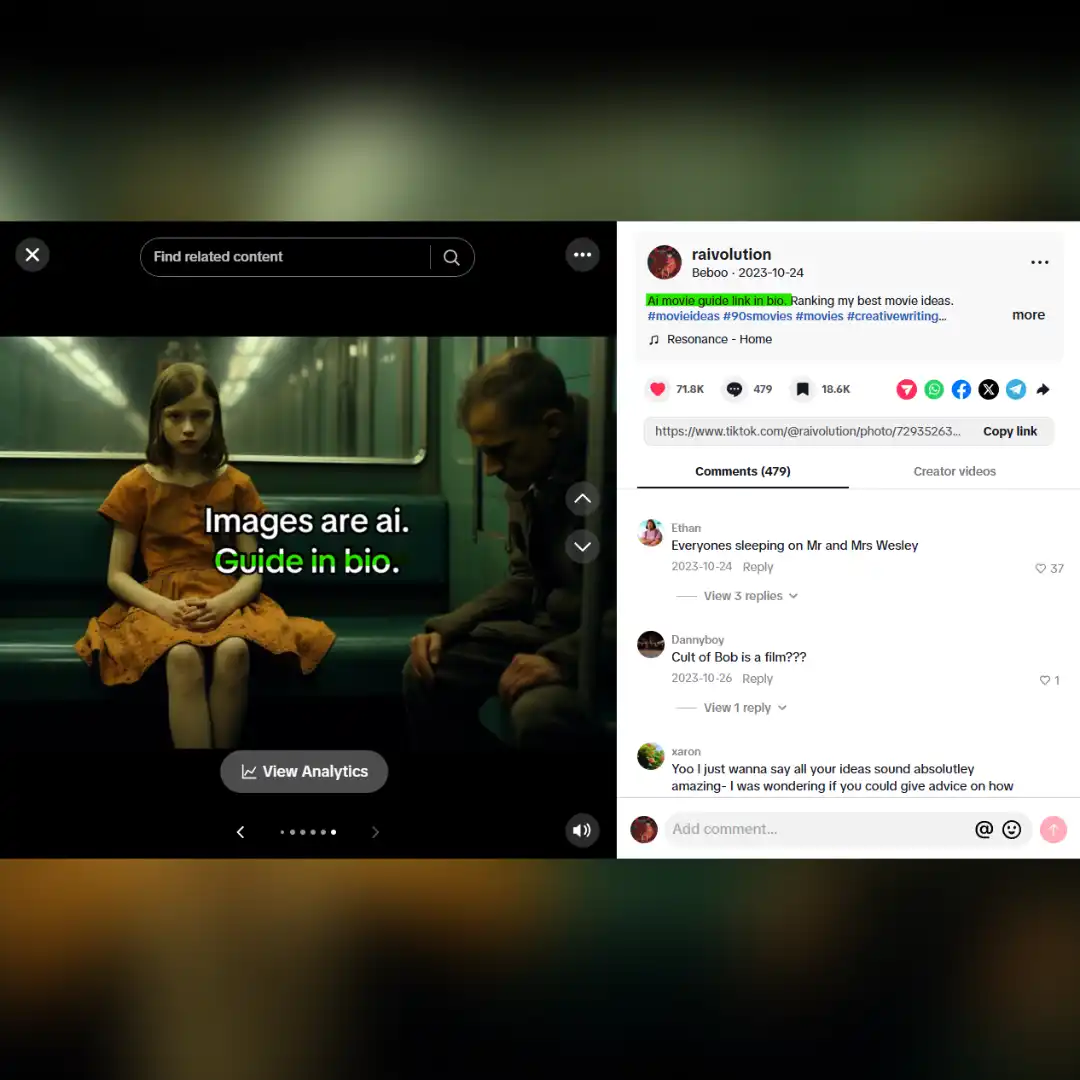
1. Beboo (@raivolution) – Tiktok
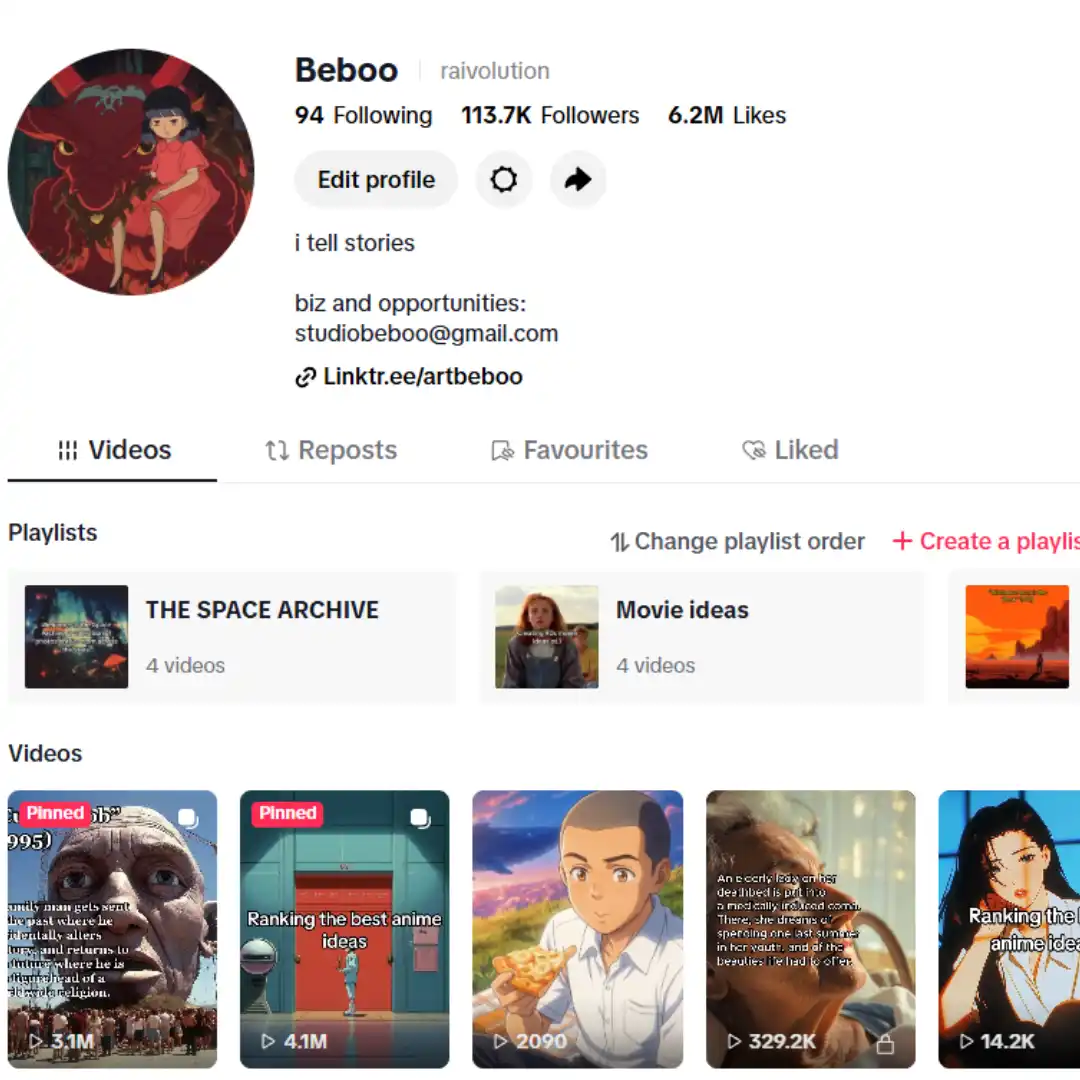
Everything changed when I moved to a guides model. Across nearly every post, I was getting comments asking how I made the videos, or how I came up with the story ideas, or both. The demand was sitting right there in my notifications.
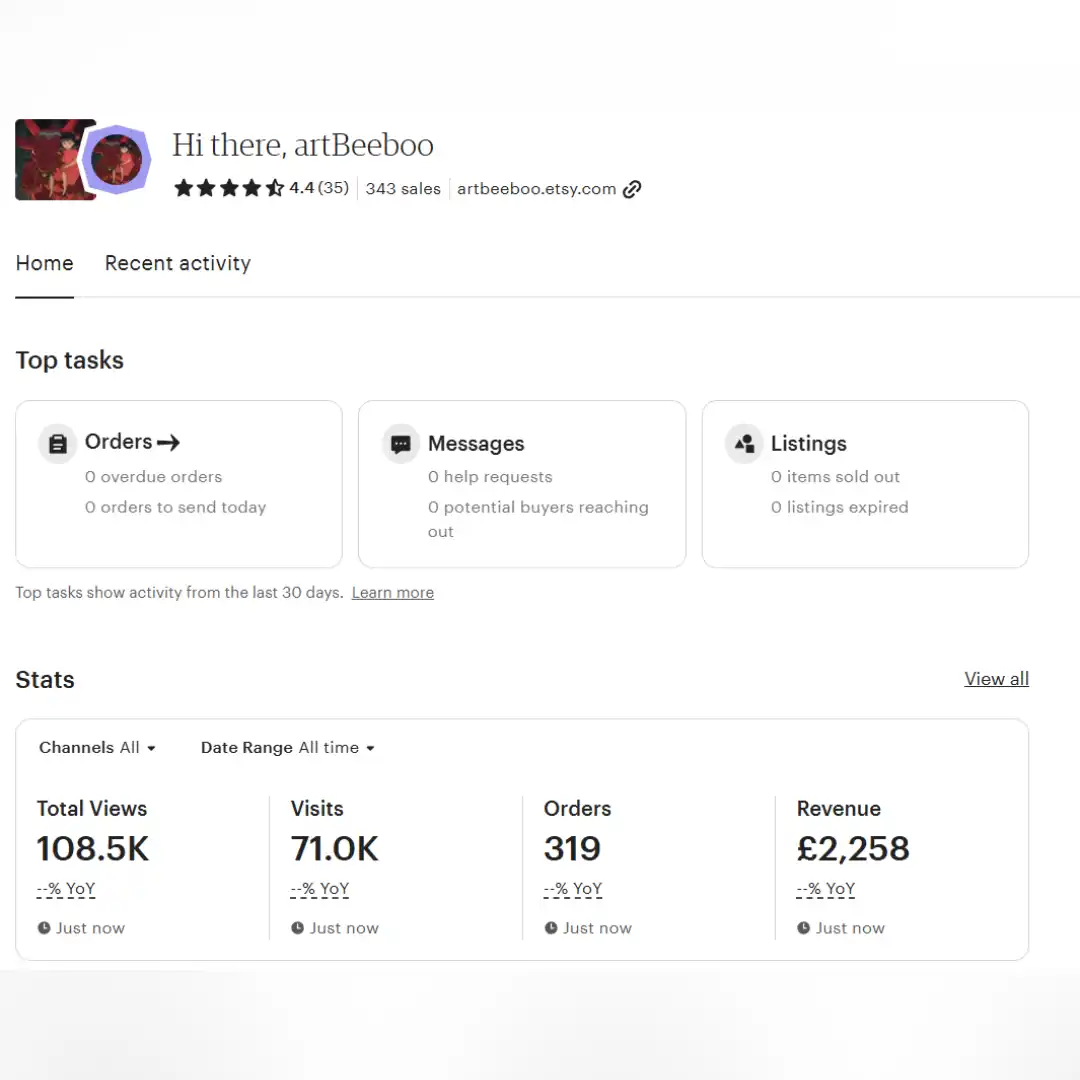
I made three guides. Two matched my most popular formats: an AI Anime Creation Guide that I promoted on anime posts, and an AI Movie Creation Guide for my movie-idea posts. Each took about three hours to write and laid out the exact tools and workflows behind that style of content. They were not about growing a channel, which is my focus now, but about the content itself. I priced both at $8. The third was an Idea Creation Guide covering my process for writing the stories, with a walkthrough of some of my best posts and the anime and movie prompts thrown in as a bonus. That one sold for $13.
I started selling in late May. At the peak, posting around three times a week, I would see two to four sales a day, and over ten when a post did especially well. That worked out to roughly $600 a month in extra income, which is notable given that I had slowed my posting right down and had not yet tightened the funnel. I left plenty on the table by forgetting a call to action on many of my best-performing posts.
In funnel terms, here is what I was running:
Content as the hook. AI-illustrated short stories, posted three to four times a week. The visuals were the differentiator. Most short-form storytelling at the time was either stock footage with a voiceover or static-image slideshow, and the AI imagery cut through because it felt unfamiliar and visually rich. The stories themselves were the second hook layer.
Demonstrated value. Every post showed exactly what the guides taught. Viewers who watched one of my anime short stories were watching the output of the workflow they could buy. The proof of value sat inside the content, which is why guide sales were so directly correlated with post quality. Strong posts sold guides. Weak posts did not.
Call to action. A simple line on the relevant posts, usually some version of “creation guide in bio,” as the final slide, with the same line repeated in the description. Soft, not pushy. When I forgot to add it on high-performing posts, sales were noticeably lower for those videos, which taught me how much even a one-line CTA mattered.
The reason this worked at scale was that the funnel matched the audience. People watching AI-illustrated stories were people interested in AI-illustrated stories. Selling them a guide on how to make AI-illustrated stories aligned the curiosity with the product. The lesson I would learn watching other creators do this well, and badly, came directly from running it on myself first.
Watching the funnel work on my own page is also what convinced me there was a tool worth building. After I slowed down on Beboo, I went on to build Taletok, a platform that creates and automates trending faceless channel formats so creators can focus on the funnel rather than the production.
2. Top100_real (@Top100_real) – Tiktok
The content is expertly edited movie and TV scenes deepfaked with popular cultural figures, from iShowSpeed and Kai Cenat to Walter White, LeBron James, and Elon Musk. The editing and scripting are excellent, with what I would estimate at well over ten hours of work per post, which explains the low post count alongside the enormous reach.
Content as the hook. The format is an evergreen loop of shock, comedy, and familiarity. It takes trending figures and cultural moments and folds them into recognisable media with a surprising or funny spin, all carried by sharp editing. The “2025 Meme Rewind,” a Squid Game parody stacked with the year’s biggest meme figures, pulled close to 20 million views on its own.
Demonstrated value. The sheer quality sells the product for him. When I first found the page, the content was good enough that I bought his guide on the spot, purely to understand how it was made. A perfect illustration of this step of the funnel.
Call to action. He goes lighter than almost anyone. There is no CTA in the videos at all. Instead the bio carries the offer as its single focus. During my own time on the platform I found that around 60% of people who watch a post will tap through to the profile, which means a creator at his view counts is sending an enormous volume of warm traffic to that one link.
He started with a single guide at $20 and has since added tiers. I will not put a revenue figure on it, because any number I could calculate from public data would be guesswork, but the structure speaks for itself. A creator built and monetised a large audience from a bedroom, using AI tools that cost well under $100 a month, and there is every reason to think the product dwarfs whatever the platform pays him.
3. Lucamaxiim (@lucamaxiim) – Instagram
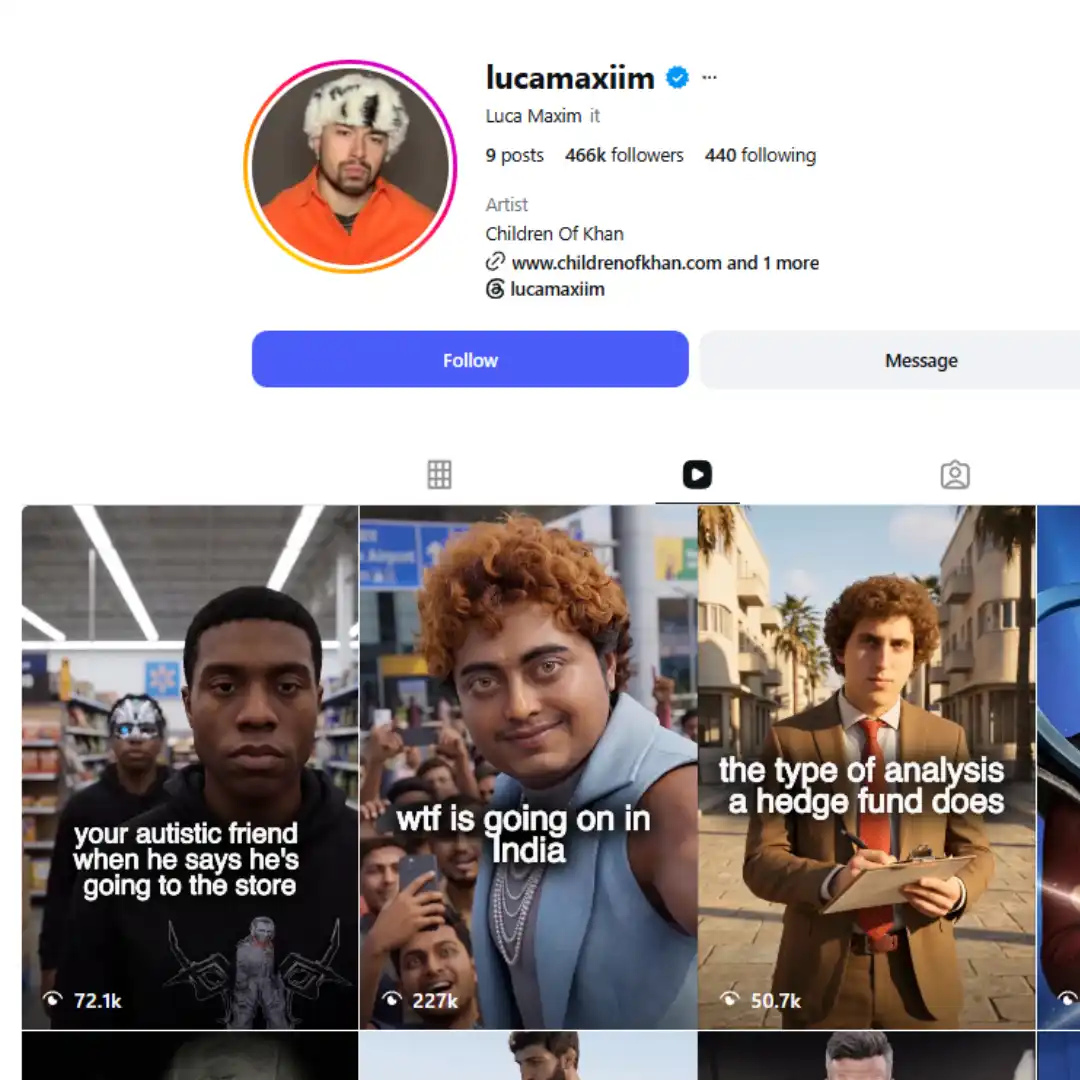
What makes him different is that the product comes first and the content is reverse-engineered from it. He sells apparel through his brand Children of Khan, built around niche meme phrases like “Elite Ball Knowledge.” Where the others stumbled onto a format and then found something to sell, his whole strategy is a product dressed up as meme-able video.
Content as the hook. The stylised game aesthetics grab anyone who identifies with the look, so there is already heavy overlap between viewer and customer before a word is spoken. It is a masterclass in audience selection.
Demonstrated value. Unusually, the value here is comedic rather than technical. Because he sells merch rather than a tutorial, he seeds the product into the script and builds the story around it. A post promoting the Elite Ball Knowledge polo resolves with a punchline that folds the product into the joke, so the CTA lands as a payoff rather than a pitch.
Call to action. He is one of the few who places the CTA directly in the content, and he has made it work so well that viewers stay for the comedy and even race to guess which item he is promoting in the comments before the video ends.
He does not stop at merch. He also sells a course on creating content like his, called Elite Ball Knowledge, priced at $197, which teaches building a brand voice and directing AI video at scale. With his apparel page noting over 10,000 customers, items starting around $60, and a following past 460,000, it is safe to say the funnel earns him well beyond a living. This is the most complete use of the faceless funnel I have come across.
4. Aze Alter (AzeAlter) – Instagram / YouTube
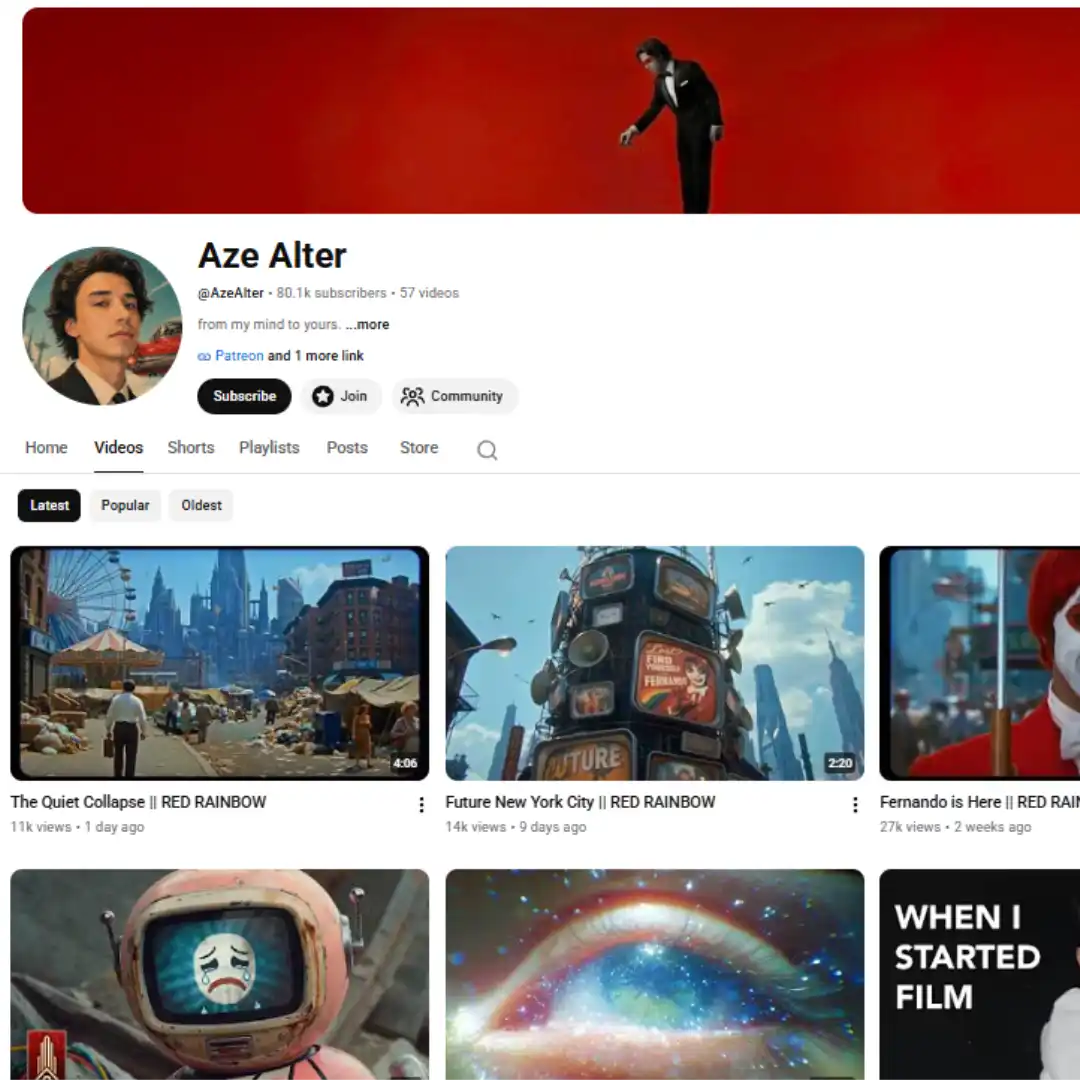
Content as the hook. His visual style stands out immediately. The dystopian imagery and unsettling characters grab attention, and even at longer runtimes he holds viewers with genuinely intriguing narratives. I am a fan of the ongoing series myself.
Demonstrated value. His distinctive ability to craft long AI narratives would make an obvious workflow guide, which he does not sell. Instead, the consistency and strangeness of his world create a visual moat, and he funnels that interest toward his apparel store, Red Rainbow, where he sells items from the universe he has built.
Call to action. He keeps it soft, with no CTA inside the content and links only at the top of his YouTube descriptions and in his bio. That fits narrative-first content, where an in-video pitch would feel intrusive. The lesson is to match the CTA to the content type before anything else.
5. Gods Ares AI (@Godsaresai) – Instagram / Tiktok
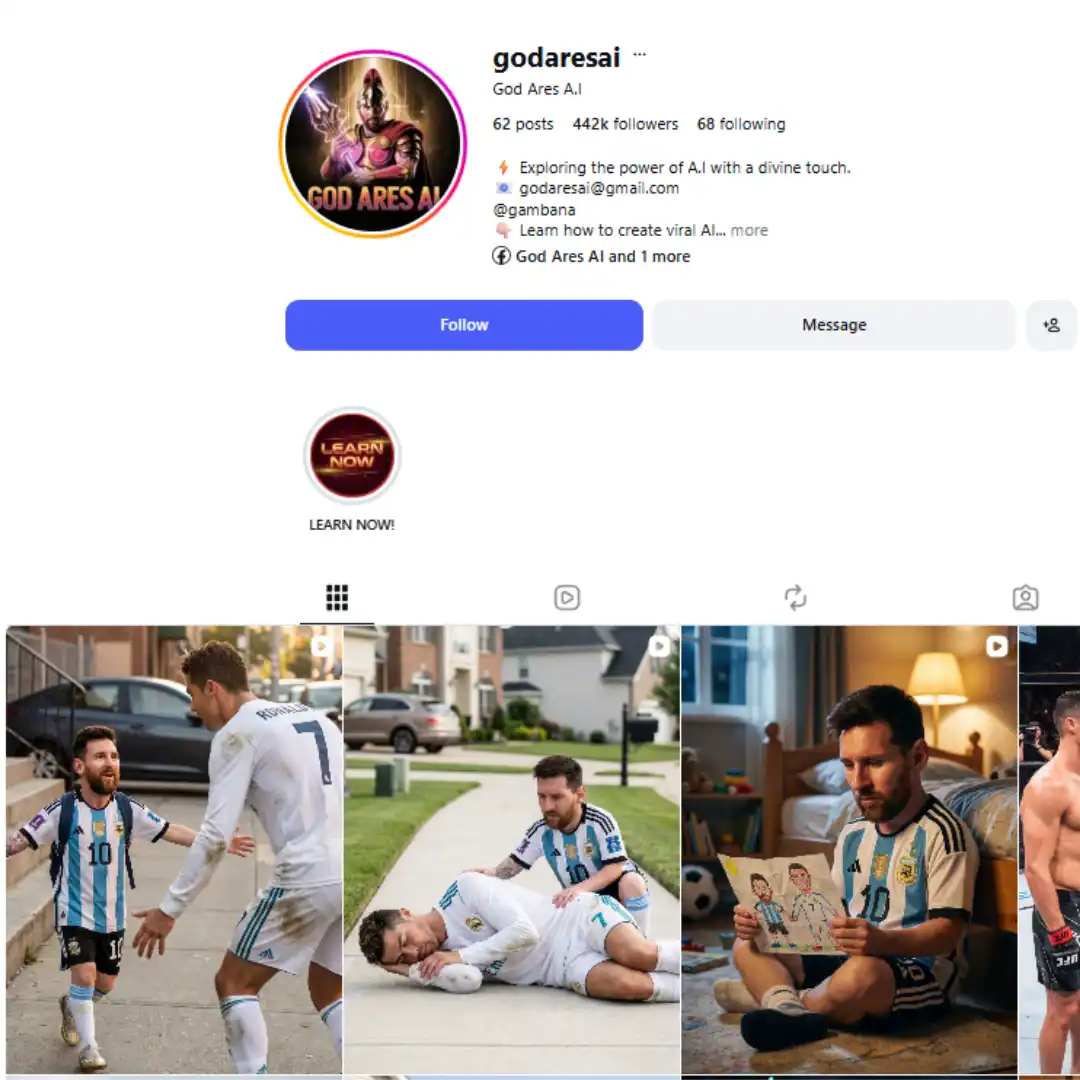
Content as the hook. Possibly the best in the group at this. It draws on the biggest sport in the world and its most famous faces, which guarantees a vast potential audience, then holds them with brash, over-the-top storylines. I have caught myself sharing these with football-fan friends. The absurdity is recognisable and fully embraced, which gives the content huge sharing and rewatch value.
Demonstrated value. Viewers are drawn in by the quality of the deepfakes and editing, which makes it easy to point them toward a workflow tutorial, and that is exactly what the channel sells.
Call to action. A bio link to a Skool community teaching the workflow. With over 4,800 members and a $19 a month tier, even a conservative paid-conversion estimate of 7% would imply meaningful recurring monthly revenue, on the order of several thousand dollars, with the headline figure depending on how many members sit on the paid plan.
The four standout channels above share something: a high level of manual craft. None is riding a copy-paste trend, which gives each a stronger moat in its niche. The next three operate in more crowded, standardised formats with plenty of competitors, but they still use the funnel well.
6. Mr_datavisuals (@mrdata_visuals) – Instagram
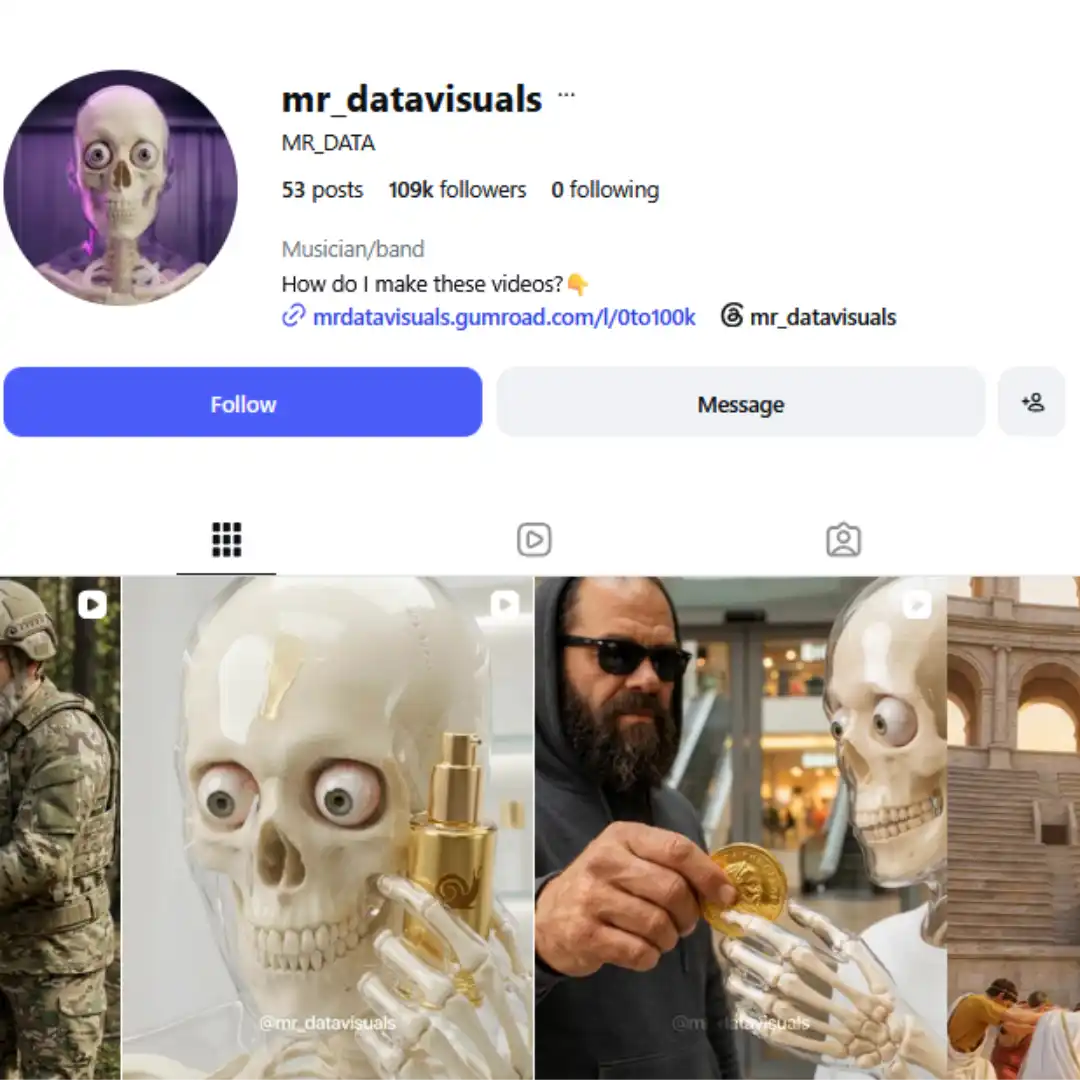
Content as the hook. The skeleton is the reason it works. The data-visualisation short is a saturated format with dozens of near-identical competitors, but viewers recognise a Mr_datavisuals video instantly from the thumbnail. In a crowded niche, visual consistency beats novelty.
Demonstrated value. The character becomes its own curiosity hook. Viewers do not just want to know how the video was made, they want to know how to build a recurring character of their own, which is a sharper and more sellable question than generic AI editing.
Call to action. A bio link to a Gumroad course at $79.99. The higher price reflects a specific, differentiated technique rather than a broad beginner course.
7. RRG_trading (@rrg_trading) – Instagram
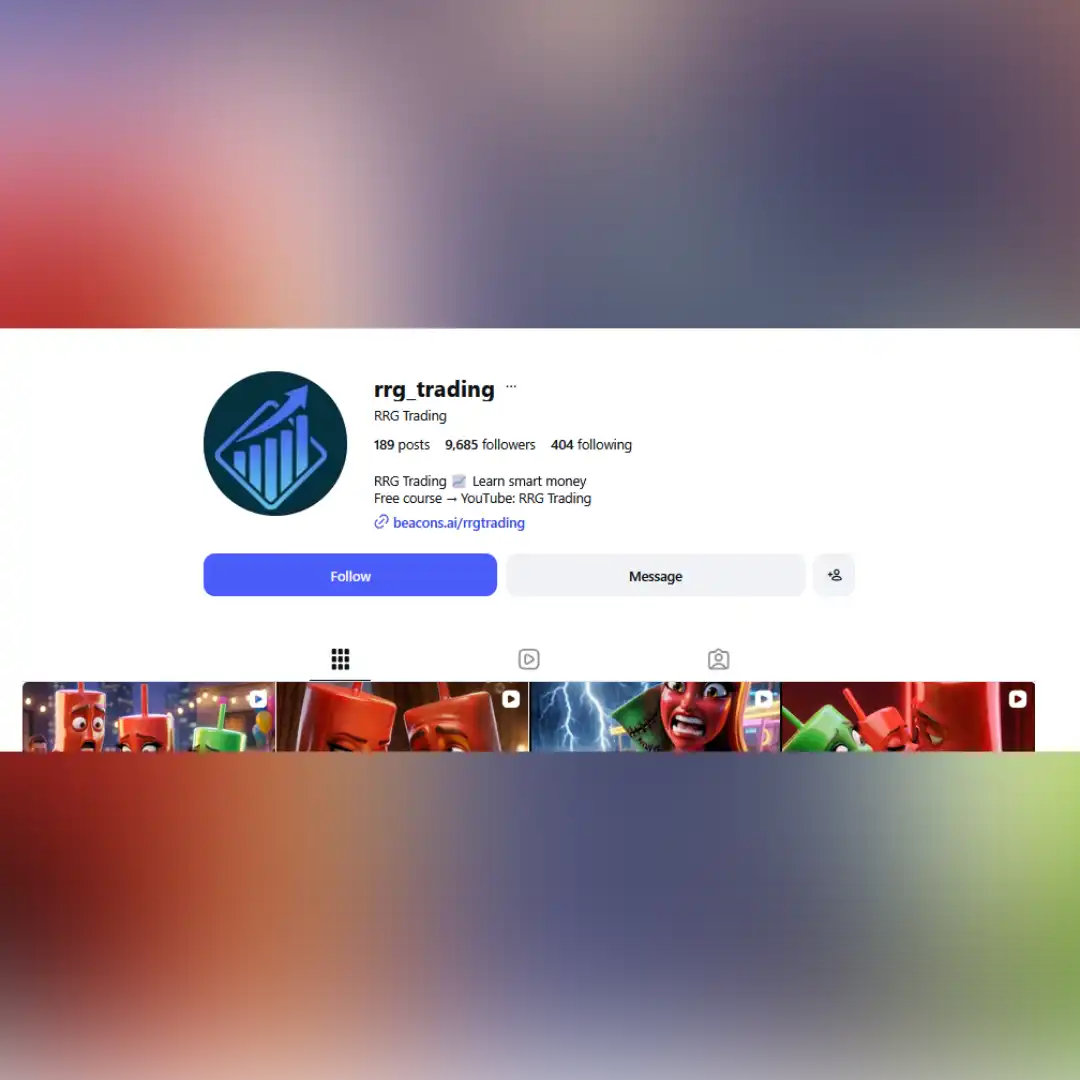
Content as the hook. Strong. Absurd anthropomorphised trading candlesticks are novel, and the algorithm rewards the shock value.
Demonstrated value. This is where it breaks. Viewers stick around for the visual spectacle, so their curiosity is about the content style, the characters, and the workflow. The natural product would be a creation tutorial. Instead the channel sells trading education, with a free YouTube course feeding a $59 Gumroad course.
Call to action. A bio link to either the free course or the paid product. The CTA mechanics are fine, but there is a real disconnect between what the audience came for, entertainment, and what it is being sold, forex strategy. A viewer hooked by candlestick drama is rarely a viewer who wants to learn to trade, so conversion almost certainly suffers.
This is the most important lesson in the article. Your product has to match the curiosity your content creates. RRG_trading has the audience and the reach, but it is selling the wrong thing to the right people.
8. HorrorFlix (@horrorflix) – Tiktok
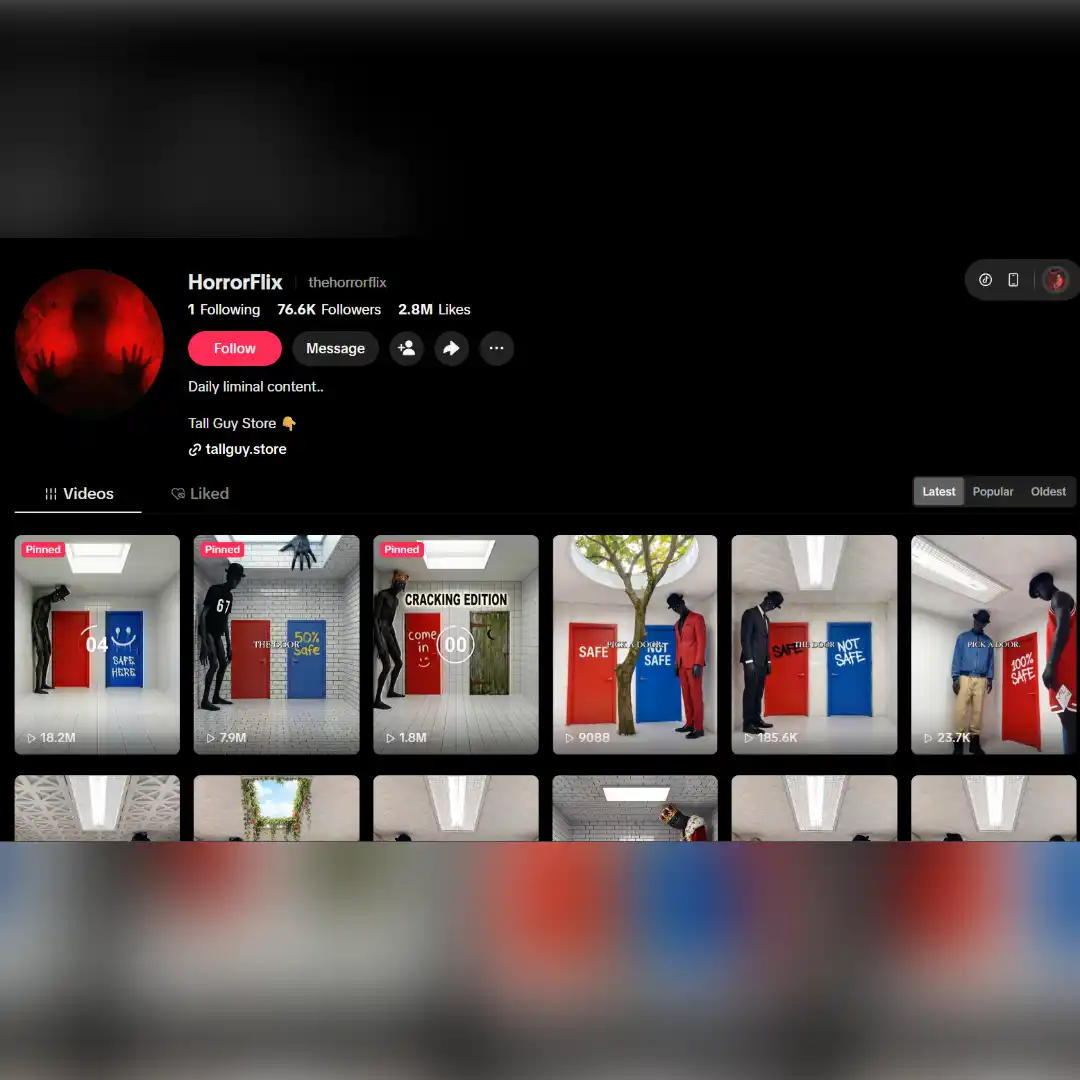
Content as the hook. Interactivity is the first hook. Viewers do not watch passively, they comment their choices, which lifts engagement and pushes the content further in the algorithm. The tall guy is the second hook and the harder one to replicate. Most liminal horror channels rely on generic AI-generated environments and shift visual styles between videos, which makes them interchangeable. @horrorflix has a recognisable character that viewers anticipate seeing, which turns one-off virality into a returning audience. In a crowded niche, character branding does the work that production budget cannot.
Demonstrated value. Technical curiosity runs high in the comments. People want to know how the look is achieved, how the choose-your-path mechanic is structured, and how the character is kept consistent across videos. That last point is the same problem Mr_datavisuals solved with his skeleton, and it is the value gap most aspiring liminal horror creators would pay to bridge.
Call to action. This is where @horrorflix is taking the most interesting bet of the group. Rather than monetising the audience through guides or workflows, the creator is building a physical merchandise brand around the tall guy character, with a store at tallguy.store currently in development. That is a longer monetisation runway than slapping a Gumroad guide in the bio, but it is also a much bigger ceiling. Aze Alter and Luca Maxim both demonstrate that character-led merchandise from a faceless channel can outearn any digital product when the character itself becomes the brand.
It is worth pausing on what this signals. The creator could already be selling a workflow guide and probably making decent monthly income from it. Choosing to build a merchandise brand instead is a bet on the audience being a community rather than a customer base, and on the character being more valuable as a piece of IP than as a tutorial subject. Whether that bet pays off will depend on execution, but the strategic instinct is the same one that turned Luca Maxim’s memes into an apparel business doing real volume. The faceless funnel does not have to end at a digital product. For creators with a strong visual identity, it can be the foundation of an entire brand.
What the faceless funnel actually teaches you
The strongest moats belong to the creators doing something nobody else is doing. Luca Maxim with merch-first storytelling, Aze Alter with a proprietary universe, Top100_real with deepfake editing quality. They did not jump on a trend, they became one. If you want to see more examples of faceless creators who built rather than borrowed, I keep a running list of the best faceless YouTube channels operating today.
Creators in saturated formats survive on branding. Mr_datavisuals would vanish without the skeleton. HorrorFlix would be one of hundreds of analog-horror accounts without the interactive mechanic.
The product has to match the curiosity. RRG_trading is the cautionary case. The funnels that convert best sell the exact thing the audience is already wondering about while it watches.
And the pattern that matters most: every one of these creators treats platform payouts as a bonus, not the engine. AdSense, Creator Rewards, Reels bonuses, all of it sits on top of the real income, which comes from the funnel underneath.
If you are building a faceless channel right now and your plan is to wait for payout eligibility, you are playing the wrong game. The creators turning this niche into a full-time income worked out long ago that the audience is the asset, the platform is a rented storefront, and real ownership only comes from selling something your audience can buy from you directly.
Build the channel. Build the funnel beneath it. Do not wait for a platform to decide what you are worth.
Disclaimer : If you buy something through our links, we may earn an affiliate commission or have a sponsored relationship with the brand, at no cost to you. We recommend only products we genuinely like. Thank you so much.
Blog Label:



Write for us
Publish a Guest Post on Pixflow
Pixflow welcomes guest posts from brands, agencies, and fellow creators who want to contribute genuinely useful content.
Fill the Form ✏